Free world folk Music Generator Powered by AI
Turn text into high-quality world folk music effortlessly – no login required!

music.toolTips
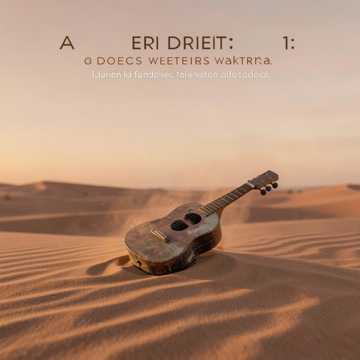
Desert Aktara Drift
A slow ambient folk instrumental that unfolds like a desert breeze, blending delicate aktara motifs, subtle hand percussion, warm drones, and bowed accents into an intimate, meditative soundscape that gradually expands before fading into silence.
03:43
Invalid date

Bunte Hände
Ein mittelalterlich geprägtes Volkslied über das Färberhandwerk, das harte Arbeit, natürliche Farben und die Freude an gemeinsam geschaffener Schönheit in poetischen Bildern und einer eingängigen, fröhlichen Atmosphäre verbindet.
03:26
11 hours ago

Chongwi Nakha
Chongwi Nakha is a warm and intimate folk-pop song about devotion, closeness, and enduring connection. Blending conversational verses with uplifting chants and communal choruses, it celebrates loyalty, shared memories, and emotional togetherness through earthy, melodic storytelling.
02:07
Invalid date
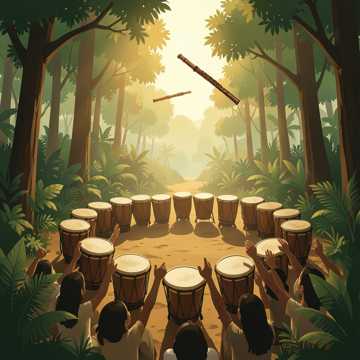
आदिवासी रे भैया
यह गीत आदिवासी समुदाय की पहचान, प्रकृति से उनके गहरे संबंध और सांस्कृतिक विरासत का गौरवपूर्ण उत्सव है। जल, जंगल और जमीन के संरक्षण, पुरखों की सीख तथा सामुदायिक एकता को लोकधुनों और ऊर्जावान समूहगान के माध्यम से प्रस्तुत किया गया है।
03:40
17 hours ago
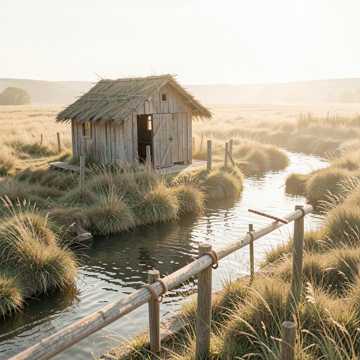
Gagri Kar Pani
यह एक बिना शब्दों वाला फोक-पॉप ट्रैक है जो ग्रामीण सहजता, खुली हवा जैसी लय और मानवीय गर्माहट को ध्वनि में बदलता है। नरम ग्रूव, बढ़ती परतें और गूंजता हुक इसे साथ गुनगुनाने जैसा अनुभव देते हैं।
02:14
Invalid date
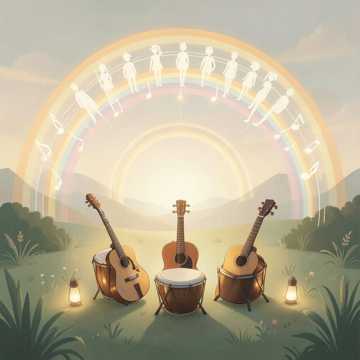
Flute Circle
An uplifting folk-pop instrumental driven by bright flute motifs, soaring violin lines, rhythmic hand drums, and acoustic strums. Its festival-ready arrangement evolves from earthy grooves to expansive choral textures, creating a joyful, communal, and cinematic listening experience.
03:21
2 days ago
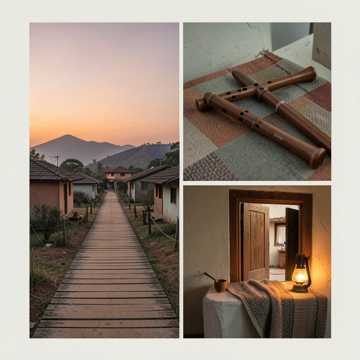
Imadole Ko Bato
यो गीत स्मृति, गाउँप्रतिको माया र अपनत्वको भावनात्मक यात्रा हो। इमाडोल, सानागाउँ, लुभू, लामाटार र धुंगिन जस्ता स्थानहरू सम्झनाको नक्सा बन्छन्, जहाँ घर, प्रेम र पहिचान संगीतसँग मिसिन्छ।
04:18
4 days ago

A szél három útja
Egy lírai világ-folk ballada, amely a Tisza, a Gangesz és az ír tájak képein keresztül mutatja be a távoli kultúrák összetartozását. A vándorlás, az otthonkeresés és az emberi egység témáit érzelmes duett és gazdag akusztikus hangszerelés kíséri.
03:58
5 days ago

Echoes of Titicaca
An instrumental piece titled 'Echoes of Titicaca' with a world folk-inspired rhythmic style, evoking the cultural essence of the Andean region.
02:04
2024-10-08
Arve Arve Chedam Non
'Arve Arve Chedam Non' mêle habilement le Karbi et l'anglais dans une célébration vibrante de la culture traditionnelle. Le chant évoque un rassemblement festif autour d'un feu, où la danse, le rire et la musique unissent les participants aux esprits anciens.
01:44
2024-07-30
Introduction to World Folk Music
World folk music refers to traditional musical expressions that originate from diverse cultures across the globe. Rooted in regional customs, indigenous storytelling, and communal rituals, world folk music preserves the musical heritage of societies through acoustic instruments, oral traditions, and culturally specific rhythms. Historically, this genre developed organically within communities as a form of collective identity, transmitting values, folktales, and social histories. Over centuries, world folk evolved through cultural exchanges, migrations, and globalization, ultimately becoming a vital musical category that showcases human diversity. Today, world folk serves as a bridge between ancestral traditions and modern reinterpretations, maintaining authenticity while embracing innovative arrangements.
Sub-tags and Classifications of World Folk Music
Celtic Folk
Celtic folk encompasses the traditional music of Ireland, Scotland, Wales, and Brittany. Characterized by instruments such as the fiddle, tin whistle, uilleann pipes, and bodhrán, Celtic folk emphasizes dance rhythms, lyrical ballads, and communal melodies.World folk music content Its storytelling themes revolve around mythology, heroism, love, and pastoral life.
Nordic Folk
Nordic folk music originates from Scandinavian regions including Sweden, Norway, and Finland. It features modal scales, haunting vocal styles, and instruments such as the nyckelharpa and Hardanger fiddle. Nordic folk often conveys atmospheric landscapes, ancient sagas, and the spiritual connection to nature.
Balkan Folk
Balkan folk music blends Slavic, Turkish, Greek, and Romani influences, resulting in complex rhythms, asymmetrical meters, and vibrant instrumental layers. Artists frequently use brass ensembles, accordions, and stringed instruments to create energetic, celebratory arrangements associated with festivals and dances.
Middle Eastern Folk
Middle Eastern folk incorporates maqam-based melodic structures, expressive vocal ornamentation, and instruments such as the oud, qanun, and darbuka. Themes often explore spiritual traditions, poetic narratives, and regional heritage, reflecting centuries of cultural cross-pollination.
African Folk
African folk music varies widely across regions but commonly features polyrhythms, call-and-response vocals, hand percussion, and indigenous instruments like the kora, mbira, and djembe. It is deeply tied to communal ceremonies, storytelling, and ancestral memory.
Latin American Folk
Latin American folk blends Indigenous, European, and African influences. Substyles such as Andean folk or Mexican son involve instruments like the charango, quena, and harp. Themes revolve around cultural identity, history, and daily life, often infused with festive rhythms.
Famous Artists and Works in World Folk Music
Miriam Makeba
Known as 'Mama Africa,' Miriam Makeba popularized African folk and traditional South African music worldwide. Her works such as 'Pata Pata' brought global recognition to African rhythms and vocal traditions while also raising awareness of cultural and political issues.
‘Pata Pata’ – Miriam Makeba
This signature African folk piece blends traditional South African rhythms with catchy melodic patterns. Its innovation lies in its accessible arrangement, uplifting percussion, and Makeba’s charismatic vocal delivery, which helped introduce African folk styles to global audiences.
The Chieftains
An iconic group in Celtic folk, The Chieftains revitalized Irish traditional music through virtuosic instrumentation and global collaborations. Their albums helped introduce Celtic folk to mainstream international audiences.
‘The Bells of Dublin’ – The Chieftains
A landmark Celtic folk album mixing traditional Irish carols with fresh arrangements. Its eclectic instrumentation and collaborations highlight the evolving nature of world folk music while preserving cultural authenticity.
Yusuf Islam (Cat Stevens)
Yusuf Islam often integrates Middle Eastern folk influences into his acoustic compositions. His later works incorporate traditional modal elements and cultural themes, contributing significantly to cross-cultural musical understanding.
‘Gracias a la Vida’ – Mercedes Sosa
A timeless Latin American folk classic, this song blends poetic lyricism with gentle acoustic arrangements. Its emotional depth and universal themes make it one of the most influential works in world folk history.
Mercedes Sosa
A leading voice in Latin American folk, Mercedes Sosa championed socially conscious folk songs known as 'Nueva Canción.' Her emotionally powerful interpretations emphasized cultural identity and human rights.
‘Traveller’ – Anoushka Shankar
This fusion album bridges Indian folk traditions with Spanish flamenco. The integration of sitar, palmas, and Arabic influences demonstrates innovative cross-cultural storytelling within the world folk genre.
Anoushka Shankar
A globally acclaimed sitar player, Anoushka Shankar blends Indian classical and folk traditions with contemporary world music. Her works explore cross-cultural fusion while preserving deep-rooted Indian musical heritage.
Application Scenarios of World Folk Music
World folk music is frequently used to evoke cultural authenticity, emotional depth, or atmospheric landscapes. Directors incorporate Celtic folk for historical dramas, Middle Eastern folk for desert-themed scenes, and African folk for storytelling rooted in traditional heritage.
Film and Television Soundtracks
Brands use world folk music to convey values such as authenticity, craftsmanship, sustainability, or global connection. Instruments like the kora or pan flute can instantly create a warm, organic sound associated with nature and cultural richness.
Advertising and Branding
World folk enhances immersive storytelling in RPGs, adventure titles, and fantasy games. Nordic folk may accompany snow-filled landscapes, while Balkan or Middle Eastern influences can enrich world-building and cultural identity within game universes.
Video Game Background Music
Live world folk performances are central to cultural celebrations, traditional ceremonies, and international arts festivals. They promote cross-cultural appreciation and highlight unique musical heritage.
Cultural Festivals and Events
Many wellness environments use world folk music—particularly Indian classical, Andean, or African ambient styles—to create grounding, calming soundscapes that enhance mindfulness and relaxation practices.
Meditation and Wellness Spaces