Free Continuo Music Generator Powered by AI
Turn text into high-quality Continuo music effortlessly – no login required!

music.toolTips
Vivaldi- Flöte- F-dur-260926
Ein spritziges Barockstück in F-Dur, getragen von pulsierenden Streichern und Continuo. Die virtuose Blockflöte führt mit schnellen Läufen, eleganten Verzierungen und strahlender Energie durch eine festliche, tänzerische Klangwelt im Geist Vivaldis.
02:04
2026-09-26
Vivaldi- Oboe-d-moll-180926
Ein energiegeladenes Barockkonzert in d-Moll mit treibendem Allegro, virtuoser Solo-Oboe und dichtem Streicherensemble. Das Stück verbindet dramatische Spannung, festliche Pracht und kontrastreiche Dialoge zwischen Soloinstrument und Orchester im Geist Vivaldis.
01:45
2026-09-18
Viv-Föte-F-dur-140926
A bright, energetic Baroque composition in F major, driven by a clear theme, agile strings, continuo, and a virtuoso solo recorder. Its festive momentum and operatic flair evoke an aristocratic celebration, theatrical dance, or radiant concert finale.
02:05
2026-09-15
C Major Minuet
A bright, brisk Baroque minuet in C major, shaped by recorder-led exchanges, crisp strings, steady bass, and harpsichord pulse. Its lighter middle passage creates contrast before a richly ornamented reprise, evoking an elegant courtly dance and refined eighteenth-century chamber performance.
02:46
2026-09-15
Viv-Oboe-d-moll-260826
A passionate instrumental concerto in D minor, shaped by alternating slow and quick sections. The solo oboe carries an expressive, virtuoso voice above strings and continuo, creating a distinctly Vivaldian arc of tension, movement, drama, and reflective resolution.
05:09
2026-08-27
Viv-Oboe-d-moll-260826
An instrumental Baroque fantasia in d-minor, built from fugue and fugato passages. A virtuoso oboe leads an animated dialogue with strings and continuo, creating tension, movement, and ornate Vivaldian drama without sung language.
03:10
2026-08-27
Viv-Oboe-d-moll-260826
An energetic Baroque orchestral fugato in d-minor, driven by brisk strings and continuo beneath a virtuosic solo oboe. Its tense harmonic color, animated counterpoint, and theatrical momentum suggest a refined eighteenth-century concert scene filled with urgency, elegance, and dramatic resolution.
03:44
2026-08-27
Viv-Oboe-d-moll-260826
Das instrumentale Stück verbindet die leidenschaftliche Dramatik von d-Moll mit einem schnellen, tänzerischen Allegro. Eine virtuose Solo-Oboe führt durch kontrastreiche Motive, während Streicherensemble und Continuo einen energischen, festlichen und typisch barocken Klangraum schaffen.
03:20
2026-08-27
Viv-Clarinet-B-dur-260826
An energetic Baroque rondo in B-flat major, driven by bright string ritornellos, continuo accompaniment, and agile solo clarinet flourishes. Its allegro momentum creates a refined yet exuberant atmosphere, well suited to period drama, historical scenes, elegant celebrations, and focused listening.
02:59
2026-08-27
Viv-Clarinet-B-dur-260826
An instrumental Baroque allegro that spotlights a nimble solo clarinet against string ensemble and continuo. Its B-flat-major warmth, rapid ornamentation, and Vivaldian drive create an energetic, refined atmosphere suited to focused listening or elegant scenes.
03:34
2026-08-27
Viv-Bagpipe-F-dur-260826
Das instrumentale Allegro verbindet barocke F-Dur-Brillanz mit pastoraler Wärme. Rasche Streicherfiguren und ein tragendes Continuo bilden den virtuosen Rahmen für den solistischen Dudelsack, der ländliche Festlichkeit, tänzerischen Schwung und venezianische Konzertenergie vereint.
02:05
2026-08-27
Viv-Hurdy-Gurdy-G-dur-260826
A bright, energetic Baroque concerto-style piece in G major, driven by a clear theme, agile string ensemble, continuo, and an expressive hurdy-gurdy solo. Its virtuosic momentum evokes an elegant18th-century court performance filled with movement, ornamentation, and theatrical brilliance.
02:46
2026-08-27
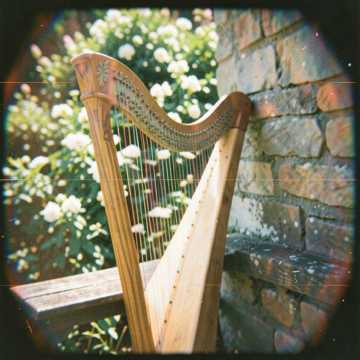
Viv-Harfe-F-dur-260826
A bright allegro waltz in F major, shaped by a clear melodic theme, agile solo harp passages, energetic string ensemble, and continuo. Its Vivaldian character evokes Baroque courts, ornate ballroom movement, festive concert halls, and elegant historical or cinematic settings.
03:59
2026-08-27
Viv-Harfe-F-dur-260826
Ein lebhaftes barockes Orchesterstück in F-Dur, getragen von einem klaren Allegro-Thema, energischen Streichern und Continuo. Die virtuose Harfe tritt als strahlende Solostimme hervor und verleiht dem Werk festliche Eleganz, Bewegung und konzertante Spannung.
03:51
2026-08-27
Vivaldi- Fagott- d-moll-160826
Ein schnelles barockes Konzertstück in d-Moll, geprägt von virtuosen Fagottpassagen, federnden Streichern und einem markanten Continuo. Die Musik wirkt dramatisch, elegant und voller Bewegung, als würde das Soloinstrument in einem intensiven musikalischen Dialog mit dem Orchester brillieren.
04:31
2026-08-17

Vivaldi- Fagott- d-moll-160826
Ein temperamentvolles Barockstück in d-Moll mit schnellem Allegro-Tempo. Das virtuose Fagott führt den musikalischen Dialog mit einem energiegeladenen Streicherensemble und Continuo und erzeugt eine dramatische, elegante Atmosphäre voller Bewegung, Spannung und kontrastreicher Klangfarben.
03:27
2026-08-17
Vivaldi- Fagott- F-dur-160826
Ein lebhaftes Instrumentalstück im Geist des Barock: Ein virtuoser Fagott-Solist tritt in einen spannungsvollen Dialog mit Streichern und Continuo. Rasche Läufe, klare rhythmische Impulse und dramatische Wechsel verbinden konzertante Brillanz mit der charakteristischen Energie Vivaldis.
03:05
2026-08-16
Vivaldi- Flöte- B-dur-160826-002
Eine kurze, langsame Barockminiatur in B-Dur, getragen von Streicherensemble und Continuo. Die virtuose Blockflöte führt mit tänzerischer Eleganz durch die harmonische Kadenz und erinnert an die farbenreiche, kontrastvolle Klangsprache Vivaldis.
04:15
2026-08-16
Vivaldi- Flöte- B-dur-160826-002
Das kurze Instrumental entfaltet eine ruhige, würdevoll schreitende Sarabande in B-Dur. Eine virtuose Blockflöte führt über getragenen Streichern und Continuo, verbindet festliche Wärme mit kontemplativer Anmut und erinnert an die kunstvolle Klangsprache des italienischen Barock.
02:36
2026-08-16
Vivaldi- Flöte- B-dur-160826-002
Das instrumentale Stück entfaltet in langsamem3/4-Takt eine anmutige B-Dur-Landschaft. Eine virtuose Blockflöte führt über sanfte Streicher und Continuo, während der ariose Charakter festliche Eleganz, intime Kontemplation und die stilistische Welt Vivaldis beschwört.
03:10
2026-08-16
Introduction to Continuo: Definition and Historical Background
Continuo, also known as basso continuo or thoroughbass, is a fundamental element of Baroque music, serving as the harmonic foundation of ensemble performances. It typically consists of a bass line played by instruments such as the cello, bassoon, or viola da gamba, combined with a chordal instrument like the harpsichord, organ, or lute, which fills in the harmonies. The practice of continuo emerged in the early 17th century in Italy, coinciding with the rise of opera and the Baroque emphasis on expressive, ornamented music. Over time, continuo became an essential part of musical composition, performance, and improvisation, influencing composers such as Claudio Monteverdi, Johann Sebastian Bach, and Henry Purcell. Its adaptability and rich harmonic texture allowed for both orchestral and chamber music settings, making it a cornerstone of Baroque music theory and performance.
Sub-tags and Classifications of Continuo Music
Instrumental continuo refers to the use of specific instruments to realize the basso continuo. The bass line is typically played by low-register instruments such as cello, double bass, bassoon, or viola da gamba, while the harmonic filling is provided by chordal instruments like harpsichord, organ, lute, or theorbo. This classification emphasizes the practical performance aspect of continuo in ensembles.
Vocal Continuo
Vocal continuo involves singers who may interpret the bass line or harmonies in addition to instrumental accompaniment. In operas and sacred music, continuo often supports solo vocalists, choirs, or recitatives, providing harmonic and rhythmic grounding that enhances melodic expression and text clarity.
Figured Bass Continuo
Figured bass continuo uses numerical symbols written above or below the bass line to indicate chords and harmonic intervals. Musicians trained in Baroque performance practice interpret these figures to improvise harmonies, allowing flexibility and stylistic nuance. Figured bass notation is crucial for historical understanding of continuo practices and Baroque improvisation.
Chamber Continuo
Chamber continuo applies basso continuo techniques to smaller ensembles, often combining a single chordal instrument with one or two bass instruments. This classification highlights intimate settings such as sonatas, trios, or small orchestral works, where the continuo provides harmonic depth without overpowering other instruments.
Famous Artists and Iconic Works of Continuo Music
Johann Sebastian Bach
Bach extensively employed continuo in his cantatas, concertos, and keyboard works. His mastery of harmonization and figured bass interpretation set the standard for Baroque continuo performance. Representative works include the 'Brandenburg Concertos' and 'Well-Tempered Clavier,' where continuo underpins the harmonic structure and supports contrapuntal textures.
Bach: Brandenburg Concerto No. 5
This concerto exemplifies the interplay between soloists and continuo. The harpsichord continuo not only provides harmonic support but also participates as a solo instrument, displaying virtuosic improvisation within the Baroque harmonic framework. The work demonstrates the dual function of continuo as both harmonic foundation and melodic contributor.
Claudio Monteverdi
Monteverdi is renowned for integrating continuo into early opera and madrigal compositions. His work 'L'Orfeo' showcases the innovative use of basso continuo to provide dramatic harmonic support for vocal lines and orchestral accompaniment, establishing a template for future Baroque operas.
Monteverdi: L'Orfeo
L'Orfeo integrates continuo throughout its recitatives and arias, where the basso continuo underpins the vocal lines and reinforces dramatic expression. Monteverdi’s use of continuo adds depth, tension, and harmonic clarity, marking a critical development in early opera composition.
Henry Purcell
Purcell incorporated continuo into English sacred music and theater works, creating expressive harmonic frameworks. Pieces such as 'Dido and Aeneas' highlight the continuo’s role in reinforcing emotional depth, rhythmic drive, and harmonic clarity.
Purcell: Dido and Aeneas
In this opera, the continuo provides harmonic grounding and emotional resonance, particularly in the famous lament 'When I Am Laid in Earth.' The combination of basso continuo and expressive vocal lines highlights Purcell’s skill in blending harmony with dramatic effect.
Arcangelo Corelli
Corelli popularized the trio sonata form, in which continuo serves as the essential harmonic backbone. His '12 Concerti Grossi' demonstrate how continuo bridges melodic lines and enriches ensemble cohesion.
Application Scenarios for Continuo Music
Continuo music is used in period films or historical dramas to evoke the Baroque era, providing authenticity and emotional depth. Its harmonic richness enhances tension, romance, or dramatic passages, creating a refined and immersive cinematic atmosphere.
Film Soundtracks
Games set in historical or fantasy settings often incorporate continuo elements to establish a sense of time and grandeur. The basso continuo supports layered textures, allowing ambient soundscapes that feel both historically grounded and musically complex.
Video Game Background Music
Continuo can be used in advertisements to convey sophistication, elegance, or classical refinement. Its harmonic structure adds subtle emotional weight to marketing campaigns, particularly in high-end or luxury product promotions.
Advertising and Commercial Music
Continuo remains central in live Baroque music performances, chamber concerts, and historically informed ensembles. Its use reinforces authenticity and engages audiences with the intricate interplay of harmony, melody, and rhythm characteristic of the Baroque period.
Live Performance and Early Music Ensembles