Free Harpsichord Music Generator Powered by AI
Turn text into high-quality Harpsichord music effortlessly – no login required!

music.toolTips
Wmokiko
Wmokiko delivers a darkly comic revolt against a delusional Shiba ruler accused of censorship, theft, and authoritarian abuse. Its repeated chant turns political satire into a confrontational anthem, while harpsichord-led chamber pop, British Invasion harmonies, and raw analog production create a theatrical1960s protest atmosphere.
02:59
16 minutes ago

Wmokiko
A satirical, confrontational protest song portrays a delusional Shiba ruler who censors truth and exploits others. Its repeated chorus turns rebellion into a darkly comic communal chant, while vintage chamber-pop textures heighten the theatrical, lo-fi sense of political farce.
03:05
17 minutes ago
Owl Lantern Waltz
A curious nocturnal waltz unfolds like a storybook adventure, pairing playful chamber-orchestra motifs with mysterious shadows and luminous orchestral lifts. Harpsichord, celesta, harp, bells, woodwinds, strings, brass, and choir create an enchanted soundscape suited to magical forests, moonlit quests, theatrical scenes, and fantasy game worlds.
03:04
10 hours ago
Repete Que Vira
A canção acompanha uma mentira aparentemente inofensiva que, repetida e alimentada, se transforma em verdade compartilhada. Entre violino insistente, batidas cardíacas e vozes em duelo, a narrativa revela como a linguagem constrói muros, jardins e castelos frágeis dentro de quem acredita.
04:02
1 days ago
Medusa, Take My Heart
A devoted narrator enters Medusa's ruined temple and willingly surrenders fear, pride, and heroic ideals. Against orchestral darkness and violent metal intensity, their bond is framed as consensual devotion, mutual recognition, and a refuge from old curses.
05:47
Invalid date
Dance of the Phantom Masquerade
A spectral masquerade unfolds in a ruined ballroom as the living and dead waltz through poison, regret, and endless midnight. Gothic classical textures and symphonic metal force transform the dance into a grand awakening of the dead.
04:48
1 days ago
Dance of the Phantom Masquerade
A spectral masquerade unfolds in a ruined ballroom, where the dead waltz beneath jade chandeliers. Driven by harpsichord, orchestral force, operatic vocals, and metal intensity, the song turns a graceful dance into a vivid ritual of memory, dread, and eternal night.
05:08
1 days ago
Dans le jardin ...
Dans un jardin au soir tombant, un peintre tente de saisir l'éphémère tandis qu'une présence mystérieuse conserve ce que le temps emporte. Portée par une mélancolie sereine, la chanson transforme la mémoire en refuge durable.
02:57
1 days ago
Rather Risk the Room
Set among drawing rooms, family expectations, and whispered rumors, the song follows two lovers who reject a carefully arranged future for an honest commitment. Its brisk waltz pulse, witty verses, and swelling chorus transform social risk into a bold, cinematic celebration of love.
03:48
Invalid date

Taste the Charge
A high-energy sports anthem that transforms hydration into a ritual of focus, teamwork, and renewed momentum. Tight rap verses, playful call-and-response vocals, orchestral stabs, and a broad chantable chorus create a futuristic arena atmosphere suited to training sessions, competitions, team campaigns, and motivational fitness content.
02:54
1 days ago
Dragon Hall Overture
A cinematic medieval fantasy overture that moves from intimate, questing lute passages into radiant orchestral triumph. Driving6/8 percussion, soaring violin melodies, brass fanfares, and dramatic swells create the feeling of entering a great hall before an epic adventure.
03:30
Invalid date
Your Majesty, I Wear the Grin
A witty theatrical anthem follows a court jester who playfully challenges a self-important king. Beneath the ceremonial grandeur, the song celebrates humor as a subtle form of power, turning royal pageantry into a bright, catchy battle for the final word.
02:52
2 days ago
Dr. Mortimer's Warning
A gothic progressive rock retelling of a Baskerville mystery, blending ominous narration with dramatic choruses. Dr. Mortimer recounts a family curse and fearful deaths, while Holmes rejects superstition and follows the evidence toward a human conspiracy on the Devon moors.
07:29
3 days ago
Seven Note Fugue
A focused instrumental fugue driven by a recurring seven-note cell. Crisp harpsichord lines enter in close imitation, building from a solitary statement into intertwined counterpoint before resolving with a lucid final return.
02:24
Invalid date
Cathedral Fugue
A vivid Baroque fugue for close-miked harpsichord, built from a precise solo subject into agile layers of imitation. Sequential modulations and a brief pedal-point surge lead to a fuller, radiant final reprise.
02:18
Invalid date
Come, Tender Spring
A pastoral celebration of spring's return, tracing thaw, birdsong, blossom, rain, and newly stirring roots. Its formal vocal fugue turns small natural changes into one shared gesture of renewal, ending with the landscape joined in a living phrase.
02:28
Invalid date
Gloam Manor Renovation
A theatrical dungeon synth journey through a slowly restored haunted manor. Dusty organ harmonies, murky bass, brittle celesta, bowed swells, and chiming transitions balance gothic unease with cozy, cracked-vinyl nostalgia.
03:43
3 days ago
J154
J154 unfolds as a restrained elegy in D minor, pairing antique mechanical textures with sparse lo-fi pulse, metallic piano resonance, and mournful pauses. Its empty center leaves space for spoken word, while extreme stereo movement creates a fragile dialogue between memory, grief, and fading time.
02:51
4 days ago
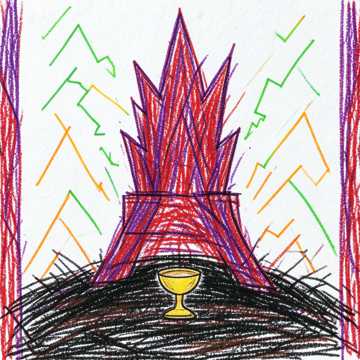
Pup at My Feet
A wicked queen revels in humiliating her fearful servant, demanding praise, obedience, and groveling devotion. The song turns tyrannical power into flamboyant comedy through bombastic orchestration, rapid theatrical momentum, sinister laughter, and a grand villain performance that parodies royal cruelty and exaggerated submission.
03:27
4 days ago

Alt Grime, Break beat
A vocal-free electronic track driven by fractured breakbeats, dark grime pressure and syncopated gqom pulse. Baroque-tinged harpsichord cuts through glitching percussion, shaping an urgent, nocturnal sound suited to underground dance floors and high-intensity visual media.
03:03
Invalid date
Introduction to Harpsichord
The harpsichord is a stringed keyboard instrument that was widely used in European classical music from the 16th through the 18th centuries. Unlike the piano, where hammers strike the strings, the harpsichord produces sound by plucking the strings with quills. The instrument's origins date back to the Middle Ages, but it gained prominence during the Renaissance and Baroque periods, playing a central role in the music of composers such as Johann Sebastian Bach and George Frideric Handel. Its bright, resonant tone made it a staple in orchestral, chamber, and solo music until it was gradually replaced by the piano in the late 18th century.
Sub-tags and Classifications of Harpsichord
Flemish Harpsichord
Flemish harpsichords are known for their rich, warm tone and intricate decorative designs. Originating in the region of Flanders during the 16th and 17th centuries, these harpsichords were often adorned with elaborate paintings and marquetry. They typically have two keyboards (manuals) and a robust sound, making them suitable for both solo performances and ensemble settings.
Italian Harpsichord
Italian harpsichords are characterized by their lighter construction and brighter, more transparent sound. These instruments were popular in the 16th and 17th centuries, often featuring a single manual and a simpler design compared to their Flemish counterparts. The Italian harpsichord’s crisp articulation made it ideal for intricate, fast-paced music, which was prominent in Italian Baroque compositions.
French Harpsichord
French harpsichords, particularly those made in the 18th century, are noted for their elegance and versatility. These instruments often feature a double manual and a range of stops that allow for varied tonal colors. French harpsichords were central to the music of composers like François Couperin and Jean-Philippe Rameau, who wrote extensively for the instrument in both solo and ensemble contexts.
English Harpsichord
The English harpsichord, prominent in the 17th and 18th centuries, is known for its full, resonant sound and sturdy construction. These harpsichords often have a more restrained decorative style but are highly valued for their powerful tone, which suited the grandiose music of the English Baroque period, including works by composers like Henry Purcell.
Famous Artists and Works Related to Harpsichord
Johann Sebastian Bach
Johann Sebastian Bach is arguably the most famous composer associated with the harpsichord. His 'Goldberg Variations' and 'The Well-Tempered Clavier' are considered masterpieces of harpsichord literature, showcasing the instrument's range and expressive potential. Bach’s intricate counterpoint and harmonic innovations set a high standard for harpsichord music.
Goldberg Variations by Johann Sebastian Bach
The 'Goldberg Variations' are one of the most significant works in the harpsichord repertoire. Composed by Bach, this set of 30 variations is a tour de force of counterpoint and thematic development, pushing the harpsichord’s expressive capabilities to their limits. Each variation explores different technical aspects of the instrument, making it both a challenging and rewarding piece for performers.
Domenico Scarlatti
Domenico Scarlatti, an Italian composer, is renowned for his 555 keyboard sonatas, many of which were composed for the harpsichord. His works are characterized by their technical brilliance and rhythmic innovation, exploring the full capabilities of the harpsichord’s sound and texture.
Sonatas by Domenico Scarlatti
Domenico Scarlatti’s harpsichord sonatas are known for their virtuosic demands and innovative use of the instrument’s capabilities. Each sonata is a unique exploration of rhythm, melody, and harmony, often incorporating elements of Spanish folk music. Scarlatti’s sonatas remain a cornerstone of the harpsichord repertoire.
François Couperin
François Couperin, known as 'Couperin le Grand,' was a French Baroque composer and harpsichordist. His 'Pièces de Clavecin' (Pieces for Harpsichord) are a collection of highly expressive and ornamented works that demonstrate the elegance and nuanced tonal possibilities of the French harpsichord.
Pièces de Clavecin by François Couperin
Couperin’s 'Pièces de Clavecin' are a collection of harpsichord works that highlight the French style’s emphasis on ornamentation and expressive nuance. Each piece is intricately crafted, often with descriptive titles that suggest a specific mood or scene, allowing performers to explore the full range of the harpsichord’s tonal palette.
Jean-Philippe Rameau
Jean-Philippe Rameau was a pivotal figure in the French Baroque era, both as a composer and a music theorist. His harpsichord works, such as the 'Nouvelles Suites de Pièces de Clavecin,' are celebrated for their complexity and their ability to evoke a wide range of emotions, from the stately to the playful.
Nouvelles Suites de Pièces de Clavecin by Jean-Philippe Rameau
Rameau’s 'Nouvelles Suites de Pièces de Clavecin' are a masterful blend of technical brilliance and emotional depth. These suites showcase Rameau’s innovative approach to harmony and rhythm, making them a significant contribution to the harpsichord’s repertoire. The pieces are noted for their rich textures and dynamic contrasts.
Application Scenarios for Harpsichord Music
Harpsichord music is often used in movie soundtracks to evoke a historical or baroque atmosphere. Its distinctive sound can immediately transport listeners to the 17th or 18th century, making it ideal for period dramas or films set in the Renaissance or Baroque periods.
Movie Soundtracks
The bright and intricate sound of the harpsichord can add a touch of elegance and sophistication to advertising music. It is particularly effective in commercials that aim to evoke a sense of tradition, luxury, or refinement.
Advertising Music
In video games, harpsichord music is used to create a medieval or fantasy ambiance. Its clear, resonant tone can add depth to game environments, especially in settings that mimic historical Europe or fantastical realms inspired by it.
Video Game Background Music
Harpsichord is a staple in classical music concerts, especially in performances of Baroque music. Its use in concert settings allows audiences to experience the authentic sound of music from the 16th to 18th centuries, often in historically informed performances.
Classical Music Concerts