Free Jazz Music Generator Powered by AI
Turn text into high-quality Jazz music effortlessly – no login required!

music.toolTips

Shadow in the Night
A secretive spy navigates dangerous missions across Europe while concealing a passionate love. Jazzy bossa nova rhythms, soulful male vocals, groovy bass, lush strings, and cinematic orchestration create an upbeat yet wistful80s thriller atmosphere.
03:23
2026-08-27
REG03
REG03 paints a surreal nighttime world where bats, nets, fezzes, and dreamers gather in rhythmic celebration. Its playful imagery and cinematic arrangement transform curiosity, fellowship, and boundless imagination into an upbeat moonlit adventure.
02:16
2026-08-27
Outake-01
REG02 paints a surreal nighttime adventure where a dream-driven man, a soaring bat, colorful fezzes, and an ark of wonders move through laughter, music, and moonlight. Its romantic mystery and playful imagery unfold over an energetic fusion of bossa nova, soul, funk, and cinematic orchestration.
01:17
2026-08-27

Me Diz Só
Uma canção sobre a tensão entre ficar calado e buscar a verdade. O eu lírico pede apenas uma resposta sincera sobre o bem-estar do outro, enquanto enfrenta medo, autocensura, ironia e o peso dos silêncios numa relação ambígua.
03:09
2026-08-26
Cycle 3 W3 History Gypsy Swing
This upbeat educational song recounts the Boston Tea Party of1773. Its repeated lyrics explain how colonists disguised as Mohawks dumped British East India Company tea into Boston Harbor, while gypsy swing, jazzy melodies, and Lindy hop rhythm create a playful historical lesson.
01:56
2026-08-26
Cycle 3 W3 English gypsy swing
An upbeat educational swing song that explains past participles through repetition, melody, and playful rhythm. Its clear female vocal, jazzy gypsy swing style, and1930s Lindy hop character make grammar practice memorable, lively, and suitable for classrooms, language lessons, and movement-based learning.
01:50
2026-08-26

Ride the wave
An uplifting, mysterious anthem about breaking free from people-pleasing, martyrdom, and emotional repression. Inspired by Uranus, eclipses, and the Pisces-Virgo axis, the song transforms spiritual upheaval into an adventurous call to embrace change, reclaim inner peace, and ride toward personal growth.
03:15
2026-08-26

Why would I die?
A reflective yet defiant song about mortality, artistic purpose, and choosing to live fully. Through soulful jazz phrasing and mysterious playfulness, the narrator transforms fear, exhaustion, and loneliness into music, love, dreams, and a lasting sense that life was worth living.
08:00
2026-08-24
Why would I die?
A reflective jazz meditation on mortality and creative purpose. The narrator rejects fear, refuses to bury her dreams, and chooses to live, love, feel, and transform pain into music, determined to make her existence meaningful before life reaches its inevitable end.
07:30
2026-08-24
a_f_SOAIMSO_INST_NotHungryII
A lyricless instrumental blending acoustic textures, Baldwin piano, Russian folk character, classical orchestration, and jazz-inflected harmony. Its nostalgic atmosphere suits quiet reflection, cinematic scenes, intimate cafés, heritage storytelling, and contemplative journeys.
02:45
2026-08-24
la chambre du poète
Dans sa chambre peuplée de portraits, de recueils poussiéreux et de souvenirs littéraires, un poète lutte contre le doute, l’ennui et la solitude. Renaud, Rimbaud, Brel et Verlaine deviennent des présences protectrices, tandis que la musique transforme la mélancolie en réconfort.
03:04
2026-08-24
la chambre du poète
Un poète solitaire travaille et dort sous le regard de ses idoles, Renaud, Rimbaud, Brel et Verlaine. Sa chambre devient un musée de vers et un cimetière de rimes, où le doute, l’épuisement et la passion d’écrire se transforment en refuge poétique.
03:28
2026-08-24
la chambre du poète
Dans une chambre transformée en musée de vers, un poète solitaire dialogue avec les figures de Renaud, Rimbaud, Brel et Verlaine. Entre fatigue, doute et besoin d écrire, il affronte la peur que ses mots ne servent à personne.
03:42
2026-08-24
la chambre du poète
Dans sa chambre peuplée de portraits, un poète solitaire dialogue avec Renaud, Rimbaud, Brel et Verlaine. Sur une mélodie blues, reggae et jazz, il exprime le doute, l’épuisement créatif et la sensation d’écrire dans un monde en deuil.
03:55
2026-08-24
la chambre du poète
Dans sa chambre transformée en musée de vers et cimetière de rimes, un poète solitaire dialogue avec les figures de Renaud, Rimbaud, Brel et Verlaine. Porté par une atmosphère blues, reggae et jazz, il poursuit l’écriture jusqu’à l’épuisement, malgré l’ennui, le silence et le deuil intérieur.
04:40
2026-08-24
la chambre du poète
Dans une chambre peuplée de portraits d’artistes, un poète solitaire écrit jusqu’à l’épuisement. Entre blues, reggae et jazz rêveur, la chanson transforme l’inspiration en musée poussiéreux, la solitude en cercueil et l’écriture en fragile cap face à l’ennui.
03:55
2026-08-24
la chambre du poète
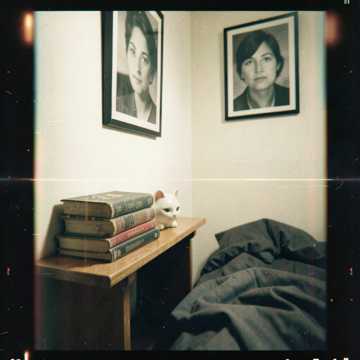
Dans une chambre transformée en musée de vers et en cimetière de rimes, un poète solitaire dialogue avec les figures de Renaud, Rimbaud, Brel et Verlaine. Porté par l'insomnie, il poursuit l'écriture malgré l'ennui, le silence et l'impression d'être fermé sur le monde.
04:39
2026-08-24

Three In Morning
'Three In Morning' explores late-night loneliness and intense romantic longing. Blending sultry jazz chords with modern trap rhythm, the song captures the quiet desperation of 3 AM solitude, waiting for a lost love's call while watching the world move on.
03:35
2026-08-23
08 When I Wake In The Morning
A heartfelt morning-and-evening prayer celebrating Jesus presence, faithful love, and the hope of a renewed life. Through uplifting imagery and repeated praise, the song portrays faith as a constant melody carried through waking, dreaming, daily living, and spiritual renewal.
03:19
2026-08-22
jazz and piano 21
An upbeat instrumental-style fusion of piano jazz, traditional folk, and bluegrass, enriched by guitar, bongos, harmonized vocals, and choir. Its lively acoustic pulse suits relaxed gatherings, travel scenes, celebratory moments, and feel-good background listening.
02:07
2026-08-22
Introduction to Jazz: Definition and History
Jazz is a genre of music that originated in the African-American communities of New Orleans, United States, in the late 19th and early 20th centuries. It is characterized by its use of swing and blue notes, call and response vocals, polyrhythms, and improvisation. The history of Jazz is rich, with its roots in blues and ragtime, and it has evolved over the decades through various phases, including the swing era of the 1930s, the bebop revolution of the 1940s, and the modal and free jazz movements of the 1960s. Jazz has significantly influenced other genres and is regarded as one of the most important musical styles in American history.
Sub-tags and Classifications of Jazz
Swing
Swing is a style of jazz that emerged in the early 1930s, characterized by its strong rhythm section, big band format, and smooth, danceable tempos. Swing music played a major role in popularizing jazz, and it dominated the American music scene during the late 1930s and early 1940s.
Bebop
Bebop is a fast-paced style of jazz that developed in the 1940s. It features complex chord progressions, rapid tempos, and a high level of improvisation. Bebop marked a departure from the dance-oriented swing music, focusing instead on intricate musicianship and innovative harmonic structures.
Cool Jazz
Cool Jazz emerged in the late 1940s and 1950s as a reaction to the intensity of bebop. It is characterized by its relaxed tempos, lighter tone, and a greater emphasis on arrangement. Cool Jazz artists often incorporated elements of classical music and used more understated expressions of emotion.
Modal Jazz
Modal Jazz is a style that focuses on modes, or scales, rather than chord progressions. This sub-genre, popularized by Miles Davis in the late 1950s and 1960s, allows for greater freedom in improvisation. 'Kind of Blue,' by Miles Davis, is a quintessential example of Modal Jazz.
Free Jazz
Free Jazz is an avant-garde form of jazz that emerged in the late 1950s and 1960s. It is characterized by its abandonment of traditional harmonic and rhythmic structures, favoring a more spontaneous and unrestrained approach to music-making. Artists like Ornette Coleman and John Coltrane were pioneers of this genre.
Famous Artists and Iconic Works in Jazz
Louis Armstrong
Louis Armstrong, also known as 'Satchmo,' was one of the most influential figures in jazz history. His virtuosic trumpet playing, gravelly voice, and charismatic stage presence made him an international star. Armstrong's recordings, such as 'What a Wonderful World' and 'Stardust,' are timeless classics.
Kind of Blue
'Kind of Blue' by Miles Davis, released in 1959, is a landmark album in the history of jazz. It is widely regarded as the definitive Modal Jazz record. The album features iconic tracks like 'So What' and 'Freddie Freeloader,' and is noted for its innovative use of modes instead of traditional chord progressions, allowing for a new level of improvisational freedom.
Miles Davis
Miles Davis was a pivotal figure in the evolution of jazz, known for his innovative contributions to several jazz styles, including bebop, cool jazz, and modal jazz. His album 'Kind of Blue' is often regarded as one of the greatest jazz albums of all time, showcasing his mastery of Modal Jazz.
A Love Supreme
'A Love Supreme' is a spiritual jazz suite by John Coltrane, released in 1965. It is considered one of the greatest jazz albums of all time. The album is structured in four parts: 'Acknowledgement,' 'Resolution,' 'Pursuance,' and 'Psalm,' each representing a different aspect of Coltrane's spiritual journey. The work is celebrated for its deep emotional expression and complex improvisations.
Duke Ellington
Duke Ellington was a legendary composer, pianist, and bandleader. He played a crucial role in the development of swing music and big band jazz. Ellington's works, such as 'Take the A Train' and 'Mood Indigo,' are considered masterpieces of American music.
Take Five
'Take Five' is a jazz standard composed by Paul Desmond and performed by The Dave Brubeck Quartet. It was released on their 1959 album 'Time Out.' The piece is famous for its distinctive 5/4 time signature, which was unusual in jazz at the time. 'Take Five' became one of the best-selling jazz singles of all time, showcasing the genre's ability to innovate while maintaining broad appeal.
John Coltrane
John Coltrane was a revolutionary saxophonist whose work in the 1950s and 1960s pushed the boundaries of jazz. Known for his deep spiritual quest and technical brilliance, Coltrane's albums like 'A Love Supreme' and 'Giant Steps' are seminal works in the jazz canon.
Application Scenarios for Jazz Music
Jazz music is frequently used in movie soundtracks to evoke certain moods and atmospheres. For instance, the film 'La La Land' features a jazz-infused soundtrack that underscores the romantic and nostalgic themes of the movie. Jazz’s versatility allows it to complement a wide range of cinematic styles, from noir to romance.
Movie Soundtracks
Jazz is often used in advertisements to convey sophistication, class, and elegance. For example, high-end brands frequently use jazz music to align their products with a sense of luxury and timeless style. The improvisational nature of jazz can also create a relaxed and inviting atmosphere, making it ideal for background music in commercials.
Advertising Music
In video games, jazz music is used to enhance immersive experiences and create unique settings. Games like 'L.A. Noire' and 'Cuphead' feature jazz-inspired soundtracks that reflect their respective eras and styles. Jazz’s dynamic and adaptable nature makes it a perfect fit for various game genres, from detective mysteries to action-packed adventures.
Game Background Music