Free analog tape Music Generator Powered by AI
Turn text into high-quality analog tape music effortlessly – no login required!

music.toolTips
Das Tor in mir
Das Lied beschreibt ein inneres Tor, durch das Bewusstsein, Liebe und schöpferische Kraft erwachen. Zwei Seelen verbinden sich, eine Blüte des Wunders entsteht, und aus Dunkelheit wächst neues Licht.
05:50
6 minutes ago

Das Tor in mir
Das Lied beschreibt eine innere Reise durch ein geheimnisvolles Tor, in der zwei Bewusstseine zu einer lichtvollen Einheit verschmelzen. Zwischen Dunkelheit, Herzschlag und Wellen entsteht ein schöpferisches Wunder, das Liebe, Hoffnung und neues Leben in die Welt trägt.
06:15
7 minutes ago
Das Tor in mir
Das Lied beschreibt eine innere Öffnung, in der zwei Bewusstseine durch Liebe, Atem und Klang verschmelzen. Aus der Tiefe entsteht eine lichtvolle Blüte: ein Wunder, das Träume in Wirklichkeit verwandelt und neue Hoffnung in eine erschöpfte Welt trägt.
06:08
8 minutes ago

Lied des Lichts am Ende des Tunnels
Das Lied besingt Liebe, Glauben und Hoffnung als Lichtquelle auf einer gemeinsamen Lebensreise. Inmitten von Dunkelheit, Tälern und Herausforderungen entstehen Mut, Verbundenheit und ein paradiesisches Zukunftsbild, getragen von spiritueller Zuversicht und der Kraft zweier vereinter Seelen.
05:33
1 hours ago

Lied des Lichts am Ende des Tunnels
Der Song besingt Licht, Hoffnung und innige Zweisamkeit als Kräfte, die durch Dunkelheit und Lebensprüfungen führen. Spirituelle Bilder verbinden Gottesnähe, Seelenpartnerschaft und gemeinsame Träume zu einer poetischen Reise voller Liebe, Mut, Vertrauen und paradiesischer Zukunft.
05:49
1 hours ago
Rice Field Dusk
A gentle instrumental portrait of evening settling over rice fields. Its slow6/8 sway, intimate acoustic textures, and gradual expansion from sparse guitar to blooming strings evoke solitude, warmth, memory, and the quiet beauty of rural dusk.
03:10
Invalid date
Low G Riff
A muscular, riff-centered blues-rock instrumental built around low G tuning, saturated guitar, and a weighty bass foundation. Its dynamic groove moves from restrained tension to forceful release, evoking smoky seventies studios, analog equipment, open-road momentum, and improvisational progressive rock energy.
03:54
6 days ago
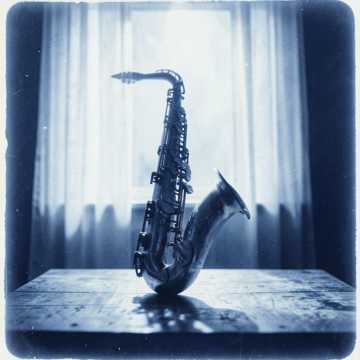
Midnight in G Minor
A slow, unhurried jazz meditation set in G minor. Warm tenor saxophone phrases drift over gentle piano, soft walking bass, and brushed drums, while tape saturation and vinyl crackle create an intimate late-night mood of solitude, reflection, and quiet elegance.
03:52
6 days ago

ATOMGRAD - khvostov (AIM session) metallic 3
A tense, motivational electronic soundscape where metallic machine fragments, alien whispers, cosmic Moog sequences, analogue tape warmth, and clipped percussion create a stark journey through industrial space and retro-futurist atmosphere.
03:28
6 days ago

ATOMGRAD - khvostov (AIM session) metallic 3
An instrumental journey through a shadowy futuristic landscape, where metallic percussion, whispered alien textures, suspended pulses, cosmic Moog patterns, and analogue tape warmth create dramatic tension between industrial machinery and vast interstellar silence.
03:28
6 days ago

ATOMGRAD - khvostov (AIM session) metallic 3
An instrumental voyage through a shadowy retro-futurist landscape, where suspended Berlin School pulses, cosmic Moog sequences, alien whispers, metallic accents, and clipped snares evoke abandoned laboratories, Soviet space technology, and distant signals from an unknown world.
03:43
6 days ago
ATOMGRAD - khvostov (AIM session) metallic 2
An instrumental descent into a mechanical cosmos, where suspended Berlin School pulses, Moog arpeggios, alien whispers, metallic accents, and clipped snares create a dramatic atmosphere of isolation, technological awe, and Soviet-era analog mystery.
03:35
6 days ago

ATOMGRAD - khvostov (AIM session) metallic 2
A stark cosmic soundscape shaped by suspended pulses, metallic percussion, alien whispers, and drifting modal synthesizers. Its restrained darkwave atmosphere moves between Soviet analogue nostalgia and futuristic machine mystery, creating a dramatic soundtrack for nocturnal exploration, science fiction, and psychological introspection.
03:33
6 days ago
ATOMGRAD - khvostov (AIM session) metallic 2
A stark, cinematic instrumental journey through metallic percussion, whispered machine-like textures, suspended pulses, and cosmic Moog sequences. Its Soviet analogue character and darkwave restraint create a mysterious atmosphere suited to dystopian sci-fi, immersive installations, nocturnal travel, and introspective listening.
03:34
6 days ago

ATOMGRAD - khvostov (AIM session) metallic
A slow, atmospheric electronic composition where metallic whispers, analogue tape grain, cosmic Moog patterns, and clipped snares create a stark industrial landscape. Its restrained darkwave frame and modal shifts evoke Soviet-era futurism, abandoned machinery, nocturnal travel, and cinematic introspection.
03:38
6 days ago
ATOMGRAD - khvostov (AIM session) metallic
A suspended metallic soundscape where Soviet analogue warmth meets cosmic Moog motion. Slow pulses, clipped snares, whispered robotic fragments, and modal shifts create an austere atmosphere suited to dystopian film, nocturnal travel, immersive installations, and focused listening.
03:44
6 days ago
ATOMGRAD - khvostov (AIM session) metallic
An instrumental electronic piece that turns restrained darkwave tension into a slow-moving cosmic transmission. Saturated analogue textures, suspended rhythm, robotic metallic fragments and modal shifts evoke an abandoned orbital station caught between Soviet futurism and nocturnal Berlin.
03:44
6 days ago

ATOMGRAD - khvostov (AIM session)
Инструментальная электронная композиция без вокального текста: медленный подвешенный пульс, космические арпеджио Moog, резкие удары малого барабана и металлический хор формируют холодный, загадочный саунд с эстетикой советской аналоговой эпохи.
03:59
6 days ago
Introduction to Analog Tape: Definition and History
Analog Tape refers to a type of magnetic tape used for recording and reproducing sound in analog form. Unlike digital recording, which captures sound as numerical data, analog tape records continuous electrical signals onto a magnetically coated strip. Its history dates back to the 1930s when Fritz Pfleumer invented the magnetic tape concept, and it gained widespread use in the 1940s and 1950s, revolutionizing the music recording industry. Analog tape allowed for multi-track recording, editing flexibility, and a warm, saturated sound that became highly valued by musicians and producers. Over decades, it has been used in everything from studio albums to radio broadcasts, and even today, it remains popular among audiophiles for its distinctive sonic qualities.
Sub-tags and Classifications of Analog Tape Music
Tape Saturation
TapeAnalog Tape Content Creation Saturation refers to the subtle distortion and harmonic enhancement that occurs when audio signals are recorded at high levels on analog tape. This sub-tag is characterized by warm, rich tones and a natural compression effect that digital recording often struggles to replicate. Artists often use tape saturation to add depth and warmth to drums, vocals, and guitars.
Lo-Fi Analog Tape
Lo-Fi Analog Tape music emphasizes imperfections such as tape hiss, wow and flutter, and slight pitch variations. This sub-tag is often associated with vintage aesthetics, indie music, and experimental soundscapes. The charm of Lo-Fi Analog Tape lies in its nostalgic and organic sound textures, which evoke a sense of authenticity and intimacy.
Multi-Track Analog Tape
Multi-Track Analog Tape refers to recording multiple individual audio tracks on separate tape tracks, allowing for complex arrangements and detailed mixing. This classification was crucial in the 1960s and 1970s for studio recordings, enabling artists to layer instruments and vocals with precise control while maintaining the signature warmth of analog tape.
Tape Loop and Experimental Techniques
This sub-tag focuses on creative uses of analog tape, such as tape loops, reversing, and splicing. Artists and experimental musicians use these techniques to create repeating motifs, unusual textures, and sound manipulations that are impossible with traditional instruments or digital recording methods. It has been a foundation for genres like musique concrète and early electronic music.
Famous Artists and Iconic Works Using Analog Tape
The Beatles
The Beatles extensively used analog tape techniques in their recordings, particularly during the 'Sgt. Pepper's Lonely Hearts Club Band' era. They pioneered tape loops, reverse recordings, and multi-track layering, which became groundbreaking in popular music production.
The Beatles – 'Tomorrow Never Knows'
This song features pioneering tape loop techniques, including reversed recordings and manipulated sound textures. It showcases the innovative use of analog tape to create psychedelic soundscapes, demonstrating the creative possibilities beyond conventional recording.
Pink Floyd
Pink Floyd utilized analog tape to craft atmospheric and immersive soundscapes, especially in albums like 'The Dark Side of the Moon.' Tape delay, loops, and subtle saturation contributed to their signature sonic depth.
Pink Floyd – 'Time'
Recorded on multi-track analog tape, 'Time' utilizes tape delay and analog effects to build a spacious, immersive auditory environment. The natural saturation and warmth of the tape enhance the emotional impact of both vocals and instrumentation.
Brian Eno
Brian Eno’s work with tape loops and ambient music techniques demonstrated the creative potential of analog tape. His experimental approach redefined ambient music and influenced generations of electronic and experimental musicians.
Brian Eno – 'Discreet Music'
This work is an exemplar of ambient music using tape loops. Eno employed extended tape recordings and loop manipulation to create evolving textures and patterns, highlighting the experimental power of analog tape as a compositional tool.
Radiohead
Radiohead has incorporated analog tape effects in both studio albums and live recordings, blending digital production with tape saturation and loop techniques to create textured, dynamic sounds that maintain warmth and character.
Application Scenarios for Analog Tape Music
Analog Tape is often used in movie soundtracks to achieve warmth, nostalgia, and cinematic depth. The natural saturation and tape compression can enhance emotional resonance and complement orchestral or electronic scores.
Movie Soundtracks
In advertising, analog tape can add a vintage or authentic feel to jingles and soundtracks. Its distinctive sonic signature helps brands evoke emotion and create a memorable auditory identity.
Advertising Music
Game developers and composers use analog tape techniques to add character and texture to background music. The organic, imperfect qualities of tape recordings enrich immersive gameplay experiences.
Video Game Background Music
Analog tape remains popular for live recordings and archival projects because it captures sound with a natural dynamic range and warmth. This makes it ideal for preserving the authenticity of performances and historical audio material.
Live Recording and Archival Projects