Free Classical Music Generator Powered by AI
Turn text into high-quality Classical music effortlessly – no login required!

music.toolTips

Трогать руками
Песня рассказывает о человеке, который переживает одиночество, предательство и разрушение прежних убеждений, но находит силу подняться со дна. Он учится принимать удары, идти вперёд, касаться света и не сгорать, сохраняя способность чувствовать и сопротивляться.
03:19
5 days ago

Descending Ostinato
'Descending Ostinato' is a slow classical passacaglia featuring a delicate, romantic piano melody anchored by a repeating descending bass. Restrained chamber strings gradually build to a deeply emotional climax before softly receding, creating an intimate, evocative soundscape filled with poetic nostalgia and nuanced dynamic depth.
03:09
Invalid date

Die Liebe bleibt
'Die Liebe bleibt' ist eine ergreifende Pop-Ballade über Verlust, Trauer und unvergängliche Liebe. Mit sanften Akustikelementen, tiefem Männervokal und eindringlichem Chor beschreibt der Song den Schmerz des Vermissens, aber auch die tröstliche Erkenntnis, dass die Liebe über den Tod hinaus im Herzen weiterlebt.
05:29
5 days ago
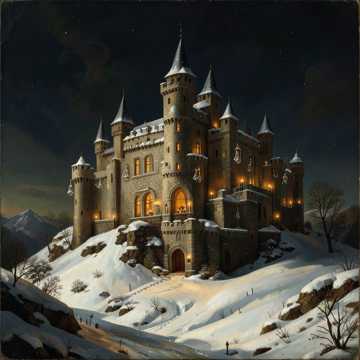
Midnight at the Snowbound
作品以孤独清澈的水晶钟声开启,逐层引入小提琴、连奏弦乐、庄严合唱与完整节日管弦乐。旋律缓慢展开,在温柔、神圣与奇幻之间流动,最终抵达宽广而感人的冬夜高潮,仿佛雪封城堡在午夜烛光中苏醒。
03:13
5 days ago

من سکوت
این اثر نوستالژیک با تلفیقی از موسیقی کلاسیک و ریتم متوسط، روایتی دردناک از عشقی یکطرفه و تنهایی در حضور معشوق است. ترانهای غرق در حسرت که با تصویرسازی شبی بارانی، جدایی و جدال درونی عاشق را به تصویر میکشد.
01:11
6 days ago

Contrapuntal Fugue
A disciplined minor-key fugue for keyboard, shaped by four interlocking voices. Its measured pulse, flowing eighth notes, warm harpsichord articulation, and carefully controlled stretto create an atmosphere of intellectual tension that resolves through a formal, resonant cadence.
02:32
6 days ago

Bittersweet Fairytale
A romantic-era-inspired piano character piece shaped like a fairytale: quiet melancholy opens the story, lyrical warmth brings it into bloom, and a graceful return leaves its emotions delicately unresolved.
02:45
6 days ago

Snow on the Bow
'Snow on the Bow' is an intimate, forlorn solo violin piece blending romantic adagio tempo with delicate rubato. Sighing legato phrases and evocative double-stops evoke a quiet, warm-lit Christmas atmosphere, beautifully capturing winter isolation, tender nostalgia, and peaceful solitude.
03:34
Invalid date

C Minor Urgency
A forceful instrumental symphonic movement in C minor, shaped by a relentless four-note rhythm. Tightly articulated strings, deep orchestral weight, timpani, brass, and woodwinds intensify the sonata-like development until rising tension resolves in a commanding and decisive climax.
02:47
Invalid date
seni en cok
'Seni en cok', klasik müzik düzenlemesi ve büyüleyici kadın vokaliyle derin bir sevgi ve özlem hissini canlandırıyor. Zarafet dolu melodileri ve dramatik yapısıyla dinleyiciyi ruhun en hassas noktalarına dokunan bir yolculuğa çıkarıyor.
03:10
6 days ago
seni en cok
'Seni En Çok', klasik müziğin zengin enstrümantasyonu ve derin duygusal derinliğiyle harmanlanmış zamansız bir eserdir. Sevginin en saf halini büyüleyici keman ve piyano tınılarıyla anlatan bu beste, dinleyiciyi romantik ve huzur dolu bir duygu atmosferine davet eder.
02:59
6 days ago
La trilogie de l'amour
Un chevalier voue un amour absolu à une femme idéalisée, puis traverse l'exil et le deuil sans renier son serment. La chanson oppose l'amour fidèle aux passions fugitives et fait de l'espoir une lumière capable de survivre à l'abîme.
07:38
6 days ago

Graceful Andante
'Graceful Andante' is an intimate classical chamber-orchestral instrumental featuring warm piano, pizzicato strings, woodwinds, and gentle harp accents. Its steady pulse, flowing melodies, and restrained dynamics create an unobtrusive, elegant acoustic tapestry tailored for culinary tutorials, instructional videos, and relaxing ambiance.
04:59
6 days ago

صبحانهٔ کلاسیک
«صبحانهٔ کلاسیک» قطعهای بیکلام و ظریف در سبک کلاسیک است که با آرپژهای ملایم پیانو، آرپژهای چنگ، ویولنهای پیتزیکاتو و نوای گرم کلارینت، فضایی باطراوت و دلپذیر میسازد. این اثر، حس آرامش، صمیمیت و نشاط یک صبح دلانگیز را به زیبایی تصویر میکشد.
03:05
6 days ago
A peaceful, abundant life I can feel...
Bài hát là khúc ca tự sự bình yên về ước mơ xây dựng mái ấm, cuộc sống tự do và an nhiên tại Mỹ vào năm 2026. Với giai điệu cổ điển dịu êm, tác phẩm mang lại cảm giác thư thái và hy vọng mãnh liệt.
07:02
6 days ago

THE SIGNAL BEYOND THE STARS
'THE SIGNAL BEYOND THE STARS' is a serene, cinematic orchestral pop journey following explorer Sabrina Chinsauba. Driven by an ancient signal, she ventures through cosmic oceans and alien worlds, learning that true discovery lies in spreading wisdom, peace, and love across the universe.
07:10
6 days ago

TÍN HIỆU TỪ THIÊN HÀ XA XÔI
'Tín Hiệu Từ Thiên Hà Xa Xôi' là bản giao hưởng điện ảnh mang đậm tính sử thi và huyền ảo. Bài hát kể về hành trình khám phá vũ trụ bao la của nhân vật Sabrina, nơi lòng quả cảm, tình yêu thương và khát vọng hòa bình thắp sáng từng ngọn sao xa.
05:48
6 days ago

Instant love
A sentimental romantic song about being overwhelmed by immediate attraction to a stranger who feels heaven-sent. Through a recurring, hopeful chorus, it imagines two hearts joining in a shared dream and asks whether sudden love can grow into a lasting future.
03:28
6 days ago
Kackduft am Morgen
'Kackduft am Morgen' ist eine bizarre, humorvolle Opern-Arie, die epischen klassischen Gesang mit extrem provokanten, absurd-satirischen Texten kombiniert. Das Werk bricht heitere Morgenromantik durch derben Fäkalhumor und schafft dadurch eine faszinierende, hochkontrastreiche musikalische Parodie voller vokaler Dramatik.
02:03
6 days ago
Moonlit Sonata
An instrumental classical symphony that moves from intimate piano and chamber textures into sweeping orchestral grandeur before returning to delicate first-chair strings. Its serene, cinematic arc evokes moonlit solitude, refined romance, and the luminous elegance of an imagined18th-century concert hall.
03:13
6 days ago
Introduction to Classical Music
Classical music, often referred to simply as 'Classical,' is a broad genre of music that originated in the traditions of Western culture, encompassing a wide period from the medieval era to the present day. Its development spans several centuries, with its roots deeply embedded in the liturgical and secular music of the Western world. The genre is characterized by its emphasis on formal styles, complex structures, and the use of notation to ensure precise performances. The Classical era itself, which ranges from the mid-18th century to the early 19th century, is often considered the pinnacle of this genre, marked by the works of composers like Haydn, Mozart, and Beethoven. Over time, Classical music has evolved, influencing and incorporating various styles and innovations from different periods and regions.
Sub-tags and Classifications of Classical Music
Baroque
The Baroque period, spanning from approximately 1600 to 1750, is known for its elaborate musical ornamentation, contrasting dynamics, and the development of tonality. Key composers of this era include Johann Sebastian Bach, George Frideric Handel, and Antonio Vivaldi. Baroque music often features complex counterpoint and was typically composed for both religious and secular settings.
Classical Period
The Classical period, roughly from 1750 to 1820, emphasized clarity, balance, and form, moving away from the ornate style of the Baroque. Composers such as Wolfgang Amadeus Mozart, Joseph Haydn, and Ludwig van Beethoven are central to this era. The music of the Classical period is known for its clear structure, with the sonata form being a dominant compositional method.
Romantic
The Romantic era, from about 1820 to 1900, focused on emotional expression, individualism, and the expansion of the orchestra. This period saw composers like Franz Schubert, Johannes Brahms, and Richard Wagner pushing the boundaries of traditional forms to convey deeper emotional content and dramatic intensity. Romantic music often features rich harmonies, dynamic contrasts, and expansive melodic lines.
20th Century and Contemporary
The 20th century and contemporary classical music reflect a broad range of styles, techniques, and ideologies, from the atonal works of Arnold Schoenberg to the minimalist compositions of Philip Glass. This period is marked by experimentation, the blending of classical traditions with modern and popular music influences, and the use of new technologies in composition and performance.
Famous Artists and Works in Classical Music
Ludwig van Beethoven
Beethoven is one of the most influential composers in the history of Western music. His works, including the 'Symphony No. 9' and 'Moonlight Sonata,' bridge the Classical and Romantic eras, showcasing his innovative use of form, harmony, and orchestration. Beethoven's music is renowned for its emotional depth and technical brilliance.
Symphony No. 9 in D minor, Op. 125
Beethoven's Symphony No. 9, also known as the 'Choral Symphony,' is a monumental work that introduced the use of a choir and vocal soloists in the final movement. The symphony's fourth movement features the famous 'Ode to Joy' theme, which has become an anthem for unity and brotherhood. This work is celebrated for its innovative structure, emotional depth, and powerful themes.
Wolfgang Amadeus Mozart
Mozart was a prolific composer who produced more than 600 works, including symphonies, operas, chamber music, and concertos. His compositions, such as 'The Magic Flute' and 'Requiem,' are celebrated for their melodic beauty, structural clarity, and emotional expressiveness.
The Magic Flute, K. 620
Mozart's 'The Magic Flute' is a two-act opera that blends elements of German singspiel with deep philosophical themes. The work is noted for its masterful use of orchestration, memorable arias, and the portrayal of complex characters. The opera remains one of the most performed works in the operatic repertoire.
Johann Sebastian Bach
Bach is often considered the greatest composer of the Baroque era. His works, such as the 'Brandenburg Concertos' and 'The Well-Tempered Clavier,' are revered for their complex counterpoint, rich harmonies, and intellectual depth. Bach's music has had a profound influence on subsequent generations of composers.
Brandenburg Concertos
Bach's 'Brandenburg Concertos' are a collection of six instrumental works that exemplify the Baroque concerto grosso form. Each concerto features a unique combination of instruments and showcases Bach's skill in fusing counterpoint with virtuosic demands. These works are celebrated for their complexity, creativity, and enduring appeal.
Frédéric Chopin
Chopin, a leading figure in the Romantic era, is known for his piano compositions, which include nocturnes, études, and sonatas. His music is characterized by its poetic lyricism, technical demands, and emotional intensity. Works like the 'Nocturne in E-flat major, Op. 9 No. 2' remain cornerstones of the piano repertoire.
Piano Concerto No. 2 in F minor, Op. 21
Chopin's Piano Concerto No. 2 is a Romantic masterpiece that highlights the expressive possibilities of the piano. The concerto is known for its lyrical second movement, which showcases Chopin's ability to convey deep emotion through subtle harmonic shifts and delicate phrasing. This work remains a favorite among pianists and audiences alike.
Application Scenarios for Classical Music
Classical music is frequently used in movie soundtracks to enhance the emotional depth of scenes and convey complex narratives. Works such as Richard Wagner's 'Ride of the Valkyries' or Johann Pachelbel's 'Canon in D' are often used to evoke specific moods or underscore dramatic moments.
Movie Soundtracks
In advertising, Classical music is often used to create a sense of elegance, sophistication, and timelessness. Pieces like Mozart's 'Eine kleine Nachtmusik' are commonly used in commercials to convey a refined atmosphere or appeal to a high-end market.
Advertising Music
Classical music is also used in video games to enhance the gaming experience, particularly in titles that require a grand or epic feel. For example, Gustav Holst's 'Mars, the Bringer of War' from 'The Planets' suite is often used in strategy games to create tension and anticipation.
Game Background Music