Free Marian Music Generator Powered by AI
Turn text into high-quality Marian music effortlessly – no login required!

music.toolTips
Dsfs
A devotional chillout hymn honoring Fr. Carlo Cavina, founder of the Daughters of St. Francis de Sales. Its prayerful lyrics celebrate his compassion for children, steadfast faith through suffering, and living call to love, serve, and lead others to Christ.
05:45
2026-08-24
Maryja idzie obok
Intymna, modlitewna pieśń o podążaniu za Jezusem w świetle poranka, oddaniu życia w Jego dłonie oraz cichej obecności Maryi. Powolna gitara klasyczna i spokojny głos budują atmosferę zaufania, skupienia i duchowego prowadzenia.
00:54
2026-08-16
Maryjo Prowadź Nas
Powtarzalna pieśń uwielbienia jest prostą, osobistą modlitwą do Maryi o prowadzenie ku Jezusowi. Jej oszczędna forma, ciepły wokal i kontemplacyjne brzmienie podkreślają ufność, pokorę oraz pragnienie życia zgodnego z Bożą wolą.
02:13
2026-08-15
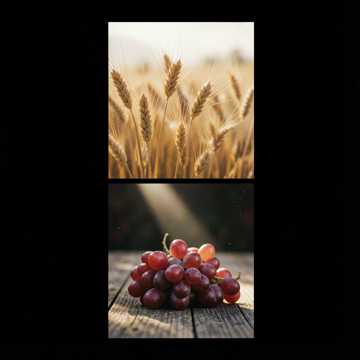
Sois bénie, Marie de la Vie
Cette chanson célèbre Marie comme guide vers Jésus et invite à faire grandir l'amour, le pardon et la fraternité. Dans un paysage de moissons, de vendanges et de tables ouvertes, l'assemblée chante une prière estivale, douce et pleine d'espérance.
03:18
2026-08-15
Maryjo Wieczór
Intymna pieśń wieczorna, w której Maryja prowadzi zagubione serce ku Jezusowi i pokojowi. Powtarzalny refren, spokojne tempo oraz oszczędna aranżacja budują atmosferę modlitwy, wyciszenia i bezpiecznej obecności podczas nocnej ciszy.
01:25
2026-08-13
Ô Vierge Sainte
Cet hymne marial exprime la confiance des pèlerins envers la Vierge Sainte. Entre supplication, protection et espérance, les couplets décrivent une foi éprouvée, tandis que le refrain choral transforme la prière intime en célébration collective.
04:02
2026-08-11
L' Angelus
Cette prière chantée médite l'Angelus à travers les heures du jour, l'Incarnation et le oui de Marie. Portée par une lenteur recueillie, elle rappelle que Dieu rejoint l'humanité et invite chacun à accueillir ce mystère au coeur de sa vie.
03:40
2026-08-11
Introduction to Marian Music
Marian music is a genre deeply rooted in the spiritual and devotional practices associated with the veneration of the Virgin Mary, particularly within the Christian tradition. Originating in the early centuries of the church, Marian music has evolved over time, blending sacred hymns, chants, and contemporary compositions that celebrate the life, virtues, and miracles attributed to Mary. The genre has seen various phases of development, from the medieval period, where Gregorian chants played a significant role, to the Renaissance and Baroque periods, which introduced more elaborate compositions. Today, Marian music continues to inspire composers and performers, serving as a cornerstone of liturgical celebrations and personal devotion.
Sub-tags and Classifications of Marian Music
Gregorian Chant
Gregorian Chant is one of the earliest forms of Marian music, characterized by monophonic, unaccompanied vocal music. It was developed during the early medieval period and became a central part of the liturgical tradition. These chants, often sung in Latin, express deep reverence for the Virgin Mary and are still performed in many traditional church settings today.
Marian Hymns
Marian Hymns are a classification of songs specifically composed to honor the Virgin Mary. These hymns have been a part of Christian worship for centuries, with well-known examples like 'Ave Maria' by Franz Schubert and Charles Gounod's rendition of Bach's 'Prelude in C Major.' They are often sung during Marian feasts, processions, and other religious ceremonies.
Contemporary Marian Music
Contemporary Marian Music refers to modern compositions that continue the tradition of honoring Mary but incorporate contemporary musical styles. This sub-tag includes works that blend traditional elements with modern genres such as pop, rock, and folk, appealing to a broader audience while maintaining the devotional aspect of Marian music.
Polyphonic Marian Motets
Polyphonic Marian Motets are complex, multi-voiced compositions that flourished during the Renaissance. These motets often set Latin texts dedicated to the Virgin Mary to intricate musical arrangements. Composers like Josquin des Prez and Palestrina were known for their Marian motets, which were performed in both liturgical settings and courtly environments.
Famous Artists and Works in Marian Music
Giovanni Pierluigi da Palestrina
Palestrina was a Renaissance composer renowned for his sacred music, including numerous Marian motets and masses. His work 'Missa Papae Marcelli' is a cornerstone of polyphonic music, and his Marian compositions are celebrated for their purity and devotional depth.
Ave Maria (Franz Schubert)
Schubert's 'Ave Maria' is a timeless piece that has become one of the most recognized and performed Marian hymns. Composed in 1825, it was originally part of a larger setting of Sir Walter Scott's 'The Lady of the Lake.' The piece is characterized by its lyrical melody and the serene beauty of its harmonic structure, making it a favorite in both liturgical and concert settings.
Franz Schubert
Schubert, a prominent composer of the Classical era, is best known for his 'Ave Maria,' a song that has become synonymous with Marian devotion. This piece, originally composed as part of his Op. 52, has transcended its origins to become one of the most performed Marian hymns worldwide.
Ave Maria... virgo serena (Josquin des Prez)
This motet, composed by Josquin des Prez, is a masterpiece of Renaissance polyphony. Written in the late 15th century, it features intricate vocal lines and a deep sense of spiritual reverence. The motet is structured in several sections, each dedicated to a different aspect of the Virgin Mary's life, and is praised for its expressive depth and technical mastery.
Josquin des Prez
Josquin des Prez was a master of Renaissance polyphony, known for his expressive and innovative compositions. His Marian motet 'Ave Maria... virgo serena' is one of the most famous works in the genre, showcasing his ability to blend complex musical structures with profound spiritual expression.
Missa Papae Marcelli (Giovanni Pierluigi da Palestrina)
Though primarily a mass setting, Palestrina's 'Missa Papae Marcelli' includes Marian elements that reflect his deep devotion to the Virgin Mary. Composed in 1562, the mass is considered a pinnacle of Renaissance choral music, known for its clarity, balance, and spiritual intensity. The work's Marian sections, in particular, highlight Palestrina's ability to convey deep religious emotion through music.
Application Scenarios for Marian Music
Marian music is often performed during liturgical celebrations, particularly on Marian feast days such as the Assumption and the Immaculate Conception. These compositions are used to enhance the spiritual atmosphere of the service, drawing worshippers into deeper contemplation of the Virgin Mary's role in Christian faith.
Liturgical Celebrations
During religious processions, especially in Catholic traditions, Marian hymns and chants are sung to accompany the faithful as they honor the Virgin Mary. These processions often take place during special events like the Feast of Our Lady of Guadalupe, where music plays a central role in the communal expression of devotion.
Religious Processions
Marian music has been featured in numerous films to underscore themes of faith, devotion, and spirituality. Composers often use Marian hymns or adaptations to evoke a sense of sacredness and reverence in scenes that depict religious or contemplative moments.
Film Soundtracks
Marian music is frequently used in meditative and prayerful environments, such as retreats, prayer groups, and personal devotional practices. The soothing and spiritual nature of these compositions helps create an atmosphere conducive to reflection and prayer.
Meditative and Prayerful Environments