Free Medieval Music Generator Powered by AI
Turn text into high-quality Medieval music effortlessly – no login required!

music.toolTips
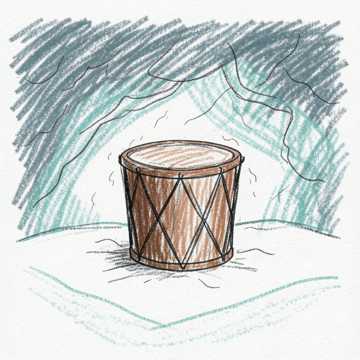
Frozen War Drum
A slow, mournful Nordic folk piece built around solo tagelharpa. Distant bowed drones gradually meet doubled strings and a grave frame-drum pulse before the arrangement retreats into a trembling, descending final phrase.
05:08
Invalid date
Corona Noctis
Hymnus narrat decem annos certaminis Noxvar contra hostes nocturnos. Sub ductu Valeriae et ardore Lyrae, populus vulneratus sed invictus ad coronam noctis progreditur, unitus una voce, una voluntate et ultima morte.
04:54
8 hours ago
Noxvar Sub Luna
Carmen narrat decem annos certaminis Noxvar contra filios tenebrarum. Regina Valeria et Lyra, filia gladii, populum sub luna nigra ducunt. Per sanguinem, cicatrices et ruinam, Noxvar una fide surgit, coronam servat et noctem tandem vincit.
03:55
8 hours ago
Noctis Regina
Carmen narrat Valeriam et Lyram, reginas noctis, quae post decem annos belli populum Noxvar contra Nightbringers ducunt. Sub choris militaribus et tonis obscuris, fraternitas, memoria sanguinis et victoria contra tenebras in unum clamorem insurgunt.
04:00
8 hours ago
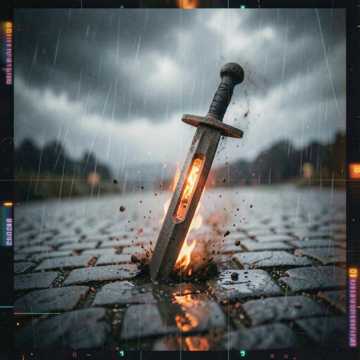
Daggerheart
Daggerheart follows a battle-forged survivor who transforms pain, scars, and defiance into an unbreakable oath. Its urgent verses, expansive harmonies, gang-vocal chorus, and triumphant final lift create a cinematic anthem of resilience, rebellion, and rising again when everything collapses.
04:59
14 hours ago
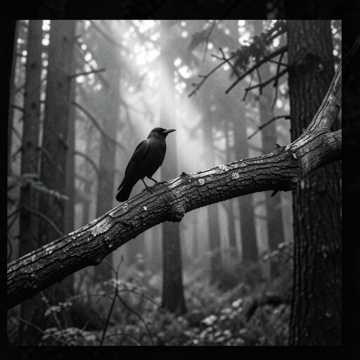
Corvus Manet
Cette ballade cérémonielle suit des guerriers happés par une forêt ancienne où le corbeau veille sur la mort et le destin. Entre refrains latins, narration française, chœurs épiques et percussions rituelles, la chanson transforme la disparition en pacte immémorial avec la terre sauvage.
06:44
15 hours ago
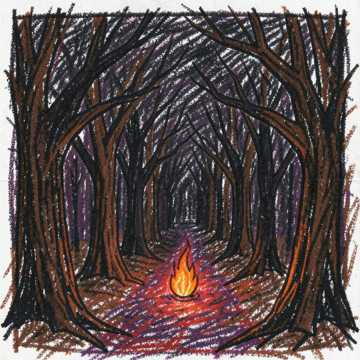
Corvus Manet
An ancient raven watches travelers enter unforgiving woods in pursuit of wealth and glory. Latin invocations, ominous folk rhythms, and escalating orchestral force frame a grim truth: the wilderness remembers every death, while fate rarely returns what darkness claims.
04:42
18 hours ago
Psalm I: Beneath the Five Suns
A reverent antiphonal psalm invokes Aurora and her Five Suns as complementary sacred virtues. Through cantor-and-choir exchanges, it condemns chosen blindness, cruelty, tyranny, and despair, then closes with a communal vow to preserve light and stand watch against gathering darkness.
06:14
19 hours ago
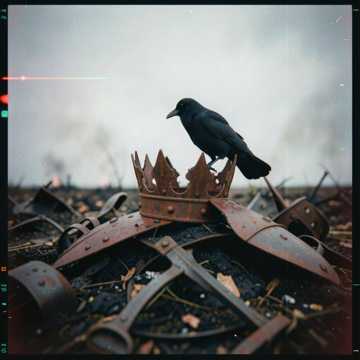
WHERE CROWS BECOME KINGS- fix ending
A devastating anti-war metal anthem portraying conflict as an engine of forgotten names, broken families, and false glory. Through cinematic orchestration, dissonance, layered screams, and mournful imagery, it argues that war is conquered only by refusing its call.
05:50
21 hours ago
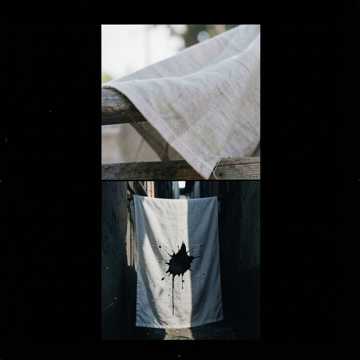
Aunt Mabel’s Label
A rustic narrator recounts the ominous discovery of a black label attached to Aunt Mabel’s washing. Framed as a cautionary tavern tale, the song turns curiosity, gossip, and an ordinary stain into a playful yet unsettling folk superstition.
04:02
22 hours ago
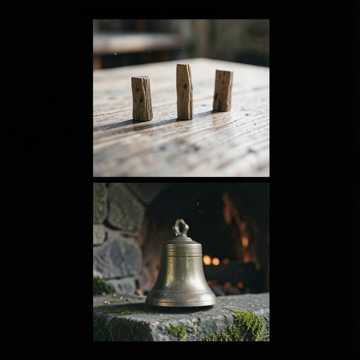
Tom Delaney's Noggin
A humorous bard song follows the narrator’s baffling count of three wooden pegs on Tom Delaney’s head. Set in a lively stone inn, the tale grows through teasing, clattering rhythms, and communal laughter, turning Tom’s eccentric noggin into a memorable piece of tavern folklore.
03:00
22 hours ago
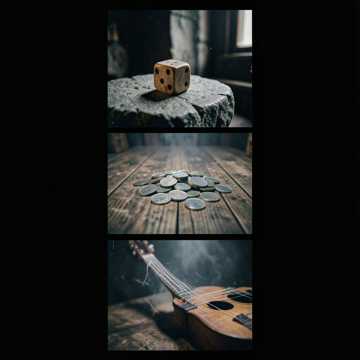
Dice Under Stone
A mischievous medieval tavern instrumental built on a swaying6/8 rhythm. Sparse drums, low drones, pipes, lute, lyre, fiddle, and coin-on-wood textures create the uneasy thrill of gambling in a dim, crowded room.
03:55
1 days ago
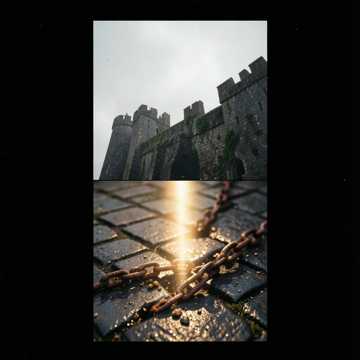
Der Fall des Zornbold
Eine Frau trauert um Norman, der unter Zornbolds Terror fiel. Als die Streiter Innos' die Burg erstürmen, wird der Tyrann gerichtet. Sein Sturz beendet die Unterdrückung und schenkt Archolos Gerechtigkeit, Frieden und neuen Glanz.
04:09
1 days ago
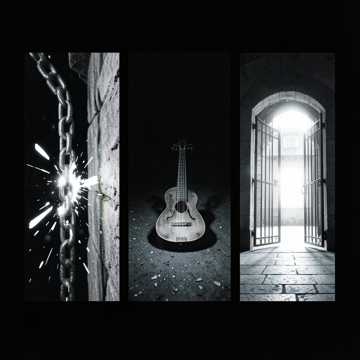
Der Fall des Zornbold
Eine trauernde Frau und die Streiter Innos' erleben den gewaltsamen Sturz des Tyrannen Zornbold. Zwischen Rache, Verlust und heiliger Gerechtigkeit besingt das Lied den Sieg für Archolos und den Beginn einer friedlicheren Zeit.
06:06
1 days ago
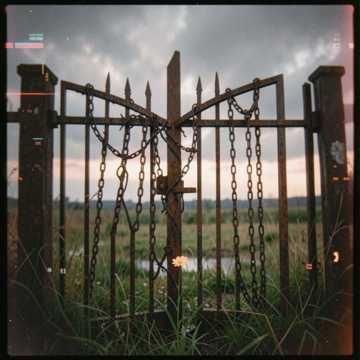
Der Fall des Zornbold
Ein dunkles, heroisches Volkslied schildert den Fall des Tyrannen Zornbold durch die Streiter Innos’. Zwischen Trauer um Norman, göttlicher Gerechtigkeit und dem Kampf um Archolos wächst eine Hymne auf Freiheit, Vergeltung und den Beginn einer friedlichen neuen Zeit.
05:33
1 days ago
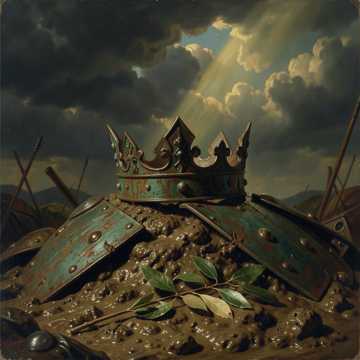
Agincourt Crown
A cinematic anthem about Henry V overcoming youthful doubt, uniting soldiers across class, and leading England through the mud and terror of Agincourt. Its repeated call for remembrance transforms personal growth and wartime sacrifice into enduring legend.
03:28
Invalid date
Baldur's Gate
An epic fantasy soundtrack about survivors crossing a ruined city, confronting gods, enemies, lost memories, and impossible choices. Bound by fate and strengthened by friendship, they advance toward one final stand beyond Baldur's Gate.
03:32
Invalid date
Baldur's Gate
A cinematic medieval-fantasy anthem follows survivors through ruined streets, divine shadows, betrayal, and mind-altering danger. Its repeated chorus transforms personal loss into a collective vow: face the final battle together before the world falls.
04:17
Invalid date
Stone Memory
Stone Memory follows a grieving narrator drawn back to a ruined sacred place by memories of a lost loved one. Ancient symbols, ashes, shadows, and flame transform sorrow into spiritual awakening, while the song builds from intimate confession to a powerful orchestral release.
04:30
1 days ago
The afterward
A grieving warrior community walks across a frozen battlefield, honors fallen brothers, and finds comfort in Norse mythology. Through shields, fire, mead, and memory, sorrow becomes a solemn celebration of courage, sacrifice, and reunion in Valhalla.
04:34
1 days ago
Introduction to Medieval Music
Medieval music refers to the music of the Middle Ages, a period that spans from roughly the 5th to the 15th century. This genre of music emerged from the remnants of the Roman Empire and developed into a distinctive form that reflected the social, religious, and cultural transformations of Europe during that time. Medieval music can be broadly divided into two categories: sacred and secular. Sacred music was primarily connected to the church, including Gregorian chant and liturgical pieces, while secular music encompassed folk songs, ballads, and troubadour melodies. The development of notation systems, such as neumes, allowed for the preservation and dissemination of Medieval compositions, setting the foundation for Western music traditions.
Sub-tags and Classifications of Medieval Music
Gregorian Chant
Named after Pope Gregory I, Gregorian Chant is a form of plainchant used in the liturgical services of the Catholic Church. It is characterized by monophonic, unaccompanied vocal music with free-flowing, modal melodies. The chant's rhythm is non-metrical, designed to follow the natural inflections of the Latin text, enhancing the spiritual and meditative aspects of worship.
Troubadour Music
Troubadour music refers to the secular songs composed and performed by poet-musicians in the courts of Southern France, Northern Spain, and Italy during the 12th and 13th centuries. These songs often focused on themes of chivalry and courtly love, characterized by lyrical poetry and melodies. Troubadours played a significant role in shaping the tradition of lyrical composition and storytelling in Western music.
Organum
Organum represents one of the earliest forms of polyphony, where a plainchant melody is accompanied by one or more additional voice parts. Emerging in the 9th century, organum evolved from parallel movement to more complex forms, such as free and melismatic organum. This development marked a significant step towards the intricate polyphonic compositions of the later Medieval period.
Ars Nova
The Ars Nova ('New Art') movement of the 14th century introduced innovations in rhythmic notation, allowing for greater complexity and variation in musical compositions. This era saw the rise of isorhythmic motets and the use of syncopation, which laid the groundwork for the transition from Medieval to Renaissance music. Composers like Philippe de Vitry and Guillaume de Machaut were pioneers of this style, pushing the boundaries of musical form and expression.
Famous Artists and Classic Works in Medieval Music
Hildegard von Bingen
Hildegard von Bingen was a German Benedictine abbess, writer, and composer of the 12th century. She is renowned for her contributions to sacred music, particularly her collection of compositions known as 'Symphonia armoniae celestium revelationum.' Hildegard's works are characterized by soaring melodies and vivid texts, which often drew upon her mystical visions, blending religious devotion with musical innovation.
Messe de Nostre Dame by Guillaume de Machaut
This iconic work is one of the first known polyphonic settings of the complete Mass Ordinary. Composed in the mid-14th century, 'Messe de Nostre Dame' showcases Machaut's mastery of polyphony and rhythmic sophistication. The composition includes movements like the Kyrie and Gloria, characterized by their complex interweaving of vocal lines and innovative use of isorhythmic techniques, which were revolutionary for their time.
Guillaume de Machaut
A leading figure of the Ars Nova movement, Guillaume de Machaut was a French poet and composer of the 14th century. His most famous work, 'Messe de Nostre Dame,' is the earliest known complete setting of the Ordinary of the Mass by a single composer. Machaut's use of intricate polyphony and rhythmic complexity in both sacred and secular music significantly influenced the transition to Renaissance music.
Carmina Burana
Although not strictly a single work but a collection of 13th-century poems set to music, 'Carmina Burana' provides insight into the secular music of the Medieval period. These pieces, written by Goliards—students and clerics—cover topics ranging from satire to love. The vibrant melodies and rhythmic patterns in 'Carmina Burana' highlight the lively and sometimes irreverent spirit of Medieval secular music.
Perotin
Perotin was a prominent composer of the Notre Dame School of polyphony in the late 12th and early 13th centuries. He is known for his development of organum, particularly the composition of multi-voice pieces such as 'Viderunt omnes.' Perotin's works exemplify the early stages of polyphonic music, characterized by their harmonic complexity and structural clarity.
Viderunt omnes by Perotin
A seminal example of early polyphonic music, 'Viderunt omnes' by Perotin is a four-voice organum composed for the Feast of the Circumcision. This work demonstrates the complexity of Notre Dame polyphony, with its layered vocal lines and dynamic interplay of melodic motifs. Perotin's composition illustrates the evolution of Medieval music from monophonic chant to richly textured polyphonic structures.
Application Scenarios for Medieval Music
Medieval music is frequently used in historical and fantasy films to create an authentic atmosphere that transports audiences to the Middle Ages. Films like 'The Name of the Rose' and 'Kingdom of Heaven' utilize Gregorian chants and medieval instrumentals to enhance the storytelling, providing a sense of time and place that aligns with the narrative.
Movie Soundtracks
Many video games set in medieval or fantasy worlds, such as 'The Elder Scrolls' series or 'Assassin's Creed,' incorporate Medieval music into their soundtracks. This genre helps to immerse players in the game environment, evoking the sounds of ancient castles, bustling medieval markets, and epic battles, thus enriching the overall gaming experience.
Video Game Background Music
Medieval music plays a crucial role in themed events such as Renaissance fairs, historical reenactments, and medieval banquets. Performers use traditional instruments like the lute, harp, and hurdy-gurdy to recreate the soundscapes of the Middle Ages, providing an authentic auditory backdrop that enhances the atmosphere and educational value of these events.
Themed Events and Reenactments
The calming and spiritual nature of Gregorian chant and other forms of sacred Medieval music makes it suitable for use in therapeutic and meditation settings. These compositions, with their repetitive structures and soothing harmonies, are often employed to promote relaxation, reduce stress, and aid in mindfulness practices.
Therapeutic and Meditation Settings