Free Monastic Music Generator Powered by AI
Turn text into high-quality Monastic music effortlessly – no login required!

music.toolTips
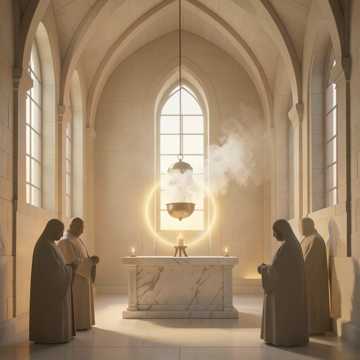
Тихий Дым Ладана
A sacred chant in the Byzantine Orthodox tradition, invoking divine grace and peace through solemn lyrics and resonant harmonies. With elements of monastic prayer and reverent simplicity, this AI-generated piece offers a deeply meditative experience.
04:44
4 days ago
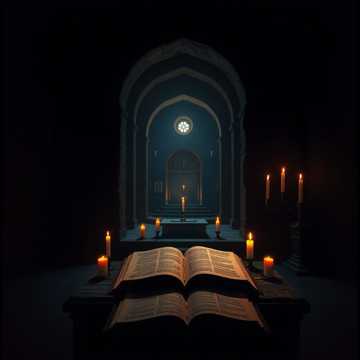
Свете Тихий
A prayerful chant invoking divine mercy, peace, and light, blending slow, resonant monastic tones with sacred Russian Orthodox imagery. The song features a rich, cavernous atmosphere and deep supplications from male voices in unison, with a final doxological lift.
04:40
4 days ago
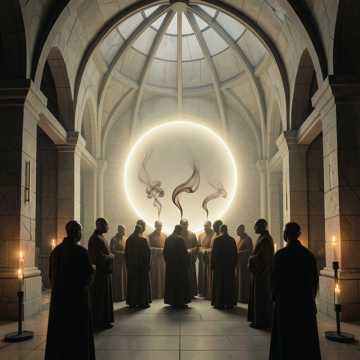
Свете Тихии
A meditative Byzantine chant in Church Slavonic, invoking mercy and inner peace through low male choir drones, stepwise melodic lines, and solemn monastic resonance.
03:44
4 days ago
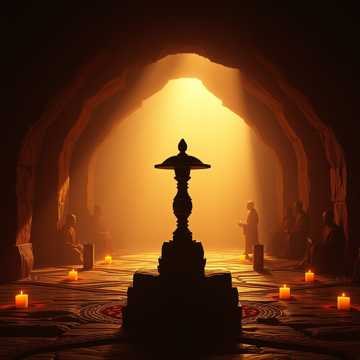
Камень Милости
A reverent monastic chant invoking divine mercy and guidance. 'Камень Милости' explores faith, the sanctity of prayer, and spiritual endurance with rich harmonic layers and ancient melodic structures.
03:09
4 days ago
Валаамский покой
Торжественный православный гимн, создающий духовное умиротворение через глубокий резонанс, молитвенные строки и монастырскую атмосферу, погружая слушателя в созерцательную тишину Валаама.
02:58
4 days ago

Свете Валаамский
A deeply spiritual Byzantine chant in Church Slavonic, 'Свете Валаамский' channels supplication and reverence through layered monastic voices, slow modal cadences, and meditative ison drones, evoking divine presence and inner reflection.
04:01
4 days ago
Утренний звоны
Медитативный православный гимн с молитвенным текстом, погружающий в духовное созерцание и умиротворение через хор и традиционный византийский стиль.
04:00
4 days ago
Молитва о свете
A meditative Orthodox chant invoking divine mercy, guiding the listener through prayerful introspection and spiritual illumination with slow, resonant male choir and sacred drones.
05:15
4 days ago
Тихий Звон
A contemplative and prayerful piece invoking divine mercy, featuring deep monastic chants and rich harmonies. The lyrics reflect themes of repentance, devotion, and hope in God's grace.
04:30
4 days ago
Во тишине келии
A deep, introspective prayer in the Russian Orthodox monastic chant style, invoking divine mercy and seeking spiritual renewal, set to a slow, resonant male choir with ancient reverence.
04:19
4 days ago
Тихий Валаам
Медленный византийский гимн, выражающий покаяние, молитву и духовное утешение через интимное сочетание хора, соло и глубокой монастырской акустики.
03:54
4 days ago
Тихий Свет Буди
A solemn, meditative hymn invoking divine protection and peace, blending deep male choir with ancient Byzantine chant traditions to create a sacred atmosphere of reflection and tranquility.
03:20
4 days ago
Свете Тихий Зов
Медитативная православная молитвенная песнь в византийском стиле, передающая смирение, покаяние и духовное утешение через камерное звучание хора и глубокие дроны.
04:35
4 days ago
Въ храмѣ тишины
A meditative monastic chant invoking divine mercy, blending deep unison drones with rising harmonies, embodying penitence, reverence, and spiritual ascent within a candlelit, sacred space.
04:04
4 days ago
Свѣтъ Тихій
A solemn, AI-generated hymn blending Byzantine Orthodox chant with Russian monastic resonance, expressing deep penitence and divine supplication. The song features rich vocal harmonies, a reflective atmosphere, and an invocation of spiritual grace.
04:15
4 days ago
Молитва валаамская
A heartfelt prayer in Orthodox chant, seeking divine mercy, repentance, and guidance through sacred petitions and deep, resonant harmonies. The song embodies reverence, humility, and spiritual yearning.
03:42
4 days ago
Utro na Valaame
A meditative Russian Orthodox chant evoking monastic dawn prayers, blending solemn unison, deep drones, and sacred atmosphere with echoes of Valaam's spiritual landscape.
03:43
4 days ago
Молитва на Валааме
Это молитвенное песнопение передает смирение, покаяние и стремление к духовному очищению через образ северного монастыря и внутренней тишины.
04:25
4 days ago
Свете Тихий Зов
A soul-stirring Russian Orthodox chant, 'Свете Тихий Зов' blends monastic devotion and ancient reverence, invoking mercy and protection from God through a lush Byzantine choral arrangement.
04:13
4 days ago
Светаго Иордана
A serene, AI-generated Byzantine chant invoking prayer, repentance, and divine solace, blending ancient ecclesiastical traditions with a deep male choir and a solemn melodic style.
05:00
4 days ago
Introduction to Monastic Music: Definition and History
Monastic music refers to the sacred music traditions rooted in monastic religious orders, particularly within Christianity. Its origins trace back to the early centuries of the Christian Church, where chants, hymns, and other forms of liturgical music were developed by monks and nuns as part of their spiritual practice. The most well-known form of Monastic music is Gregorian chant, which was standardized in the 9th century under Pope Gregory I. Monastic music is characterized by its meditative, contemplative nature and is typically performed a cappella, emphasizing a sense of spiritual purity and devotion. Over time, this genre has influenced various forms of Western sacred music and continues to be a significant part of religious ceremonies and practices.
Exploring the Sub-tags and Classifications of Monastic Music
Gregorian Chant
Gregorian Chant is the most iconic sub-tag within Monastic music. It consists of plainsong melodies sung in unison without instrumental accompaniment, typically by a choir of monks or nuns. The melodies are simple and follow a free rhythm, meant to align with the natural flow of the text being sung, often in Latin. Gregorian Chant was formalized during the Carolingian Renaissance and remains the most recognizable form of Monastic music.
Byzantine Chant
Byzantine Chant is a form of liturgical music used in the Eastern Orthodox Church and some Eastern Catholic Churches. Unlike Gregorian Chant, it features a modal system and employs a variety of melodic patterns. Byzantine Chant is monophonic and is usually performed by a choir or soloist. It is known for its rich modal structures and its capacity to convey deep emotional and spiritual expressions.
Ambrosian Chant
Ambrosian Chant is another early form of Christian liturgical music associated with the Ambrosian Rite of Milan. Named after Saint Ambrose, the chant is more rhythmically free than Gregorian Chant and has a distinct melodic structure. Ambrosian Chant has survived in the liturgical practices of the Milanese Church and is a vital part of the monastic tradition in that region.
Mozarabic Chant
Mozarabic Chant, also known as Visigothic Chant, is a liturgical chant of the Christian Church in the Iberian Peninsula before the arrival of the Gregorian Chant. It is characterized by its unique melodic forms and free rhythmic structure. Mozarabic Chant played a crucial role in the religious practices of the Mozarabic Christians and has influenced the development of other Western liturgical music traditions.
Notable Artists and Classic Works in Monastic Music
Saint Gregory I
Saint Gregory I, also known as Gregory the Great, is credited with organizing and codifying the chant that would later bear his name—Gregorian Chant. Although his direct involvement in the creation of the chants is debated, his influence on the development of Western liturgical music is undisputed. Gregorian Chant remains the most significant form of Monastic music, embodying the spiritual essence of the early Church.
Missa Orbis Factor
Missa Orbis Factor is a Gregorian chant mass, one of the most well-known and frequently performed settings of the Roman Catholic Mass. The work exemplifies the characteristics of Gregorian Chant—simple, unaccompanied melodies that emphasize the sacred text. Its structure and mode create a profound sense of reverence, making it a cornerstone of Monastic liturgical music.
Saint Hildegard of Bingen
Saint Hildegard of Bingen was a 12th-century Benedictine abbess, composer, and mystic whose contributions to Monastic music are profound. Her compositions, known as the 'Symphonia armoniae celestium revelationum,' consist of hymns, antiphons, and sequences that combine poetic text with soaring melodies. Hildegard's works are noted for their complexity and expressiveness, setting them apart from the more austere Gregorian Chant.
O Virtus Sapientiae
O Virtus Sapientiae is a chant composed by Saint Hildegard of Bingen. This piece is a prime example of Hildegard's unique style, which combines intricate melodic lines with vivid, mystical imagery in the text. The chant's ethereal quality reflects Hildegard's visionary experiences and her deep connection to the divine. It stands as a testament to her innovative contributions to Monastic music.
Leonin and Perotin
Leonin and Perotin were composers associated with the Notre Dame school of polyphony in the 12th and 13th centuries. They expanded the Monastic music tradition by introducing organum, an early form of polyphony that layered independent melodic lines over Gregorian Chant. Their innovations laid the groundwork for the development of Western classical music, blending the monastic tradition with emerging secular styles.
Viderunt Omnes
Viderunt Omnes, composed by Perotin, is a landmark work in the history of Western music. This piece is an example of organum, where multiple vocal lines are sung simultaneously over a Gregorian Chant. Viderunt Omnes showcases the transition from monophonic to polyphonic music, highlighting the creative evolution within the Monastic tradition while maintaining the spiritual solemnity of the chant.
Application Scenarios for Monastic Music
Monastic music, particularly Gregorian Chant, is often used in movie soundtracks to evoke a sense of spirituality, history, or solemnity. Films such as 'The Name of the Rose' and 'The Da Vinci Code' use Monastic music to enhance the atmosphere, grounding the narrative in a rich religious and historical context.
Movie Soundtracks
In video games, Monastic music is frequently used to underscore scenes set in cathedrals, monasteries, or during moments of reflection and mystery. The solemn tones of Gregorian Chant or Byzantine Chant can add depth and immersion, making the gaming experience more profound and emotionally resonant.
Video Game Background Music
Monastic music's serene and contemplative qualities make it an effective choice for advertising, particularly in campaigns related to wellness, luxury products, or travel. The timeless and tranquil nature of Monastic music can convey a message of peace, tradition, and authenticity, aligning well with brands that emphasize these values.
Advertising Music