Free Moral choice Music Generator Powered by AI
Turn text into high-quality Moral choice music effortlessly – no login required!

music.toolTips

BDtPK4
A player is summoned to overthrow the Pixel King, a tyrant ruling through coded violence. Chiptune textures collide with chugging metal riffs as the lyrics frame combat as both gameplay and moral choice, ending with the promise of peace after the screen goes dark.
03:35
1 days ago

BDtPK
BDtPK portrays a rebellion against a machine-born tyrant, blending video game imagery, moral choice, and apocalyptic combat. Its8-bit chiptune foundation collides with metalcore intensity and southern metal grit, creating a cinematic boss-battle anthem about sacrifice, freedom, and peace after destruction.
03:40
1 days ago
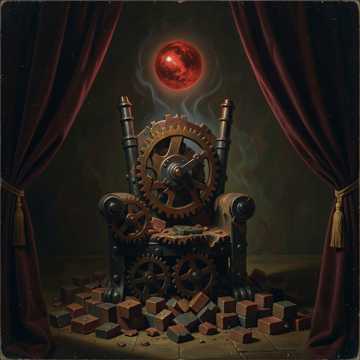
tpk
tpk frames a pixelated rebellion as a playable war against the Pixel King, combining arcade imagery, moral choice, and apocalyptic resolve. Its narrator empowers the listener to destroy tyranny, while chiptune textures and metalcore intensity create a dramatic soundtrack for a final boss encounter.
03:36
1 days ago

BdtPK
BdtPK portrays a digital rebellion against the tyrannical Pixel King. Through game-like commands, loaded weapons, and moral choices, the song blends pixelated combat with metal intensity, ending in a grim but hopeful vision of peace after the final battle.
03:14
1 days ago

BDtPK
BDtPK portrays a creator urging characters to overthrow the tyrannical Pixel King. Blending arcade imagery, moral choice, and apocalyptic combat, the song transforms a platformer battle into a metaphor for resistance, sacrifice, and the hard-won peace discovered after conflict ends.
03:04
1 days ago
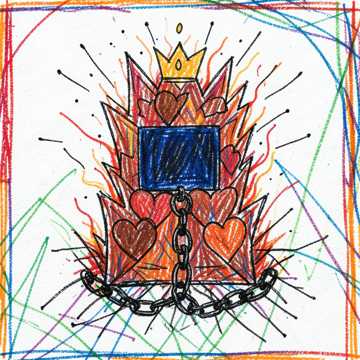
BDtPK
BDtPK portrays a rebellion against the tyrannical Pixel King, blending video-game imagery, moral choice, and apocalyptic combat. Its chiptune foundations collide with metalcore intensity and southern metal grit, creating a cinematic boss-battle anthem about sacrifice, resistance, and peace after destruction.
03:02
1 days ago

BDtPK
BDtPK frames a platformer rebellion as a moral war against the Pixel King. Chiptune imagery, metalcore intensity, and southern-metal weight drive the player toward a final choice: fight, sacrifice, and destroy the machine-made tyrant to restore peace.
03:50
1 days ago
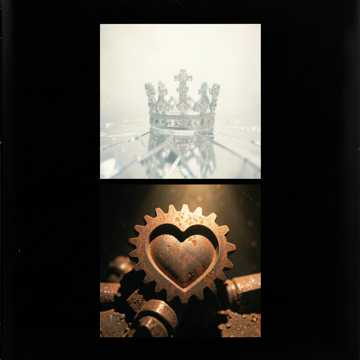
BDtPK2
A game-world creator commands characters to overthrow the tyrannical Pixel King. Blending arcade imagery, moral choice, and metal intensity, the song turns a platformer battle into a meditation on violence, agency, sacrifice, and peace after destruction.
03:21
1 days ago

Light and dark
A mid-tempo hard rock anthem about humanity caught between opposing forces of light and darkness. Cathedral imagery, ancient judgment and moral conflict unfold over a relentless two-note guitar riff, marching drums and a commanding, chant-ready chorus.
04:17
4 days ago
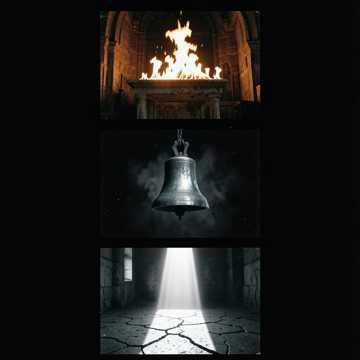
Light and dark
A darkly anthemic hard rock song about people caught between opposing moral forces. Cathedral imagery, ancient kings, burning altars, and a repeated march-like chorus frame an inner battle for the human spirit.
04:03
4 days ago

Final Judgment
Final Judgment uses a cursed tarot card as a metaphor for love’s power to heal or destroy. Through bones, thorns, black roses, and ominous warnings, the song confronts deception, emotional consequences, and the choice between nurturing another soul or exploiting it.
04:10
4 days ago

Jigsaw
JIGSAW zwingt einen Schuldigen in ein tödliches Spiel, in dem jede Sekunde zur Entscheidung wird. Zwischen Maschinenlärm, Growls und epischen Clean-Vocals verschmelzen Horror, Reue und Überlebenswille zu einer klaustrophobischen Metalcore-Dramatik.
07:21
6 days ago

вава
Песня размышляет о первых словах, родительской любви, человеческой благодарности и общей судьбе. Через образы Земли, волка и возрождения герой призывает отвечать за свои поступки, хранить верность близким и искать надежду в единстве.
03:39
6 days ago
Moral Choice Music Sub-tags and Classifications
Ethical Dilemma
Ethical Dilemma music focuses on situations in which every available decision carries meaningful consequences. This type of Moral Choice music often uses unresolved harmony, contrasting melodic themes, gradual crescendos, and shifting dynamics to communicate uncertainty. It is particularly suitable for stories involving difficult decisions, competing principles, or situations where there is no obviously correct answer.
Good vs. Evil
Good vs. Evil is one of the most recognizable classifications within Moral Choice music. It uses dramatic contrasts between light and dark musical ideas to represent opposing moral forces. Powerful orchestration, minor-key passages, aggressive percussion, and contrasting thematic motifs can create a sense of conflict, while moments of harmonic resolution may symbolize hope, justice, or victory.
Sacrifice and Duty
Sacrifice and Duty music explores the emotional weight of choosing responsibility over personal happiness or safety. Slow orchestral arrangements, solemn piano, strings, choir, and restrained melodies are commonly used to express courage, loss, honor, and selflessness. This Moral Choice classification works especially well in stories involving heroic decisions, military service, family obligations, or the protection of others.
Guilt and Redemption
Guilt and Redemption music centers on remorse, regret, forgiveness, and the possibility of transformation. It often begins with sparse or melancholic textures before gradually introducing warmer harmonies and more hopeful musical elements. As a Moral Choice theme, it is effective for portraying characters who must confront past mistakes and decide whether to accept responsibility and seek redemption.
Justice and Revenge
Justice and Revenge music examines the difficult boundary between legitimate justice and personal retaliation. Tense rhythmic patterns, dark orchestral textures, pulsing bass, and emotionally charged motifs can represent anger and determination, while softer passages may question whether revenge can truly resolve injustice. This classification is common in crime dramas, historical narratives, thrillers, and action-oriented storytelling.
Loyalty and Betrayal
Loyalty and Betrayal music explores the moral consequences of remaining faithful to a person, group, institution, or ideal. Musical themes may shift between intimate melodies representing trust and darker harmonic changes representing deception. Moral Choice music in this category is particularly valuable for stories about friendships, political conflicts, family relationships, and divided allegiances.
Freedom vs. Responsibility
This classification focuses on the conflict between personal freedom and obligations to society or other individuals. Music may combine expansive melodic phrases with restrained rhythmic patterns to symbolize the tension between independence and duty. It is well suited to narratives involving political decisions, social movements, leadership, and personal sacrifice.
Compassion and Empathy
Compassion and Empathy music presents moral choice through emotional understanding rather than confrontation. Gentle piano, warm strings, acoustic instruments, subtle ambient textures, and intimate melodies can emphasize forgiveness and human connection. This form of Moral Choice music is useful when a character must choose kindness, mercy, or understanding in difficult circumstances.
Moral Ambiguity
Moral Ambiguity represents situations in which characters cannot be easily categorized as good or evil. The music often avoids clear emotional resolution, using modal harmonies, layered textures, irregular rhythmic structures, and recurring motifs that change meaning over time. This is a sophisticated form of Moral Choice music that encourages audiences to interpret a character's actions from multiple perspectives.
Redemption and Hope
Redemption and Hope focuses on the possibility of moral renewal after failure or wrongdoing. Musical development frequently moves from darker, sparse passages toward brighter harmonies, fuller instrumentation, and emotionally uplifting climaxes. This Moral Choice classification is particularly effective for stories about second chances, forgiveness, reconciliation, and personal transformation.
Famous Artists and Works Related to Moral Choice Music
Johann Sebastian Bach
Johann Sebastian Bach is strongly associated with music that explores spirituality, conscience, suffering, responsibility, and redemption. His sacred works, particularly the St Matthew Passion and St John Passion, demonstrate how musical structure can intensify profound ethical and spiritual questions. Bach's sophisticated counterpoint, expressive harmony, and dramatic vocal writing helped establish a lasting model for music that connects human decisions with moral and spiritual reflection.
Bach - St Matthew Passion
The St Matthew Passion is an important example of music that connects narrative, suffering, conscience, responsibility, and redemption. Its large-scale structure combines solo voices, choruses, instrumental textures, and reflective passages to create a deeply emotional journey. The work's innovation lies in its ability to move between dramatic storytelling and personal contemplation, allowing the listener to experience moral questions from both collective and individual perspectives.
Ludwig van Beethoven
Ludwig van Beethoven's music frequently communicates struggle, personal responsibility, triumph over adversity, and the search for human dignity. Works such as his Ninth Symphony and Fidelio contain powerful themes of freedom, justice, courage, and liberation. His dramatic use of musical conflict and resolution has influenced generations of composers creating Moral Choice music and emotionally complex narrative scores.
Beethoven - Fidelio
Fidelio presents themes of courage, loyalty, justice, freedom, and self-sacrifice. Its dramatic musical language emphasizes the moral strength required to oppose injustice and protect another person. The contrast between oppressive dramatic passages and uplifting musical moments creates a clear emotional trajectory from confinement toward liberation, making the work a significant historical example of music built around moral conflict and ethical courage.
Richard Wagner
Richard Wagner transformed musical storytelling through recurring leitmotifs and large-scale dramatic structures. His operas often examine loyalty, betrayal, power, love, sacrifice, and destiny. The Ring Cycle, in particular, provides an important example of how recurring musical themes can represent characters, ethical forces, and moral consequences across an extended narrative.
Shostakovich - Symphony No. 5
Shostakovich's Symphony No. 5 is frequently discussed in terms of its complex relationship between public triumph and private emotional tension. Its dramatic contrasts, recurring motifs, and ambiguous emotional character allow listeners to interpret the music in different ways. This interpretive openness makes it relevant to Moral Choice music because it demonstrates how musical meaning can exist between apparent victory and underlying suffering.
Dmitri Shostakovich
Dmitri Shostakovich created music marked by profound tension between individual conscience, authority, fear, resistance, and survival. His symphonies and string quartets often contain contrasting emotional layers that allow listeners to perceive multiple interpretations. This ambiguity makes his work highly relevant to the Moral Choice music theme, particularly in stories concerned with moral courage and the consequences of political or personal decisions.
John Williams - Schindler's List
The score for Schindler's List uses a restrained orchestral palette, expressive solo violin, and deeply melancholic melodic writing to explore memory, human suffering, compassion, and moral responsibility. Rather than relying on constant dramatic intensity, the music often achieves its impact through simplicity and emotional restraint. Its central musical ideas reinforce the story's examination of whether individuals will remain passive or choose to act against injustice.
John Williams
John Williams has made major contributions to cinematic music that depicts moral conflict, heroism, temptation, sacrifice, and responsibility. His work on Star Wars, Schindler's List, and other major films demonstrates how memorable leitmotifs and orchestral themes can communicate the ethical dimensions of a character's journey. His music shows how Moral Choice themes can become central to the emotional identity of a film.
Hans Zimmer - The Dark Knight
The Dark Knight demonstrates a modern approach to Moral Choice music through psychological tension and musical duality. The score contrasts themes associated with order, responsibility, chaos, and moral instability. Repetitive electronic textures, distorted sounds, escalating rhythms, and orchestral forces create an atmosphere in which ethical boundaries appear increasingly uncertain. Its innovation lies in using sound design and musical structure to represent the psychological consequences of moral decisions.
Hans Zimmer
Hans Zimmer is known for creating immersive cinematic soundscapes that explore psychological pressure, sacrifice, responsibility, and moral uncertainty. Scores such as The Dark Knight and Interstellar use electronic textures, powerful percussion, repeating motifs, and large-scale orchestration to amplify difficult choices. His approach has influenced contemporary Moral Choice music by combining emotional storytelling with modern sound design.
Ennio Morricone - The Mission
The Mission combines orchestral writing, choral textures, and distinctive instrumental colors to explore faith, sacrifice, colonial violence, and competing forms of duty. The music balances spiritual beauty with tragic tension, reflecting characters who must choose between personal convictions and institutional responsibilities. Its fusion of European classical traditions with expressive world-influenced colors makes it an influential example of morally driven cinematic scoring.
Ennio Morricone
Ennio Morricone's extensive filmography demonstrates how music can express ethical complexity without relying on dialogue. His scores often use distinctive melodies, unusual instrumentation, silence, and carefully controlled tension. His work for films involving violence, justice, loyalty, and personal consequence illustrates the power of music to make audiences question the morality of characters and events.
Moral Choice Music Application Scenarios
Moral Choice music is highly effective in films where protagonists face difficult ethical decisions. It can underscore moments involving sacrifice, betrayal, justice, redemption, or the consequences of a character's actions. A gradual orchestral build can accompany a major decision, while unresolved harmony can preserve moral ambiguity and encourage the audience to reflect on whether a choice was right or wrong.
Movie and Film Soundtracks
In television dramas and serialized streaming stories, Moral Choice music can reinforce recurring themes of loyalty, corruption, family responsibility, and personal transformation. Repeated musical motifs can evolve as characters make new decisions, allowing the soundtrack to track their moral development across multiple episodes or seasons.
Television and Streaming Series
Moral Choice music is particularly powerful in video games because players may directly determine the outcome of ethical decisions. Dynamic music systems can change instrumentation, harmony, tempo, or thematic material according to player choices. A hopeful theme may develop after compassionate decisions, while darker or more dissonant music can emerge when players choose violence or betrayal.
Video Games and Interactive Storytelling
Brands can use Moral Choice music in campaigns focused on social responsibility, sustainability, charity, community support, ethical business, or personal courage. Piano, strings, and gradual orchestral development can create an emotional narrative that moves from a problem toward a meaningful decision or positive action. The music should remain authentic and avoid excessive melodrama when the campaign addresses serious social issues.
Advertising and Brand Storytelling
Moral Choice music can provide emotional context in documentaries dealing with war, political history, social justice, human rights, or environmental challenges. Subtle ambient textures and restrained orchestration can encourage reflection without overwhelming factual content. This makes Moral Choice music useful for emphasizing the human consequences of historical decisions.
Documentaries and Historical Programs
Independent filmmakers can use Moral Choice music to communicate complex internal conflicts when budgets or screen time limit dialogue. A carefully developed musical motif can represent a character's conscience, while changes in harmony or instrumentation can signal a turning point. This approach is especially useful in short films built around a single transformative decision.
Short Films and Independent Cinema
Moral Choice music can support stage narratives involving tragedy, family conflict, political struggle, or personal sacrifice. Live orchestral textures, thematic transitions, and recurring motifs can help audiences understand shifts in character motivation and moral perspective, strengthening the connection between dramatic action and emotional interpretation.
Theater and Stage Productions
In trailers, Moral Choice music can create anticipation by gradually increasing tension around an important decision. Deep percussion, rising strings, atmospheric sound design, and a final emotional climax can suggest that characters are approaching a decisive moral crossroads. This makes the tag suitable for dramatic films, narrative games, documentaries, and social-impact campaigns.
Trailers and Promotional Videos
Moral Choice music can enhance educational videos and awareness campaigns that encourage audiences to consider ethical behavior, empathy, civic responsibility, or social consequences. A restrained and reflective musical approach can support the message while leaving space for narration and factual information.
Educational and Social Awareness Content
Outside traditional narrative media, Moral Choice music can accompany reflective content about personal growth, life transitions, forgiveness, and difficult decisions. Minimal piano, ambient pads, gentle strings, and slow harmonic movement can create an introspective environment that encourages listeners to examine their own values and experiences.
Meditation, Reflection, and Personal Storytelling