Free odd time Music Generator Powered by AI
Turn text into high-quality odd time music effortlessly – no login required!

music.toolTips
Arr_Iuu_Maaiin__1
রাতের নিঃসঙ্গ গ্যারেজে যন্ত্রের সঙ্গে এক কারিগরের obsessive সাধনা ধীরে ধীরে রূপ নেয় আত্মবিশ্বাস, স্বীকৃতি ও বিজয়ের উন্মত্ত ঘোষণায়। গো-নো-গো সীমার কঠোর শৃঙ্খলা তার ভেতরের বিশৃঙ্খলা থামিয়ে তাকে ইস্পাতসম পূর্ণতায় পৌঁছে দেয়।
06:04
22 hours ago
The Open Door
The song follows a narrator confronting an unstable version of themselves shaped by false memories, emotional denial, and fractured identity. Its shifting rhythms and explosive vocals mirror psychological unraveling, while the open door becomes a symbol of responsibility, escape, intrusion, and the fear of becoming someone unfamiliar.
05:22
2026-09-08
The Open Door
The song portrays a person confronting a fractured identity shaped by invented memories, unresolved guilt, and emotional dissociation. Through unstable rhythms, shifting perspectives, and escalating vocals, the narrator questions responsibility, rejects an old self, and finally awakens the version they feared becoming.
04:52
2026-09-08
Treason
Treason builds a tense, confrontational atmosphere through syncopated djent riffs, swung percussion, chromatic bass movement, dissonant synth accents, and explosive power chords. Its polished, smoky intensity suits action scenes, betrayal narratives, combat montages, competitive gaming, and cinematic moments of rupture or defiance.
03:07
2026-08-31
introspection - 1970s Prog Psyche uplift
An expansive progressive rock odyssey through cosmic isolation and existential wonder. Swirling Mellotron, analog synthesizers, delayed guitars, deep bass, and shifting rhythms transform the indifference of the universe into a heavy yet uplifting meditation on consciousness, fragility, and the search for meaning.
04:13
2026-08-27

introspection - 1970s Prog Psyche uplift
An expansive instrumental journey through interstellar emptiness, Introspection contrasts devastating existential solitude with energetic, uplifting momentum. Progressive rhythms, analog synthesizers, Mellotron textures, deep bass, and echoing guitars evoke dying stars, ancient spacecraft, and the fragile beauty of consciousness.
05:14
2026-08-27
introspection - 1970s Prog Psyche uplift
An instrumental cosmic journey through isolation, existential doubt, and the fragile beauty of consciousness, driven by progressive rhythms, analog synths, Mellotron textures, and soaring guitars that transform despair into energetic, hard-won uplift.
04:29
2026-08-27
introspection - 1970s Prog Psyche uplift
An instrumental cosmic odyssey blending progressive rock complexity, psychedelic atmosphere, and soaring uplift. Mellotron choirs, analog synthesizers, echoing guitars, deep bass, intricate drums, and flute or organ washes explore existential solitude before transforming the void into fragile transcendence.
03:59
2026-08-27
introspection - 1970s Prog Psyche dark
An instrumental-feeling cosmic epic that descends into the fragile human mind. Through swirling Mellotron, analog synths, delayed guitars, intricate rhythms, and immense bass pulses, it confronts the universe's indifference while revealing the eerie beauty of consciousness and existence.
07:59
2026-08-27
introspection - 1970s Prog Psyche dark
An expansive instrumental meditation on humanity's fragile consciousness against an indifferent universe, moving through cold nebulae, dying stars, and silent spacecraft with ominous synthesizers, Mellotron textures, complex rhythms, and mournful guitar echoes.
07:59
2026-08-27
introspection - 1970s Prog Psyche dark
A vast instrumental descent into cosmic solitude, Introspection uses progressive rock dynamics, psychedelic textures, and ominous space-driven melodies to contemplate consciousness, mortality, isolation, and the fragile search for meaning in an infinite void.
07:59
2026-08-27

introspection - 1970s Prog Psyche dark
A vast progressive rock meditation on consciousness drifting through an indifferent universe. Mellotron, analog synthesizers, echoing guitars, deep bass, and complex rhythms create a cold cosmic landscape where existential dread and the fragile beauty of existence slowly converge.
07:59
2026-08-27
introspection - 1970s Prog Psyche
An expansive instrumental meditation on consciousness, isolation, and the indifferent universe. Swirling Mellotron, analog synthesizers, echoing guitars, intricate rhythms, and immense bass pulses create a bleak yet beautiful voyage from fragile human thought toward dying stars and infinite emptiness.
04:05
2026-08-27
introspection - 1970s Prog Psyche
An instrumental cosmic odyssey through isolation, mortality, and the search for meaning. Swirling Mellotron, analog synthesizers, delayed guitars, deep bass, and intricate drums create a devastating yet beautiful portrait of consciousness drifting through an immense, indifferent universe.
04:25
2026-08-27
introspection - 1970s Prog Psyche
A dark, cosmic instrumental journey through isolation, fragile consciousness, and the search for meaning in an indifferent universe. Swirling Mellotron, analog synthesizers, delayed guitars, complex rhythms, and deep bass create a devastating yet beautiful progressive rock meditation.
04:17
2026-08-27

The difference between remorse and restitution
The song confronts emotional absence and the damage caused when loved ones receive only what remains. Its narrator rejects apology as sufficient, recognizing that remorse cannot restore lost years. Through explosive anger and stark reflection, restitution becomes a daily commitment: stop taking from the time that remains.
04:15
2026-08-24
The difference between remorse and restitution
A brutally honest confession from someone confronting years of emotional absence and the suffering it caused. The song distinguishes remorse from restitution, rejecting empty apologies in favor of responsible action, presence, and a commitment to stop taking time from the people who remain.
03:47
2026-08-24
The ninth orientation
A defiant narrator leaves a familiar place without pretending to escape personal problems or discover a new identity. Through escalating vocals, rhythmic pressure, and explosive breakdowns, the song reframes departure as self-respect rather than defeat.
03:38
2026-08-19
The ninth orientation
A defiant alt-metal and trap-infused anthem about abandoning external definitions of identity. The narrator rejects the need for a fixed destination, embracing uncertainty as an honest form of self-knowledge and discovering a direction that does not require returning to the past.
04:43
2026-08-18
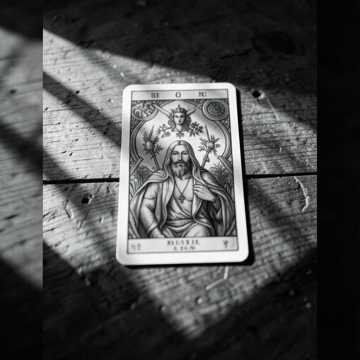
MY TAROT DECK TOLD ME WHO TO BE TODAY
An introspective narrator uses tarot not to find certainty, but to disrupt familiar assumptions. Through shifting meanings, fractured perspective, and explosive melodic pressure, the song explores how arbitrary symbols can alter attention, challenge decisions, and reveal that interpretation often matters more than truth.
03:44
2026-08-17
Introduction to Odd Time
Odd time, also known as odd meter or irregular meter, refers to musical time signatures that do not fit the usual 2/4, 3/4, or 4/4 patterns. These time signatures include meters like 5/4, 7/8, and 11/8, where the number of beats per measure is not divisible by 2 or 3. The use of odd time signatures can be traced back to ancient music traditions, but it gained significant prominence in the 20th century with the advent of jazz, progressive rock, and contemporary classical music. Pioneers like Dave Brubeck and Frank Zappa popularized odd time meters, pushing the boundaries of rhythmic complexity in modern music.
Sub-tags and Classifications of Odd Time
5/4 Time
5/4 time signature is a type of odd meter with five beats per measure. It creates a unique rhythmic feel that can be divided into patterns like 3+2 or 2+3. A famous example of 5/4 time is Dave Brubeck's 'Take Five'.
7/8 Time
7/8 time signature consists of seven beats per measure, typically divided into groupings such as 2+2+3 or 3+2+2. This meter is common in progressive rock and Eastern European folk music. Rush's 'Tom Sawyer' features sections in 7/8 time.
9/8 Time
9/8 time signature is an odd meter with nine beats per measure, often grouped as 2+2+2+3 or 3+3+3. It is frequently used in jazz and classical music. An example is Béla Bartók's 'Mikrokosmos'.
11/8 Time
11/8 time signature has eleven beats per measure, which can be grouped in various combinations such as 3+3+3+2 or 2+2+3+2+2. It is popular in progressive and experimental music. 'The Dance of Eternity' by Dream Theater features 11/8 sections.
Famous Artists and Works Related to Odd Time
Dave Brubeck
Dave Brubeck is a jazz pianist known for his innovative use of odd time signatures. His iconic piece 'Take Five' in 5/4 time is one of the most famous examples of odd meter in jazz.
Take Five
Composed by Paul Desmond and performed by The Dave Brubeck Quartet, 'Take Five' is a classic jazz piece in 5/4 time. Its smooth, catchy rhythm and improvisational elements make it a timeless example of odd time signature usage in jazz.
Frank Zappa
Frank Zappa, a prolific composer and guitarist, extensively used odd time signatures in his work. His complex compositions, like 'The Black Page', showcase his mastery of irregular meters.
Tom Sawyer
Rush's 'Tom Sawyer' features alternating sections in 4/4 and 7/8 time. The song's complex structure and shifting meters showcase the band's technical prowess and ability to create engaging music with odd time signatures.
Rush
The rock band Rush, particularly through drummer Neil Peart, incorporated odd time signatures into their music. Songs like 'Tom Sawyer' and 'YYZ' are prime examples of their use of irregular meters.
The Black Page
Frank Zappa's 'The Black Page' is renowned for its rhythmic complexity, featuring numerous odd time signatures. The piece is a challenging study for musicians, illustrating Zappa's avant-garde approach to composition.
Tool
Tool, a progressive metal band, frequently uses odd time signatures in their music. Tracks like 'Lateralus' (in 9/8 and 7/8) highlight their rhythmic complexity and innovative approach.
Lateralus
Tool's 'Lateralus' employs a mix of 9/8, 8/8, and 7/8 time signatures, reflecting the band's sophisticated approach to rhythm. The song's structure and thematic content are deeply intertwined with its rhythmic patterns, creating a profound musical experience.
Application Scenarios for Odd Time Music
Odd time signatures can add a unique and unsettling atmosphere to movie soundtracks, enhancing scenes with complex emotional or dramatic content. For example, the use of 5/4 or 7/8 time can heighten tension in thriller or horror films.
Movie Soundtracks
Using odd time in advertising music can capture listeners' attention due to its unusual and catchy rhythmic patterns. This can make advertisements more memorable and engaging.
Advertising Music
Odd time signatures are often used in video game soundtracks to create dynamic and immersive environments. Games with intense action or intricate storylines benefit from the added rhythmic complexity, enhancing the player's experience.
Game Background Music
Odd time signatures are a staple in experimental and avant-garde music projects. Artists use irregular meters to push musical boundaries, creating innovative and thought-provoking pieces.
Experimental Music Projects