Free tom fills Music Generator Powered by AI
Turn text into high-quality tom fills music effortlessly – no login required!

music.toolTips
ГДЕ Я СБИЛСЯ
Песня исследует болезненное исчезновение музыкального диалога между двумя людьми. Герой меняет высоту, громкость и ритм, пытаясь вернуть прежний контакт, но постепенно понимает: он уже не ищет правильную ноту, а отчаянно просит другого снова вступить.
04:22
1 days ago
ГДЕ Я СБИЛСЯ
Лирический герой пытается понять, в какой момент потерял связь с тем, кто раньше отвечал ему музыкой. Он меняет голос, высоту и ритм, но постепенно осознаёт: проблема не в ошибке, а в исчезнувшем диалоге. Финальная просьба остаётся без ответа.
04:02
1 days ago
Black Briefcase
Black Briefcase unfolds as a high-speed espionage chase, moving from stealthy tension to explosive pursuit. Staccato strings, clipped brass, driving drums, pulsing low synths, and cinematic swells create a dangerous, urgent atmosphere suited to covert missions, thriller finales, and action sequences.
02:34
2 days ago
Ripped Drums
Ripped Drums delivers a high-impact breakbeat experience built on chopped Amen-style rhythms, deep sub hits, crisp percussion, synth stabs, and aggressive transitions. Its widening drop, tape-stop effects, and vocal-shot edits create kinetic momentum for clubs, workouts, action sequences, and underground rave settings.
03:49
2 days ago
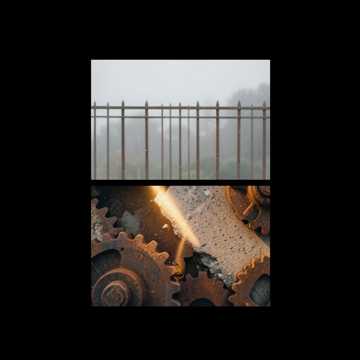
Rust Choir
A tense, mid-tempo metal-rock instrumental that moves from sparse dread into serrated riffs, heavy half-time drums, and a low-drone breakdown before erupting in a dusty, cathartic wall of guitars and tom fills.
03:35
4 days ago
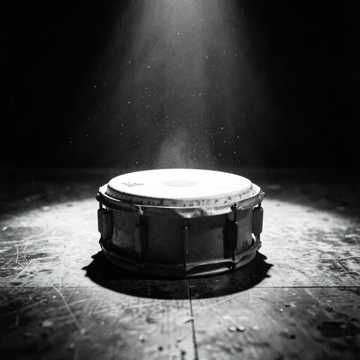
Impacto Final
Una introducción instrumental de batería que evoluciona desde pulsos escasos hacia una explosión de rock moderno. Los fills intrincados, la caja definida y los bombos contundentes crean tensión física y cinematográfica, culminando en un golpe final seco, poderoso y decisivo.
00:15
5 days ago
Tom Fills: Definition, History, and Role in Drum Performance
Tom Fills are short rhythmic drum passages built primarily around the tom-toms of a drum kit. Rather than describing a standalone music genre, the Tom Fills tag identifies a percussion technique and sonic characteristic that can appear across rock, metal, pop, funk, jazz, cinematic music, electronic production, and many other styles. Tom Fills commonly connect musical sections, emphasize transitions, increase tension, or provide dramatic rhythmic punctuation. Their development is closely connected to the expansion of the modern drum kit during the twentieth century. As drum sets incorporated multiple rack and floor toms, drummers gained a wider tonal range for creating descending, ascending, and circular patterns around the kit. Jazz and big-band drummers helped establish tom-based transitions, while rock drummers of the 1960s and 1970s transformed Tom Fills into powerful compositional devices. Progressive rock, hard rock, and later metal expanded the technique with larger kits, unusual subdivisions, double-bass coordination, and increasingly elaborate fills. In contemporary production, Tom Fills can be acoustic, heavily processed, sampled, synthesized, or layered withTom Fills Content Write cinematic percussion. The phrase therefore covers everything from a subtle two-beat transition to an enormous multi-tom crescendo.
Tom Fills Sub-Tags and Classifications
Descending Tom Fills
Descending Tom Fills move from higher-pitched rack toms toward deeper floor toms. This high-to-low movement creates an immediately recognizable sense of forward motion and resolution. Descending Tom Fills are especially common before choruses, drops, breakdowns, and major downbeats because the falling pitch contour naturally directs attention toward the next musical section.
Ascending Tom Fills
Ascending Tom Fills reverse the conventional high-to-low pattern by moving from low floor toms toward higher rack toms. The rising contour can create anticipation, instability, or an intentionally unresolved feeling. Producers and drummers often use ascending Tom Fills when building tension immediately before a dramatic hit, vocal entrance, or rhythmic change.
Tribal Tom Fills
Tribal-style Tom Fills emphasize repetitive, powerful patterns across multiple toms, frequently supported by floor toms and additional hand or cinematic percussion. The resulting sound is physical and driving. This approach appears frequently in cinematic scores, action trailers, world-influenced electronic music, festival productions, and dramatic game soundtracks.
Rock Tom Fills
Rock Tom Fills typically feature strong acoustic drum tones, clear stick attack, and energetic movement between rack and floor toms. They may be simple eighth-note transitions or extended sixteenth-note phrases. Their primary purpose is often to connect verses, choruses, bridges, and instrumental sections while reinforcing the energetic character of the performance.
Progressive Tom Fills
Progressive Tom Fills use complex subdivisions, irregular meters, accents, polyrhythmic ideas, and extended movement around the drum kit. Instead of functioning merely as transitions, these Tom Fills can become important compositional phrases. Progressive rock and progressive metal frequently use them to blur the boundary between groove, fill, and drum solo.
Metal Tom Fills
Metal Tom Fills emphasize speed, weight, precision, and aggressive dynamics. Rapid tom runs may interact with double-kick patterns, cymbal accents, and syncopated guitar riffs. Deeply tuned floor toms are particularly effective for producing the massive low-frequency impact associated with modern metal and breakdown-oriented arrangements.
Cinematic Tom Fills
Cinematic Tom Fills combine drum-kit toms or orchestral-style tom sounds with large reverberant spaces, layered percussion, compression, and dramatic dynamics. They are designed to communicate scale and momentum rather than simply demonstrate drumming technique. These fills work particularly well before trailer impacts, scene transitions, logos, and climactic musical cues.
Electronic and Sampled Tom Fills
Electronic Tom Fills are created with drum machines, synthesized percussion, samples, or heavily processed acoustic recordings. Producers can manipulate tuning, stereo position, distortion, reverb, filtering, and velocity to produce fills that range from retro drum-machine patterns to futuristic percussion sequences. They are common in EDM, synthwave, pop, techno, and hybrid cinematic production.
Syncopated Tom Fills
Syncopated Tom Fills place important accents away from predictable strong beats. By incorporating rests, displaced notes, triplets, or offbeat accents, these patterns generate rhythmic surprise. Funk, fusion, progressive rock, and modern alternative music frequently employ syncopated Tom Fills to create more conversational and sophisticated drum parts.
Floor Tom Fills
Floor Tom Fills focus on the deepest toms in the kit and emphasize resonance, weight, and physical impact. Repeated floor-tom patterns can function almost like a secondary bass pulse. They are particularly effective in dramatic rock builds, indie arrangements, cinematic sequences, post-rock crescendos, and sections where a conventional snare-driven groove would sound too busy.
Famous Artists and Classic Works Related to Tom Fills
Phil Collins
Phil Collins is strongly associated with dramatic tom-centered drumming and helped make powerful drum fills an instantly recognizable part of mainstream pop and rock. His work with Genesis and his solo recordings demonstrate how Tom Fills can function as major arrangement events rather than minor transitions.
In the Air Tonight – Phil Collins
The famous late-song drum entrance is one of popular music's most recognizable examples of dramatic tom-led percussion. Its effectiveness comes from context: a restrained arrangement creates enormous anticipation before the drums arrive with forceful, spaciously produced hits. The recording helped establish large, processed drum sounds as a defining production aesthetic of the 1980s.
John Bonham
Led Zeppelin drummer John Bonham became renowned for enormous drum tones, dynamic phrasing, triplet-based vocabulary, and powerful movement between kick drum and toms. His approach demonstrated how Tom Fills could sound simultaneously heavy, spacious, and groove-oriented, influencing generations of rock and metal drummers.
Rock and Roll – Led Zeppelin
John Bonham's performance demonstrates the energetic relationship between groove and explosive drum transitions. His tom and snare vocabulary maintains the momentum of the song rather than interrupting it, illustrating an essential principle of effective Rock Tom Fills: technical expression remains connected to the underlying pulse.
Neil Peart
Rush drummer Neil Peart expanded the compositional possibilities of Tom Fills through large drum setups, precise orchestration, odd meters, and technically elaborate transitions. His drum parts frequently treat different toms as distinct melodic voices, making his work particularly influential in progressive rock and technical drumming.
Tom Sawyer – Rush
Neil Peart's drumming on Tom Sawyer demonstrates precise drum-kit orchestration within progressive rock. The performance incorporates sophisticated transitions and tonal movement across the kit while remaining tightly integrated with the composition's changing rhythmic structures. It is a useful reference for understanding technically detailed Progressive Tom Fills.
Bill Bruford
Bill Bruford, known for his work with Yes and King Crimson, developed an unconventional approach to drum-kit orchestration characterized by unusual accents, timbral experimentation, and sophisticated rhythmic structures. His performances demonstrate how Tom Fills can challenge predictable rock conventions.
The Grudge – Tool
The Grudge highlights Danny Carey's ability to integrate tom-oriented percussion into complex progressive-metal structures. Rather than reserving toms for occasional transitions, the arrangement uses them as part of a broader rhythmic vocabulary involving changing meters, layered accents, and long-form dynamic development.
Danny Carey
Tool drummer Danny Carey is known for combining tom-heavy grooves and fills with odd meters, polyrhythms, powerful dynamics, and progressive compositional structures. His work shows how toms can operate continuously within a groove instead of appearing only at the end of a musical phrase.
YYZ – Rush
YYZ provides a prominent example of highly composed progressive drumming. Neil Peart's movement around the kit demonstrates how multiple tom pitches can turn percussion into an orchestrated sequence of rhythmic and tonal events. Its precision and structural complexity have made it an enduring reference point for technically ambitious drummers.
Stewart Copeland
As drummer for The Police, Stewart Copeland developed an energetic and highly distinctive percussion vocabulary involving toms, cymbals, rim sounds, syncopation, and reggae-influenced rhythmic ideas. His concise Tom Fills illustrate how carefully placed accents can add personality without overwhelming an arrangement.
Tom Fills Application Scenarios in Music and Media
Tom Fills can connect a verse to a chorus, introduce a breakdown, signal a guitar solo, or drive the arrangement toward a final chorus. A short descending Tom Fill provides an obvious transition without requiring additional melodic instruments.
Rock and Metal Song Transitions
Large cinematic Tom Fills can accompany chase scenes, battles, explosions, reveals, and rapid visual transitions. Deep toms layered with orchestral percussion create a physical rhythmic impact that can increase the perceived scale and intensity of an action sequence.
Movie Action Soundtracks
Trailer composers can use Tom Fills immediately before impacts, title reveals, or changes in editing pace. Processed toms with long reverb tails are especially effective for creating anticipation before a major cinematic downbeat.
Movie Trailers
Tom Fills work naturally in combat, boss-battle, racing, and action-adventure game music. They can signal gameplay transitions such as an enemy entering, a battle phase changing, or an encounter escalating while maintaining musical momentum.
Video Game Combat Music
Short Tom Fills can provide rhythmic punctuation for visual cuts, slogans, product reveals, and logo animations. Because a compact fill can communicate anticipation within one or two seconds, Tom Fills are useful in commercials and short-form promotional videos.
Advertising and Product Reveals
Heavy Rock or Cinematic Tom Fills complement slow-motion highlights, athlete introductions, countdowns, championship sequences, and dramatic edits. Their strong attack makes it easy to synchronize percussion with cuts and significant moments in sports footage.
Sports Promos and Highlight Reels
Electronic producers can replace or supplement conventional snare-roll builds with pitched Tom Fills. Increasing note density, raising pitch, widening stereo movement, or adding reverb automation can transform a simple tom pattern into an effective transition toward an EDM drop.
EDM Builds and Drops
Sparse, low-frequency Tom Fills can resemble distant ritual drums or ominous pulses. When combined with silence, drones, and long reverberation, they can build suspense without requiring a continuous drum groove, making them suitable for horror films and dark game environments.
Horror and Suspense Music
Drummers frequently use Tom Fills to communicate structural changes to other musicians and increase excitement for an audience. Extended fills can also connect songs, introduce encores, or expand into short drum-feature sections during live performances.
Live Concert Performances
The Tom Fills tag can be useful when describing desired percussion characteristics in AI-generated or production-library music. Combining keywords such as 'powerful Tom Fills,' 'descending acoustic Tom Fills,' 'cinematic floor toms,' or 'fast progressive Tom Fills' gives a more precise description of the intended rhythmic movement, drum tone, and transition style.
AI Music and Production Prompts