Free Classical Music Generator Powered by AI
Turn text into high-quality Classical music effortlessly – no login required!

music.toolTips
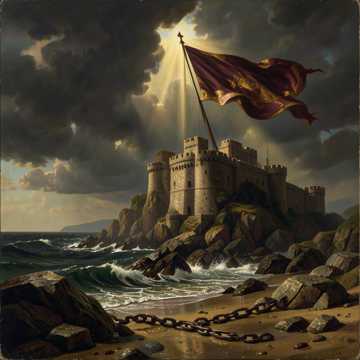
بلاد المجد
ملحمة وطنية تحتفي بالجزائر وتاريخ مقاومتها، وتربط بين وجع الاحتلال وبطولة الثورة ووحدة الشعب. تتصاعد الجوقات البشرية من أجواء قاتمة إلى إعلان انتصار وسيادة، مؤكدة الوفاء للأرض والشهداء والحرية.
04:34
1 days ago
Spring Renewal Suite
A continuous instrumental suite that follows spring's awakening: brisk orchestral motion blooms into powerful trance, pauses for a witty ragtime turn, then races toward a radiant, major-key electronic finale.
06:00
Invalid date
Steel Fanfare
An instrumental ceremonial march that transforms a solitary bugle call into a broad, triumphant brass-and-percussion salute. Tight snare patterns, low brass weight, timpani momentum, and rising strings create a disciplined, victorious atmosphere suited to grand entrances and formal celebrations.
03:09
Invalid date
كلامك حلو
تروي الأغنية خيبة امرأة اكتشفت أن الحبيب يجيد الكلام ولا يملك ثبات الأفعال. بنبرة حازمة وحزينة، ترفض الوعود والتبريرات وتطلب حباً آمناً يساندها في الشدائد.
03:43
1 days ago
English Pastoral
A richly recorded orchestral pastoral that evokes an English countryside awakening. Solo oboe, low strings, horns, woodwinds, harp, and measured percussion shape a gradual ascent from intimate stillness to an emotionally resonant, triumphant coda.
08:00
Invalid date

What The Dusk Shows The Trees
A cosmic love letter that fuses quantum imagery with intimate devotion. Through darkness, mortality, and awe, the narrator promises to protect, understand, and accompany a beloved spirit, finding sacred harmony in their shared, imperfect existence.
06:12
1 days ago

What The Dusk Shows The Trees
A lover describes connection through quantum physics and cosmology, finding sacred harmony in another person's complexity. As the song confronts illness, death, admiration, and vulnerability, its narrator promises shelter, remembrance, and a final lesson in becoming dusk-lit silhouette.
06:23
1 days ago
Y si no te hubiese conocido
Una balada íntima que celebra el encuentro de un amor decisivo. La narradora imagina la vida sin esa persona, expresa temor ante el paso del tiempo y reafirma su elección de amar, cuidar y permanecer a su lado.
06:05
1 days ago

Labyrinth of Form
A dense instrumental journey where surgical technical death metal meets progressive rock, classical tension, and ambient scale. Odd-meter blasts, double-kick propulsion, clean arpeggios, strings, and cinematic swells create an intricate, ominous labyrinth.
04:14
1 days ago
Fractal Cathedrals
A high-velocity instrumental that fuses technical death metal brutality with classical architecture. Swarm-picked guitars, polymetric movement, suspended harmonies, and spectral ambient details create a bright yet overwhelming journey through an immense sonic labyrinth.
04:06
1 days ago
Clockwork Cathedrals
A precise, ominous technical death metal instrumental that evokes a vast mechanical sanctuary. Jagged riffs, clean arpeggios, blast beats, orchestral-minded counterpoint, and ticking sound design create relentless tension before each crushing harmonic ascent.
03:34
1 days ago
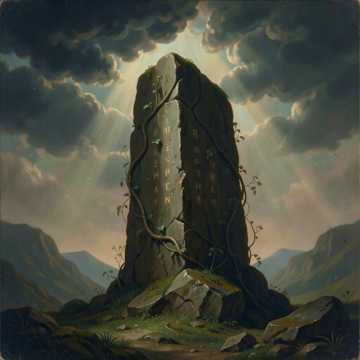
Whispers Beneath the World
A very slow, atmospheric orchestral fantasy piece that descends into an unseen cosmic realm. Whispered female vocal textures and choir drift through ambient space while restrained tension gradually suggests ancient secrets, perilous discovery, and immense underground wonder.
03:40
1 days ago

Гимн энергетиков 32
Песнь прославляет энергетиков как незаметных, но незаменимых хранителей тепла и света. Через образы солнца, генератора, турбины, фазы и ноля раскрываются профессиональная гордость, служение людям, надежда и единство.
02:48
1 days ago
123
Зворушлива пісня-подяка матері, побудована на спогадах про її турботу, підтримку й безумовну любов. Ліричний герой дорослішає та віддаляється, але незмінно відчуває мамин голос, погляд і долоні як свій справжній дім.
04:24
1 days ago
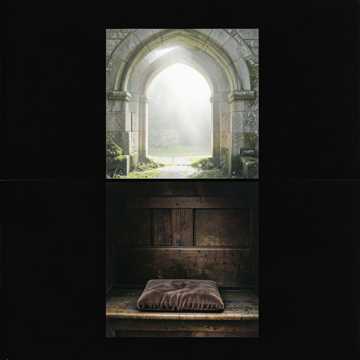
Processional Lament
A slow liturgical lament shaped by low strings, bassoon, sparse organ, and wordless choir. Its restrained procession rises to a dignified emotional crest before fading into a hushed, unresolved cadence.
03:12
1 days ago
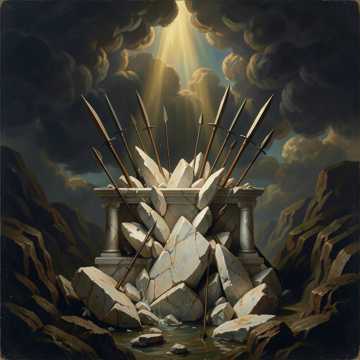
Mars of the Fifth Beat
An instrumental orchestral march that turns asymmetry into pressure and momentum. Low-string patterns drive a five-beat advance while brass and woodwinds trade martial gestures, building through dense counterpoint, swelling dynamics, and a dramatic concert-hall climax.
02:19
Invalid date

Reste encore
Une invitation tendre à rester près de l'être aimé, danser et oublier les soucis. Sur un rythme énergique et une mélodie accessible, le narrateur célèbre la simplicité d'une soirée partagée, faite de regards, de sourires et de complicité.
02:30
1 days ago

J’avance en silence
Un rap mélodique introspectif sur la persévérance silencieuse, les épreuves invisibles et la promesse de protéger sa famille. Le narrateur avance malgré la douleur, transforme ses nuits sombres en ambition et prépare sa victoire sans chercher les applaudissements.
02:41
1 days ago
Brostep Gothica
A long-form instrumental fusion of gothic classical drama and hard phonk energy. Pipe organ and piano establish a cathedral-scale atmosphere, while orchestral and operatic textures build a slow, ominous procession toward heavy rhythmic impact.
03:18
1 days ago
Brostep Gothica
A long-form instrumental collision of cathedral-scale pipe organ, classical piano, operatic orchestration, and forceful brostep. Its slow, gothic build creates a theatrical descent from sacred grandeur into heavy electronic impact.
03:49
1 days ago
Introduction to Classical Music
Classical music, often referred to simply as 'Classical,' is a broad genre of music that originated in the traditions of Western culture, encompassing a wide period from the medieval era to the present day. Its development spans several centuries, with its roots deeply embedded in the liturgical and secular music of the Western world. The genre is characterized by its emphasis on formal styles, complex structures, and the use of notation to ensure precise performances. The Classical era itself, which ranges from the mid-18th century to the early 19th century, is often considered the pinnacle of this genre, marked by the works of composers like Haydn, Mozart, and Beethoven. Over time, Classical music has evolved, influencing and incorporating various styles and innovations from different periods and regions.
Sub-tags and Classifications of Classical Music
Baroque
The Baroque period, spanning from approximately 1600 to 1750, is known for its elaborate musical ornamentation, contrasting dynamics, and the development of tonality. Key composers of this era include Johann Sebastian Bach, George Frideric Handel, and Antonio Vivaldi. Baroque music often features complex counterpoint and was typically composed for both religious and secular settings.
Classical Period
The Classical period, roughly from 1750 to 1820, emphasized clarity, balance, and form, moving away from the ornate style of the Baroque. Composers such as Wolfgang Amadeus Mozart, Joseph Haydn, and Ludwig van Beethoven are central to this era. The music of the Classical period is known for its clear structure, with the sonata form being a dominant compositional method.
Romantic
The Romantic era, from about 1820 to 1900, focused on emotional expression, individualism, and the expansion of the orchestra. This period saw composers like Franz Schubert, Johannes Brahms, and Richard Wagner pushing the boundaries of traditional forms to convey deeper emotional content and dramatic intensity. Romantic music often features rich harmonies, dynamic contrasts, and expansive melodic lines.
20th Century and Contemporary
The 20th century and contemporary classical music reflect a broad range of styles, techniques, and ideologies, from the atonal works of Arnold Schoenberg to the minimalist compositions of Philip Glass. This period is marked by experimentation, the blending of classical traditions with modern and popular music influences, and the use of new technologies in composition and performance.
Famous Artists and Works in Classical Music
Ludwig van Beethoven
Beethoven is one of the most influential composers in the history of Western music. His works, including the 'Symphony No. 9' and 'Moonlight Sonata,' bridge the Classical and Romantic eras, showcasing his innovative use of form, harmony, and orchestration. Beethoven's music is renowned for its emotional depth and technical brilliance.
Symphony No. 9 in D minor, Op. 125
Beethoven's Symphony No. 9, also known as the 'Choral Symphony,' is a monumental work that introduced the use of a choir and vocal soloists in the final movement. The symphony's fourth movement features the famous 'Ode to Joy' theme, which has become an anthem for unity and brotherhood. This work is celebrated for its innovative structure, emotional depth, and powerful themes.
Wolfgang Amadeus Mozart
Mozart was a prolific composer who produced more than 600 works, including symphonies, operas, chamber music, and concertos. His compositions, such as 'The Magic Flute' and 'Requiem,' are celebrated for their melodic beauty, structural clarity, and emotional expressiveness.
The Magic Flute, K. 620
Mozart's 'The Magic Flute' is a two-act opera that blends elements of German singspiel with deep philosophical themes. The work is noted for its masterful use of orchestration, memorable arias, and the portrayal of complex characters. The opera remains one of the most performed works in the operatic repertoire.
Johann Sebastian Bach
Bach is often considered the greatest composer of the Baroque era. His works, such as the 'Brandenburg Concertos' and 'The Well-Tempered Clavier,' are revered for their complex counterpoint, rich harmonies, and intellectual depth. Bach's music has had a profound influence on subsequent generations of composers.
Brandenburg Concertos
Bach's 'Brandenburg Concertos' are a collection of six instrumental works that exemplify the Baroque concerto grosso form. Each concerto features a unique combination of instruments and showcases Bach's skill in fusing counterpoint with virtuosic demands. These works are celebrated for their complexity, creativity, and enduring appeal.
Frédéric Chopin
Chopin, a leading figure in the Romantic era, is known for his piano compositions, which include nocturnes, études, and sonatas. His music is characterized by its poetic lyricism, technical demands, and emotional intensity. Works like the 'Nocturne in E-flat major, Op. 9 No. 2' remain cornerstones of the piano repertoire.
Piano Concerto No. 2 in F minor, Op. 21
Chopin's Piano Concerto No. 2 is a Romantic masterpiece that highlights the expressive possibilities of the piano. The concerto is known for its lyrical second movement, which showcases Chopin's ability to convey deep emotion through subtle harmonic shifts and delicate phrasing. This work remains a favorite among pianists and audiences alike.
Application Scenarios for Classical Music
Classical music is frequently used in movie soundtracks to enhance the emotional depth of scenes and convey complex narratives. Works such as Richard Wagner's 'Ride of the Valkyries' or Johann Pachelbel's 'Canon in D' are often used to evoke specific moods or underscore dramatic moments.
Movie Soundtracks
In advertising, Classical music is often used to create a sense of elegance, sophistication, and timelessness. Pieces like Mozart's 'Eine kleine Nachtmusik' are commonly used in commercials to convey a refined atmosphere or appeal to a high-end market.
Advertising Music
Classical music is also used in video games to enhance the gaming experience, particularly in titles that require a grand or epic feel. For example, Gustav Holst's 'Mars, the Bringer of War' from 'The Planets' suite is often used in strategy games to create tension and anticipation.
Game Background Music