Free Classical Music Generator Powered by AI
Turn text into high-quality Classical music effortlessly – no login required!
music.toolTips
Cathedral Fire
A seductive electro-classical house track where sacred architecture meets rebellious desire. Driven by soaring violins, cathedral-scale ambience, and hypnotic rhythms, it explores temptation, spectacle, and emotional transcendence through playful yet dramatic storytelling.
04:26
2026-07-24
Sonata #1 moderato
An expressive Romantic-style piano sonata that balances mystery, energy, and graceful moderation. Its flowing melodies and dynamic contrasts evoke emotional depth while preserving the elegance and structural character of the classical sonata tradition.
04:07
2026-07-24

La gloire du Seigneur
Ce chant de louange exprime une profonde adoration envers le Seigneur. À travers une poésie majestueuse et des images grandioses de la création, il célèbre la puissance, la gloire et la présence universelle de Dieu dans un style classique et cinématographique.
03:22
2026-07-23
fdrg
A tender nostalgic reflection on childhood evenings spent around a glowing coal fire, where flickering shadows inspired fear and wonder while the warmth and presence of family created lasting memories of comfort and love.
01:45
2026-07-23
fdrg
A heartfelt nostalgic folk songSong Analysis Request recalling childhood evenings around a glowing coal fire, where mysterious shadows sparked both fear and wonder while the warmth and closeness of family created lasting memories of comfort and love.
01:54
2026-07-23

Isa
Ein romantisches Lied über die wachsende Liebe zu Isa. Erinnerungen an eine besondere Begegnung entwickeln sich zu einem tiefen Versprechen von Verbundenheit, Geborgenheit und gemeinsamer Zukunft, getragen von einer sentimentalen, klassisch inspirierten Atmosphäre.
03:35
2026-07-23
Простите мне, что думаю о Вас
Лирическая история о любви, воспоминаниях и надежде на взаимность. Героиня просит прощения за свои чувства, бережно хранит память о счастливых мгновениях и мечтает о новой встрече, наполненной романтикой и искренней нежностью.
02:53
2026-07-23
Bembe de Madera
An expressive instrumental for classical solo guitar blending Afro-Cuban rhythmic vitality with lyrical elegance. Tremolo melodies, percussive rasgueado, harmonics, and dynamic contrasts shape an intimate performance that balances virtuosity with emotional warmth.
03:27
2026-07-23

Pluie sur les Tuiles
Une œuvre instrumentale pour piano inspirée de l'impressionnisme français, retraçant le passage d'une pluie délicate à une tempête intense avant de s'ouvrir sur un éclat de soleil lumineux dans une conclusion sereine et rayonnante.
02:57
2026-07-23

Quelle est la P max d'une onde ?
Une chanson expérimentale et répétitive qui transforme une question technique en refrain absurde et hypnotique. Le morceau joue sur l'humour, la curiosité et le contraste entre science, énergie musicale et exploration sonore.
00:54
2026-07-23
New 1
மயிலின் அழகையும் காதலியின் புன்னகையையும் ஒப்பிட்டு, தூய்மையான காதல், இயற்கை, நம்பிக்கை மற்றும் மனதை மலரச்செய்யும் உணர்வுகளை இனிமையாக வெளிப்படுத்தும் காதல் மெலடி.
04:12
2026-07-22

Raven Key
A slow baroque chamber piece that blends sparse harpsichord and fragile solo violin into an intimate, subtly ominous soundscape, gradually deepening through restrained dissonance before fading into a delicate, haunting conclusion.
04:43
2026-07-22
Moth In The Hall
A slow-burning Baroque-inspired instrumental where resonant harpsichord and restrained violin weave a somber, intimate atmosphere. Sparse phrasing, suspended dissonance, and subtle ambient details evoke the feeling of wandering through an ancient, shadowed hall filled with quiet tension.
04:38
2026-07-22

Gloam Key
A slow Baroque chamber instrumental where resonant harpsichord and mournful violin weave an intimate, ominous atmosphere. Sparse phrasing, delicate dissonance, and fadingAI Song Analysis echoes create a timeless meditation on mystery and quiet melancholy.
00:50
2026-07-22
Ashes On Ivory
A slow Baroque-inspired instrumental where delicate harpsichord phrases and a solitary violin weave through silence, gentle dissonance, and fading echoes, creating a somber, ancient atmosphere that gradually dissolves into a single lingering tone.
03:24
2026-07-22

Moonlit Cipher
A slow Baroque-inspired chamber instrumental built around resonant harpsichord ostinatos and restrained solo violin. Sparse phrasing, subtle tape textures, and dark harmonic shifts create an intimate, mysterious, and emotionally contemplative listening experience.
03:39
2026-07-22

Ashen Parlor
A slow Baroque-inspired chamber instrumental where harpsichord and violin weave restrained, sorrowful melodies through spacious silence, delicate dissonance, and intimate acoustics, creating an atmosphere of fading memories and quiet emotional tension.
02:49
2026-07-22
Ashen Court
A slow Baroque-inspired instrumental where solemn harpsichord and expressive solo violin weave sparse, mournful melodies through silence, subtle dissonance, and intimate acoustics, ending in a suspended pause that leaves a lingering sense of mystery and quiet sorrow.
03:00
2026-07-22
Midnight Courtyard
An instrumental Baroque-inspired chamber composition that contrasts tense harpsichord ostinatos with lyrical violin melodies, evolving from shadowy minor-key drama into luminous counterpoint before returning to its powerful, emotionally charged conclusion.
02:45
2026-07-22
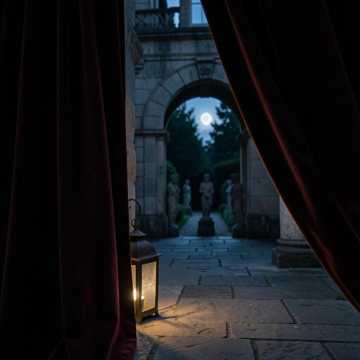
Black Velvet Courtyard
A dark Baroque instrumental driven by harpsichord and restless strings, unfolding through sparse counterpoint, swelling ensemble passages, and a restrained coda that leaves an atmosphere of mystery, tension, and antique elegance.
03:45
2026-07-22
Introduction to Classical Music
Classical music, often referred to simply as 'Classical,' is a broad genre of music that originated in the traditions of Western culture, encompassing a wide period from the medieval era to the present day. Its development spans several centuries, with its roots deeply embedded in the liturgical and secular music of the Western world. The genre is characterized by its emphasis on formal styles, complex structures, and the use of notation to ensure precise performances. The Classical era itself, which ranges from the mid-18th century to the early 19th century, is often considered the pinnacle of this genre, marked by the works of composers like Haydn, Mozart, and Beethoven. Over time, Classical music has evolved, influencing and incorporating various styles and innovations from different periods and regions.
Sub-tags and Classifications of Classical Music
Baroque
The Baroque period, spanning from approximately 1600 to 1750, is known for its elaborate musical ornamentation, contrasting dynamics, and the development of tonality. Key composers of this era include Johann Sebastian Bach, George Frideric Handel, and Antonio Vivaldi. Baroque music often features complex counterpoint and was typically composed for both religious and secular settings.
Classical Period
The Classical period, roughly from 1750 to 1820, emphasized clarity, balance, and form, moving away from the ornate style of the Baroque. Composers such as Wolfgang Amadeus Mozart, Joseph Haydn, and Ludwig van Beethoven are central to this era. The music of the Classical period is known for its clear structure, with the sonata form being a dominant compositional method.
Romantic
The Romantic era, from about 1820 to 1900, focused on emotional expression, individualism, and the expansion of the orchestra. This period saw composers like Franz Schubert, Johannes Brahms, and Richard Wagner pushing the boundaries of traditional forms to convey deeper emotional content and dramatic intensity. Romantic music often features rich harmonies, dynamic contrasts, and expansive melodic lines.
20th Century and Contemporary
The 20th century and contemporary classical music reflect a broad range of styles, techniques, and ideologies, from the atonal works of Arnold Schoenberg to the minimalist compositions of Philip Glass. This period is marked by experimentation, the blending of classical traditions with modern and popular music influences, and the use of new technologies in composition and performance.
Famous Artists and Works in Classical Music
Ludwig van Beethoven
Beethoven is one of the most influential composers in the history of Western music. His works, including the 'Symphony No. 9' and 'Moonlight Sonata,' bridge the Classical and Romantic eras, showcasing his innovative use of form, harmony, and orchestration. Beethoven's music is renowned for its emotional depth and technical brilliance.
Symphony No. 9 in D minor, Op. 125
Beethoven's Symphony No. 9, also known as the 'Choral Symphony,' is a monumental work that introduced the use of a choir and vocal soloists in the final movement. The symphony's fourth movement features the famous 'Ode to Joy' theme, which has become an anthem for unity and brotherhood. This work is celebrated for its innovative structure, emotional depth, and powerful themes.
Wolfgang Amadeus Mozart
Mozart was a prolific composer who produced more than 600 works, including symphonies, operas, chamber music, and concertos. His compositions, such as 'The Magic Flute' and 'Requiem,' are celebrated for their melodic beauty, structural clarity, and emotional expressiveness.
The Magic Flute, K. 620
Mozart's 'The Magic Flute' is a two-act opera that blends elements of German singspiel with deep philosophical themes. The work is noted for its masterful use of orchestration, memorable arias, and the portrayal of complex characters. The opera remains one of the most performed works in the operatic repertoire.
Johann Sebastian Bach
Bach is often considered the greatest composer of the Baroque era. His works, such as the 'Brandenburg Concertos' and 'The Well-Tempered Clavier,' are revered for their complex counterpoint, rich harmonies, and intellectual depth. Bach's music has had a profound influence on subsequent generations of composers.
Brandenburg Concertos
Bach's 'Brandenburg Concertos' are a collection of six instrumental works that exemplify the Baroque concerto grosso form. Each concerto features a unique combination of instruments and showcases Bach's skill in fusing counterpoint with virtuosic demands. These works are celebrated for their complexity, creativity, and enduring appeal.
Frédéric Chopin
Chopin, a leading figure in the Romantic era, is known for his piano compositions, which include nocturnes, études, and sonatas. His music is characterized by its poetic lyricism, technical demands, and emotional intensity. Works like the 'Nocturne in E-flat major, Op. 9 No. 2' remain cornerstones of the piano repertoire.
Piano Concerto No. 2 in F minor, Op. 21
Chopin's Piano Concerto No. 2 is a Romantic masterpiece that highlights the expressive possibilities of the piano. The concerto is known for its lyrical second movement, which showcases Chopin's ability to convey deep emotion through subtle harmonic shifts and delicate phrasing. This work remains a favorite among pianists and audiences alike.
Application Scenarios for Classical Music
Classical music is frequently used in movie soundtracks to enhance the emotional depth of scenes and convey complex narratives. Works such as Richard Wagner's 'Ride of the Valkyries' or Johann Pachelbel's 'Canon in D' are often used to evoke specific moods or underscore dramatic moments.
Movie Soundtracks
In advertising, Classical music is often used to create a sense of elegance, sophistication, and timelessness. Pieces like Mozart's 'Eine kleine Nachtmusik' are commonly used in commercials to convey a refined atmosphere or appeal to a high-end market.
Advertising Music
Classical music is also used in video games to enhance the gaming experience, particularly in titles that require a grand or epic feel. For example, Gustav Holst's 'Mars, the Bringer of War' from 'The Planets' suite is often used in strategy games to create tension and anticipation.
Game Background Music