Free Modern classical Music Generator Powered by AI
Turn text into high-quality Modern classical music effortlessly – no login required!

music.toolTips
Frame4
An instrumental concerto grosso unfolds across six connected movements: a fragile music-box prelude grows into Vivaldian urgency, dissonant orchestral tension, echoing guitar improvisation, and a melancholic organ-led march before fading back into unease.
05:07
2026-09-12
Paper Rain
Paper Rain unfolds as a soft, intimate piano meditation. Sparse notes and gentle room ambience create a feeling of fragile memories, quiet grief, and emotional release, making it well suited to reflective storytelling, cinematic transitions, personal documentaries, and deeply contemplative scenes.
03:08
2026-09-12
essai one jeudi 10 septembre 8h15
Cette pièce instrumentale au style Chanson cinématographique française mêle la délicatesse d'un motif au piano Steinway D à la chaleur de cordes acoustiques. Évoluant d'un sol mineur mélancolique vers un sol majeur lumineux, elle évoque une poésie urbaine et nostalgique, à la fois intime et profondément émouvante.
03:05
2026-09-10

Gothic
A cinematic gothic orchestral journey from sparse cathedral shadows to a devastating full-orchestra climax. Mournful strings, distant piano, bells, low brass, and wordless choir create a mysterious, tragic atmosphere, while evolving motifs and an unresolved ending suggest grief, fate, and secrets left buried.
02:50
2026-09-09
Failed State (Take 8)
An experimental chamber piece built without fixed melody, harmony, chords, or tempo. Organ and flute emerge as isolated voices within chaotic silences, metric rotations, sirens, and dissonant textures, creating a tense, unpredictable soundscape that feels both microscopic and cosmic.
07:59
2026-09-09
Moonlit Sonata
A wordless journey from fragile nocturnal stillness to majestic emotional release. Felt-piano arpeggios establish intimacy before warm strings, French horns, low strings, and restrained timpani build a broad, concert-hall climax.
02:54
2026-09-08
Failed State (Take 2)
'Failed State (Take 2)' is a deeply chaotic avant-garde chamber piece driven solely by oboe and harp solos. Rejecting traditional harmony and melody, it weaves dissonant polyrhythms, sudden silences, and stark macro-structural improvisations to evoke a chilling portrait of societal collapse and spatial emptiness.
05:25
2026-09-08
Songs with Orchestra
A wordless orchestral techno composition built around chant-like vocal syllables, pulsing analog bass, warm kicks, piano ostinato, taiko accents, and soaring strings. Its A B A structure creates a ritualistic, cinematic atmosphere suited to immersive listening, dramatic visuals, dance performance, and contemplative spaces.
04:17
2026-09-08
Thirty Second Resolve
A brief instrumental journey from fragile stillness through gentle emotional tension to a hopeful piano resolution. Sparse textures, soft strings, and a near-silent pause create an intimate atmosphere suited to moments of reflection, transition, healing, and renewed determination.
00:30
2026-09-08
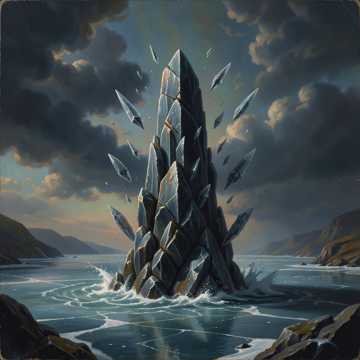
Escape Route (Take 9)
作品没有歌词,以自由节奏、无调性和声、微分音、反馈噪声及空间化打击乐展开。竖琴与打击乐在冰川般的和弦、突发重叠和静默之间游移,营造出神秘、冥想、疏离而充满逃逸感的外太空声景。
04:50
2026-09-08
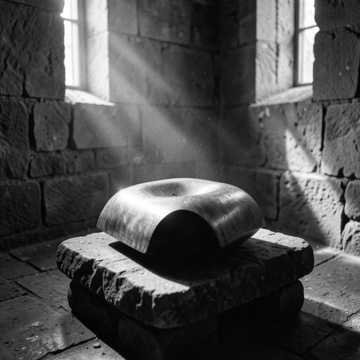
E59
E59 unfolds as a patient, continuous musical conversation in deep D minor. Piano leads an unforgettable theme while handpan, guitar, celesta, cimbalom, and nyckelharpa answer in layered echoes, creating a warm, meditative soundscape suited to reflection, film, memory, and quiet transformation.
04:00
2026-09-08

Escape Route (Take 8)
An instrumental escape into unstable sonic space, pairing bass clarinet and harp with microtonal pitches, atonal polyphony, glacial chord movement, silences, sirens, and freely shifting acceleration. Its meditative yet challenging form evokes an unknown world unfolding without melody or fixed time.
04:00
2026-09-08
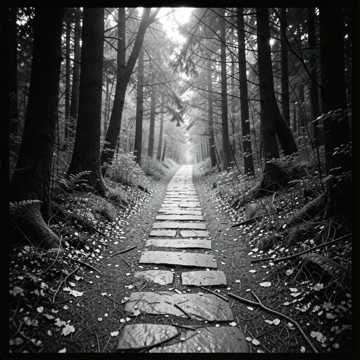
Escape Route (Take 7)
'Escape Route (Take 7)' is an avant-garde experimental chamber piece featuring clarinet, harp, and marimba. Navigating atonal, microtonal textures, spatial rhythms, and unpredictable tempos, it crafts an otherworldly, meditative yet challenging sonic labyrinth of suspense and liberation.
06:18
2026-09-08
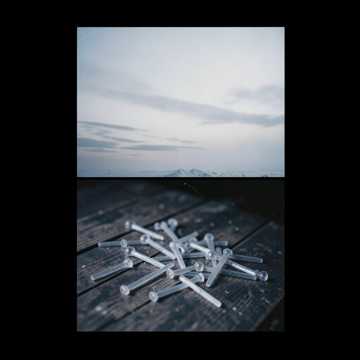
Escape Route (Take 6)
An experimental instrumental passage through instability and stillness. Bassoon, harp, horn, and marimba explore microtonal colors, overlapping accidents, free durations, silences, sirens, and evolving textures, suggesting an elusive escape route through a strange, meditative outerworld.
06:35
2026-09-07
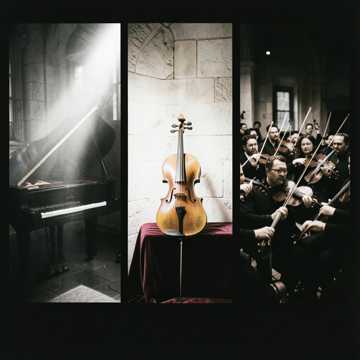
Cérémonie Laïque
Pièce instrumentale dédiée à une cérémonie laïque, elle fait dialoguer un piano délicat et un duo de violons émotionnel. Sa progression cinématographique accompagne les vœux, l’échange des alliances et la célébration d’un amour sincère, entre solennité, tendresse et joie.
04:31
2026-09-07
被安放的时间
歌曲以薰衣草、窗帘、尘埃与弦音描绘静谧房间,将生活的排列化为温柔的自我映照。自由律动逐渐归于秩序,表达心灵在细密日常中重新安放、缓慢归来的过程。
03:40
2026-09-07
Soon
With no lyrics, Soon communicates through abstract instrumental texture: vibraphone, harp, and bass clarinet move through atonal polyphony, multiphonics, pitch-bending, silence, and unstable pacing, creating a meditative yet unsettling journey into an outerworldly avant-garde space.
03:18
2026-09-06
Voyage (Take 5)
An instrumental avant-garde voyage shaped by harp and clarinet, where atonal polyphony, multiphonics, pitch-bending, silence, noise, and shifting pulse create a meditative yet unsettling passage through an imagined cosmic landscape.
06:43
2026-09-04
Voyage (Take 2)
An experimental chamber voyage without lyrics or conventional melody, shaped by bassoon, flute, harp, silences, sirens, multiphonics, pitch-bending, and shifting pace. Its meditative yet challenging sound world evokes cosmic travel, mysticism, and20th-century avant-garde exploration.
04:07
2026-09-04
Voyage
An experimental instrumental voyage led entirely by bassoon. Atonal polyphony, multiphonics, siren-like gestures, pitch-bending, silences, and shifting acceleration create a meditative yet demanding passage through an outerworldly sonic landscape.
05:26
2026-09-04
Introduction to Modern classical Music
Modern classical music is a genre that bridges the gap between traditional classical music and contemporary sounds, often incorporating elements from a wide range of styles, including minimalism, electronic music, and avant-garde. The genre began to take shape in the early 20th century as composers sought to explore new harmonic and structural possibilities, moving away from the Romantic era's expressive intensity. Influential figures such as Igor Stravinsky, Arnold Schoenberg, and later, Philip Glass and Steve Reich, played key roles in defining the genre, which continues to evolve today.
Sub-tags and Classifications in Modern classical Music
Minimalism
Minimalism is a sub-genre of Modern classical music characterized by repetitive patterns, steady pulse, and a focus on gradual change. Pioneers like Philip Glass, Steve Reich, and Terry Riley used minimalism to create hypnotic, evolving soundscapes that defied traditional Western musical forms.
Post-Minimalism
Post-Minimalism emerged as a response to the rigid structures of minimalism, incorporating more expressive elements and complex rhythms. Composers like John Adams and Julia Wolfe have expanded the minimalist approach to include richer textures and more dynamic shifts, creating works that are both accessible and emotionally impactful.
Neoclassicism
Neoclassicism in Modern classical music refers to a style that draws on classical forms and structures while infusing them with contemporary techniques and sensibilities. Stravinsky's 'Pulcinella' and Prokofiev's 'Classical Symphony' are quintessential examples of this movement, blending past and present in innovative ways.
Electroacoustic Music
Electroacoustic music combines classical compositional techniques with electronic sound production and manipulation. This sub-genre explores the possibilities of sound beyond traditional instruments, utilizing computers, synthesizers, and other electronic devices to create immersive auditory experiences. Key figures include Karlheinz Stockhausen and Pierre Boulez.
Famous Artists and Works in Modern classical Music
Philip Glass
Philip Glass is a seminal figure in Modern classical music, known for his contributions to the minimalist movement. His works, such as 'Einstein on the Beach' and 'Glassworks,' have been praised for their repetitive structures and meditative qualities, influencing a wide range of composers and musicians.
Einstein on the Beach by Philip Glass
This opera is one of the most iconic works in Modern classical music, showcasing Glass's minimalist style. The work features repetitive structures, an unorthodox narrative, and a hypnotic score, which together create a surreal, almost trance-like experience. It defies traditional operatic forms, emphasizing rhythm and texture over melody.
Steve Reich
Steve Reich, another pioneer of minimalism, is renowned for his use of phasing techniques and repetitive patterns. His works like 'Music for 18 Musicians' and 'Different Trains' have expanded the boundaries of Modern classical music, blending acoustic instruments with tape loops and other electronic elements.
Music for 18 Musicians by Steve Reich
This piece is a landmark in the minimalist genre, known for its complex interlocking rhythms and gradual changes in texture. 'Music for 18 Musicians' is structured around a series of shifting harmonic patterns, creating a mesmerizing soundscape that evolves subtly over time. The work is celebrated for its innovative use of pulse and timbre.
Arvo Pärt
Arvo Pärt is an Estonian composer whose unique style, often referred to as 'tintinnabuli,' has made a significant impact on Modern classical music. His works, such as 'Spiegel im Spiegel' and 'Tabula Rasa,' are known for their spiritual depth and simplicity, blending ancient and contemporary elements.
Tabula Rasa by Arvo Pärt
Arvo Pärt's 'Tabula Rasa' is a profound work that exemplifies his 'tintinnabuli' style. The piece is characterized by its stark simplicity and emotional intensity, using sparse textures and resonant harmonies to evoke a deep sense of contemplation. It has become a cornerstone of Modern classical repertoire, influencing a generation of composers.
Application Scenarios for Modern classical Music
Modern classical music is frequently used in film soundtracks to evoke deep emotional responses and underscore dramatic moments. For example, Philip Glass's music has been featured in films like 'The Hours' and 'Koyaanisqatsi,' where his minimalist compositions enhance the narrative with their repetitive, meditative qualities.
Film Soundtracks
The immersive and often atmospheric nature of Modern classical music makes it a popular choice for video game soundtracks. Composers like Austin Wintory have drawn on Modern classical elements to create scores for games like 'Journey,' where the music adapts to the player's actions, enhancing the overall gaming experience.
Video Game Background Music
Modern classical music's ability to convey sophistication and emotion has made it a valuable tool in advertising. Brands often use minimalist or neoclassical pieces to evoke a sense of elegance or modernity, creating a strong emotional connection with the audience. For instance, Max Richter's work has been featured in numerous high-profile ad campaigns.
Advertising Music