Free Ancient era Music Generator Powered by AI
Turn text into high-quality Ancient era music effortlessly – no login required!

music.toolTips
Ordo, Vis, Aeternitas
Carmen est hymnus civitatis militaris, in quo populus Quvariae sub ductu Gaii Quvarii ordinem, vim et aeternitatem extollit. Voces communes, disciplina, sacrificium et victoria efficiunt atmosphaeram obscuram, solemnem et quasi imperii antiqui, ubi fides civium legem et rem publicam sustentat.
03:30
2026-08-22

Argonauts
A forceful retelling of the Argonauts' voyage, blending Greek mythology, ritual imagery, heroic conquest, and sacred feminine symbolism. Its relentless war-dance rhythm and gruff vocals evoke an archaic warrior procession sailing toward glory, danger, and the Golden Fleece.
05:03
2026-08-22

Argonauts
Argonauts recounts Jason and his legendary crew sailing toward the Golden Fleece. Framed as a ritualistic war chant, the song blends heroic mythology, goddess worship, sacrifice, violence, and conquest with relentless drums and archaic Greek instrumentation, creating a dark, ceremonial atmosphere of martial power and ancient destiny.
06:13
2026-08-22

Argonauts
An archaic war hymn retelling the Argonauts' quest for the Golden Fleece. Pounding drums, masculine chants, and ancient Greek instrumentation create a ritualistic atmosphere of conquest, divine power, heroic fellowship, and mythic adventure.
05:05
2026-08-22
Pèlerin du martyre
Cette lamentation doom metal raconte le chemin de Paul Mikki vers le martyre. Porté par une foi invincible, il endure la faim, les chaînes et la crucifixion avant d’offrir le pardon. La chanson transforme sa souffrance en témoignage spirituel, puissant et durable.
05:10
2026-08-22
Krone der Queen
Eine entschlossene Kriegerinnenschar zieht gemeinsam gegen eine mächtige Queen. Zwischen Trommeln, Stahl und mystischen Hallen entfaltet sich eine dramatische Hymne über Mut, Loyalität und unerschütterlichen Zusammenhalt, bis die Krone der Herrscherin fällt.
03:22
2026-08-22

viking
Une voyageuse, poussée par la mer et séparée de son passé, atteint un rivage sauvage où règnent la paix, les chevaux libres et l'amour véritable. Le morceau transforme cet exil en renaissance spirituelle, dans une atmosphère viking intense, froide et lumineuse.
02:49
2026-08-21
viking
Guidée par la mer vers un rivage inconnu, une voyageuse découvre une terre infinie où règnent la paix et les chevaux sauvages. Derrière l'horizon, elle abandonne son passé et trouve l'amour véritable, accompagné d'une joie éternelle.
02:04
2026-08-21

viking
Portée par la mer jusqu à une terre nouvelle, une voyageuse abandonne son passé derrière l horizon et découvre un amour véritable, une paix profonde et une joie éternelle au cœur d un paysage sauvage.
02:45
2026-08-21
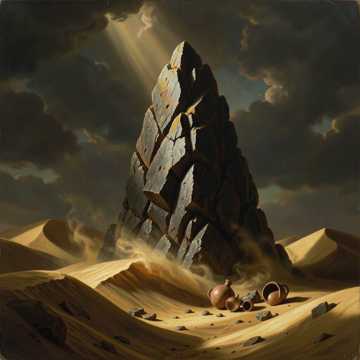
Steele
Steele evokes armies colliding across endless dunes through thunderous percussion, ominous brass, ritualistic Middle Eastern textures, and a soaring female vocal. Its relentless momentum transforms ancient desert warfare into a tragic, majestic cinematic experience filled with tension, dread, and overwhelming scale.
03:19
2026-08-16
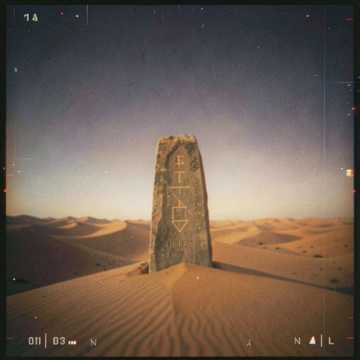
Steele
Steele evokes a sacred ceremony beneath an endless desert sky. Deep drones, ritualistic percussion, and a haunting female voice create an ominous yet majestic soundscape, suggesting forgotten temples, spiritual awakening, ancient prophecy, and vast otherworldly landscapes.
04:29
2026-08-16
Речь Святослава Храброго.
Патриотическая историческая баллада о памяти Руси и наследии Святослава Храброго. Через маршевый ритм, хриплый вокал и древнеславянские тембры песня противопоставляет живую память официальным мифам, звуча как суровое предупреждение о цене забвения и искажения прошлого.
03:09
2026-08-12
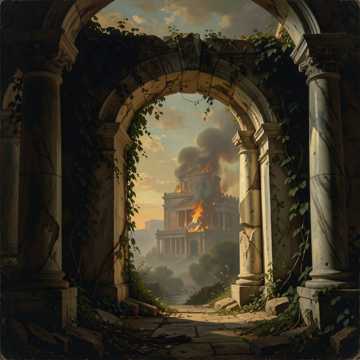
16. Kings, Gods and Empires
A powerful gothic rock meditation on Egypt, Persia, Greece, and Rome, exploring how empires created magnificent cultures while causing suffering. Its imposing chorus contrasts human ambition with inevitable collapse, reminding us that every throne, banner, and civilization eventually becomes history.
03:15
2026-08-11
15. Cities of Dust and Stone
A powerful cinematic rock song about humanity's first cities and the systems they created. It celebrates writing, trade, law, and collective ambition while confronting the inequality and control that emerged alongside civilization.
03:35
2026-08-11

Beginning
Carmen describit concordiam ignis, terrae, aquae atque aeris: ex pugna nascitur ordo, ex ordine corpus unum, quod amore ligatur et per tempora servatur. Vox quasi ritus vetus, inter sonos arcanae resonantiae, creationem cosmicam celebrat.
02:15
2026-08-09
The way of the viking
A fierce Viking war hymn portraying warriors defending sacred lands under Odin’s gaze. Fast, triumphant, and ritualistic, it combines shield-wall imagery, Valkyries, thunderous drums, and the repeated cry Til Valhall to evoke courage, sacrifice, brotherhood, and ancient Norse battlefield spirit.
03:47
2026-08-08

The way of the viking
The song portrays Viking warriors defending sacred lands under Odins gaze. Driven by horns, drums, steel, and shield-wall chants, it builds a heroic atmosphere of courage, sacrifice, loyalty, and spiritual destiny, culminating in a powerful cry of Til Valhall.
03:44
2026-08-08

The way of the viking
An energetic Viking war hymn in which warriors defend sacred lands under Odin’s gaze. Through imagery of Gjallarhorns, Valkyries, shield-walls, and Valhalla, the song transforms courage, sacrifice, loyalty, and ancient Norse spirituality into a forceful battle cry.
03:37
2026-08-08
Sunshine
Sunshine follows a fallen ruler trapped between memories of greatness, romantic betrayal, and impending destruction. Its recurring chorus turns sunlight into a deceptive symbol of obsession and false hope, while ancient acoustic textures and a brooding vocal performance create a ritualistic atmosphere of doom, guilt, and resignation.
04:04
2026-08-08
Sunshine
Sunshine portrays a fallen ruler confronting delusion, lost power, destructive love, and impending catastrophe. Its recurring chorus turns sunlight into a deceptive symbol of memory and longing, while doom-laden vocals and ancient instruments create a ritualistic atmosphere of guilt, isolation, and inevitable collapse.
03:43
2026-08-08
Introduction to the Ancient Era in Music
The Ancient era in music refers to the period from the earliest known musical traditions up until the fall of the Roman Empire, roughly encompassing 5000 BCE to 476 CE. This era is marked by the use of music in religious ceremonies, communal rituals, and cultural expressions. Music from the Ancient era is characterized by its simplicity, primarily monophonic texture, and its use of early musical instruments such as lyres, flutes, and drums. The origins of written music notation can also be traced back to this time, with the earliest examples found in ancient Mesopotamian and Greek civilizations. The Ancient era laid the foundational structures for the music of later periods, with its influence seen in the development of scales, modes, and musical forms.
Sub-tags and Classifications of Ancient Era Music
Mesopotamian Music
Mesopotamian music, one of the oldest documented forms of music, was integral to the religious and social life of ancient Sumer, Akkad, and Babylon. It featured the use of instruments like the lyre, harp, and drum, and early forms of written notation have been discovered on cuneiform tablets, providing insight into their musical scales and modes.
Egyptian Music
Ancient Egyptian music was central to both sacred and secular life, with musicians often holding esteemed positions in society. Their music employed instruments such as the sistrum, lute, and various types of drums and flutes. Egyptian music is noted for its connection to the gods and was an essential part of rituals, festivals, and royal ceremonies.
Greek Music
Greek music from the Ancient era is perhaps the most studied, thanks to the extensive writings of philosophers like Pythagoras and Plato on the theory and ethos of music. Greek music was performed with instruments such as the lyre, aulos (a double-reeded wind instrument), and the kithara. The Greeks also developed an early system of notation and contributed significantly to the understanding of scales, modes, and harmony.
Roman Music
Roman music, influenced by the Greeks, played a significant role in public spectacles, military ceremonies, and private entertainment. Instruments used included the tuba, cornu, and hydraulic organ. While much of Roman music was adapted from Greek traditions, it also featured distinct elements, such as the emphasis on grandiose public performances in amphitheaters.
Famous Artists and Works of the Ancient Era
Enheduanna
Enheduanna, a high priestess of Ur in ancient Mesopotamia, is considered one of the earliest known composers. Her hymns, composed around 2300 BCE, were used in temple rituals and are some of the earliest examples of written music, reflecting the spiritual and ceremonial use of music in this period.
Hurrian Hymn No. 6
The Hurrian Hymn No. 6, discovered in ancient Ugarit (modern-day Syria), is one of the oldest known pieces of written music, dating back to around 1400 BCE. It is a hymn dedicated to the goddess Nikkal and is written in the Hurrian language. The notation system used provides insight into the musical scales and practices of the time, and it is performed today using reconstructed ancient instruments.
Terpander
Terpander was a Greek musician and poet from the 7th century BCE, credited with significant contributions to the development of Greek music. He is known for standardizing the musical scales used in Greek music and for introducing the seven-stringed lyre, which expanded the melodic range available to musicians.
Epitaph of Seikilos
The Epitaph of Seikilos is an ancient Greek song inscribed on a tombstone from the 1st century CE, and it is the oldest complete musical composition that has survived to the present day. The song is accompanied by musical notation, providing a clear example of how music was structured in ancient Greece. The lyrics, which speak of the transient nature of life, are still evocative, and the melody offers insight into ancient Greek musical aesthetics.
Stesichorus
Stesichorus, a Greek lyric poet from the 6th century BCE, is renowned for his contributions to choral lyric poetry. His work laid the groundwork for later musical and poetic forms in ancient Greece, and his innovations in lyric composition influenced the development of music in the classical world.
Delphic Hymns
The Delphic Hymns, composed around 128 BCE, are two hymns dedicated to Apollo. These hymns are significant for being some of the few surviving pieces of notated music from ancient Greece. They reflect the importance of music in religious worship and provide examples of the melodic and harmonic practices of the time.
Application Scenarios for Ancient Era Music
Ancient era music is often used in movie soundtracks to evoke a sense of history or to set the scene in films depicting ancient civilizations. The use of reconstructed ancient instruments and scales helps create an authentic atmosphere, transporting viewers back in time.
Movie Soundtracks
In documentaries that explore ancient history, cultures, or archaeological discoveries, music from the Ancient era provides an appropriate and immersive background. It enhances the storytelling by connecting viewers with the time period being discussed.
Documentary Background Music
Ancient era music is frequently incorporated into the soundtracks of historical video games, particularly those set in ancient Rome, Greece, or Egypt. The use of music from this period helps create a more immersive gaming experience, allowing players to feel as if they are part of the ancient world.
Historical Video Games
Museums often use Ancient era music in their exhibits to enhance the experience of viewing artifacts from ancient civilizations. The music helps set the tone and context, providing visitors with a multisensory experience that deepens their understanding of the exhibits.
Museum Exhibits