Free Ancient era Music Generator Powered by AI
Turn text into high-quality Ancient era music effortlessly – no login required!

music.toolTips

Le corps selon la bible
Dans un style solennel et narratif, la chanson présente le corps comme un temple et un microcosme où s’unissent matière, pensée, esprit et monde. Elle célèbre l’unité sacrée de l’être, les sens, le soin et la mémoire corporelle.
03:28
2026-09-12
Dernier Rempart
Dernier Rempart déploie une marche de guerre médiévale, tendue et grandiose. Les tambours martèlent la progression, les cuivres appellent au combat et les cordes maintiennent la pression jusqu’à l’assaut final, avant une accalmie solitaire au violon.
03:08
2026-09-11

Z
A dal a hunok dicső múltját, Attila örökségét és az ősi vér megállíthatatlan erejét ünnepli. A dübörgő ritmusok, a vágtató lovak hangulata és a harci kürtök szava egy epikus, történelmi utazásra hívják a hallgatót, ahol a szabadság és a büszkeség tüze örökké ég.
04:35
2026-09-10
The kingdom of Rovan
A slow, atmospheric voyage through the ruins and grandeur of Roman civilization. Its dark, mysterious, and adventurous mood suggests ancient battles, imperial legends, hidden temples, and solemn reflections beneath vast cinematic soundscapes.
03:25
2026-09-10

H
Diese geistliche Rezitation aus Matthäus18,15–20 spricht über brüderliche Zurechtweisung, Versöhnung, die Autorität der Gemeinde und die Kraft des gemeinsamen Gebets. Im Zentrum steht die Zusage Jesu: Wo zwei oder drei in seinem Namen versammelt sind, ist er mitten unter ihnen.
01:21
2026-09-06
境界の向こうへ
封じられた記憶と二つの月に導かれ、姉妹が戦乱の異世界を駆け抜ける物語。血縁を超えた絆を力に変え、神々や宿命に抗いながら、未来と新たな世界を切り拓いていく。
04:26
2026-09-05

遥かな彼方へ
焼けた村を旅立った姉妹が、古い羅針盤と巻物に導かれ、時空を越えて二つの世界を結ぶ。戦火や別離を乗り越え、消えない絆を胸に、真実と帰る場所を求めて新たな朝へ進む物語。
04:39
2026-09-05

I. VIENADIENĖ
Daina pasakoja apie pirmąjį Ajos susitikimą su pasauliu: rasa, pieva, vabzdžiai, medžiai ir vanduo atsiveria kaip tūkstančiai tarpusavyje susiliejančių balsų. Iš pradžių klausydamasi tyliai, ji pamažu pajunta visos gyvybės vienybę ir troškimą pažinti didžiulį pasaulį.
04:52
2026-09-05

Dcec
एतत् श्रीकृष्णजगद्गुरुस्तोत्रं तस्य दिव्यरूपं, पराक्रमं, करुणां, माधुर्यं च वर्णयति। स्थिरलययुक्तेन पुरुषस्वरेण, सामञ्जस्यपूर्णैः स्वरेः, मन्त्रपाठसदृशेन गायनेन च गीतं भक्तेः, श्रद्धायाः, अन्तःशान्तेश्च अनुभवं जनयति।
03:19
2026-09-04

Evangelium
Die gesprochene Vertonung schildert Jesu Begegnung mit Simon am See Gennesaret: Aus erfolgloser Arbeit wird ein überwältigender Fang, aus Ehrfurcht eine Berufung. Simon und seine Gefährten verlassen alles und folgen Jesus nach.
02:15
2026-09-03

월하초연
궁궐 담장 너머로 시작된 열여섯의 첫사랑을 달빛, 서찰, 눈빛의 이미지로 그려낸 곡이다. 전통 궁중음악의 느린 흐름 속에서 말하지 못한 그리움이 깊어지고, 세월이 흘러도 남는 사랑의 기억으로 잔잔하게 마무리된다.
04:00
2026-09-02
R
Der Text schildert, wie Jesus in Kafarnaum mit göttlicher Vollmacht lehrt und einen besessenen Menschen befreit. Das gesprochene Format verstärkt die liturgische Wirkung und lenkt die Aufmerksamkeit auf Jesu Autorität, die Furcht der Anwesenden und die sich verbreitende Kunde seines Wirkens.
01:09
2026-09-02
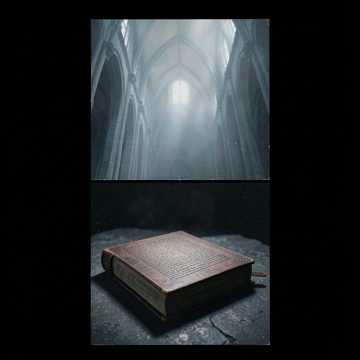
The Ballad of Spanish the Second
A sorrowful yet ultimately triumphant medieval-style ballad about students enduring Spanish Two under the stern Master Iglesias. Through haunted imagery, dramatic repetition, and comic academic despair, the song turns difficult grammar, homework, and subjunctive verbs into an epic battle ending in hard-earned victory.
06:32
2026-09-01
Ih
Der Text schildert Jesu Auftritt in Nazaret: Er verkündet die Erfüllung der Schrift, Hoffnung für Arme und Freiheit für Unterdrückte. Seine universelle Botschaft stößt jedoch auf Ablehnung und Wut, bis er der Menge entkommt und weitergeht.
02:47
2026-08-31
《千年的囚徒》
歌曲描寫九王爭鬥中的千年宿命與禁忌之愛。水龍、雷龍、冰火血脈交織於皇權、冤屈與輪迴之間,兩個破碎靈魂在仇恨盡頭重逢,最終以餘生補償罪與罰。
04:30
2026-08-31
Argonauts
A bombastic ritual retelling of the Argonauts' voyage, following Jason, Hercules, Atalanta, and their crew through divine trials, violent conquest, and the pursuit of the Golden Fleece. Its recurring war-chant transforms Greek myth into a stern hymn to ancient gods, warriors, ambition, and endurance.
05:58
2026-08-31

Argonauts
A stern, bombastic retelling of the Argonauts' voyage, blending Greek myth, Goddess symbolism, warrior initiation, and the quest for the Golden Fleece. Ritual drums, archaic instruments, and gruff vocals create a dark ceremonial atmosphere of conquest, sacrifice, divine rivalry, and heroic destiny.
06:03
2026-08-31

《千秋宿命畫卷》
歌曲描寫九王爭權、洪水冤魂與雷電雙生交織的千年宿命。兩個被仇恨與權力撕裂的靈魂,在冰火、輪迴與贖罪之中重新確認愛的唯一性。
04:35
2026-08-30

Argonauts
A bombastic retelling of the Argonauts expedition, this ancient war song follows Jason, Hercules, Atalanta, and their crew through divine rites, perilous seas, monstrous guardians, and the theft of the Golden Fleece. Its relentless chorus transforms mythic adventure into a ritualistic anthem of conquest, loyalty, and martial destiny.
05:30
2026-08-30
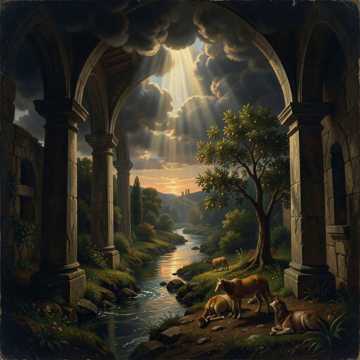
The Sacred Garden
The song poetically recounts creation, from the birth of light and ordered heavens to living creatures and humanity’s arrival in a sacred garden. Its reverent choral atmosphere, solemn minor mode, and gradual emotional swells celebrate divine order, wonder, stewardship, and the peaceful goodness of the created world.
06:04
2026-08-30
Introduction to the Ancient Era in Music
The Ancient era in music refers to the period from the earliest known musical traditions up until the fall of the Roman Empire, roughly encompassing 5000 BCE to 476 CE. This era is marked by the use of music in religious ceremonies, communal rituals, and cultural expressions. Music from the Ancient era is characterized by its simplicity, primarily monophonic texture, and its use of early musical instruments such as lyres, flutes, and drums. The origins of written music notation can also be traced back to this time, with the earliest examples found in ancient Mesopotamian and Greek civilizations. The Ancient era laid the foundational structures for the music of later periods, with its influence seen in the development of scales, modes, and musical forms.
Sub-tags and Classifications of Ancient Era Music
Mesopotamian Music
Mesopotamian music, one of the oldest documented forms of music, was integral to the religious and social life of ancient Sumer, Akkad, and Babylon. It featured the use of instruments like the lyre, harp, and drum, and early forms of written notation have been discovered on cuneiform tablets, providing insight into their musical scales and modes.
Egyptian Music
Ancient Egyptian music was central to both sacred and secular life, with musicians often holding esteemed positions in society. Their music employed instruments such as the sistrum, lute, and various types of drums and flutes. Egyptian music is noted for its connection to the gods and was an essential part of rituals, festivals, and royal ceremonies.
Greek Music
Greek music from the Ancient era is perhaps the most studied, thanks to the extensive writings of philosophers like Pythagoras and Plato on the theory and ethos of music. Greek music was performed with instruments such as the lyre, aulos (a double-reeded wind instrument), and the kithara. The Greeks also developed an early system of notation and contributed significantly to the understanding of scales, modes, and harmony.
Roman Music
Roman music, influenced by the Greeks, played a significant role in public spectacles, military ceremonies, and private entertainment. Instruments used included the tuba, cornu, and hydraulic organ. While much of Roman music was adapted from Greek traditions, it also featured distinct elements, such as the emphasis on grandiose public performances in amphitheaters.
Famous Artists and Works of the Ancient Era
Enheduanna
Enheduanna, a high priestess of Ur in ancient Mesopotamia, is considered one of the earliest known composers. Her hymns, composed around 2300 BCE, were used in temple rituals and are some of the earliest examples of written music, reflecting the spiritual and ceremonial use of music in this period.
Hurrian Hymn No. 6
The Hurrian Hymn No. 6, discovered in ancient Ugarit (modern-day Syria), is one of the oldest known pieces of written music, dating back to around 1400 BCE. It is a hymn dedicated to the goddess Nikkal and is written in the Hurrian language. The notation system used provides insight into the musical scales and practices of the time, and it is performed today using reconstructed ancient instruments.
Terpander
Terpander was a Greek musician and poet from the 7th century BCE, credited with significant contributions to the development of Greek music. He is known for standardizing the musical scales used in Greek music and for introducing the seven-stringed lyre, which expanded the melodic range available to musicians.
Epitaph of Seikilos
The Epitaph of Seikilos is an ancient Greek song inscribed on a tombstone from the 1st century CE, and it is the oldest complete musical composition that has survived to the present day. The song is accompanied by musical notation, providing a clear example of how music was structured in ancient Greece. The lyrics, which speak of the transient nature of life, are still evocative, and the melody offers insight into ancient Greek musical aesthetics.
Stesichorus
Stesichorus, a Greek lyric poet from the 6th century BCE, is renowned for his contributions to choral lyric poetry. His work laid the groundwork for later musical and poetic forms in ancient Greece, and his innovations in lyric composition influenced the development of music in the classical world.
Delphic Hymns
The Delphic Hymns, composed around 128 BCE, are two hymns dedicated to Apollo. These hymns are significant for being some of the few surviving pieces of notated music from ancient Greece. They reflect the importance of music in religious worship and provide examples of the melodic and harmonic practices of the time.
Application Scenarios for Ancient Era Music
Ancient era music is often used in movie soundtracks to evoke a sense of history or to set the scene in films depicting ancient civilizations. The use of reconstructed ancient instruments and scales helps create an authentic atmosphere, transporting viewers back in time.
Movie Soundtracks
In documentaries that explore ancient history, cultures, or archaeological discoveries, music from the Ancient era provides an appropriate and immersive background. It enhances the storytelling by connecting viewers with the time period being discussed.
Documentary Background Music
Ancient era music is frequently incorporated into the soundtracks of historical video games, particularly those set in ancient Rome, Greece, or Egypt. The use of music from this period helps create a more immersive gaming experience, allowing players to feel as if they are part of the ancient world.
Historical Video Games
Museums often use Ancient era music in their exhibits to enhance the experience of viewing artifacts from ancient civilizations. The music helps set the tone and context, providing visitors with a multisensory experience that deepens their understanding of the exhibits.
Museum Exhibits