Free Classical Music Generator Powered by AI
Turn text into high-quality Classical music effortlessly – no login required!

music.toolTips

The Poet
The Poet follows a wordsmith who transforms heartbreak into verses while struggling to control a love story that resists rewriting. Moving from intimate reflection to playful ska and dramatic classical passages, the song ultimately reveals that the beloved was not merely inspiration, but the poem itself.
05:42
2026-09-01

The Poet
The Poet follows a writer who turns heartbreak into verses, jokes, metaphors, and music while trying to escape an unforgettable love. Through indie pop, classical drama, ska brightness, and melodic rap, the song moves from emotional disguise toward acceptance, revealing that every poem was also rewriting the poet.
05:49
2026-09-01
The Poet
The song follows a writer who turns heartbreak, love, and self-deception into poetry. Moving through classical drama, pop confession, ska humor, and melodic rap, he realizes that every attempt to control the story only reveals the person who inspired it: the poem itself.
05:07
2026-09-01

The Poet
The Poet follows a writer who turns heartbreak into verses, using pop confession, ska humor, melodic rap, and classical vulnerability. Beneath the clever metaphors, he discovers that every poem leads back to one unforgettable love, until acceptance finally gives him the words to say goodbye.
05:21
2026-09-01

The Poet
The Poet follows a writer who transforms love, pain, and fear into art, only to discover that every verse leads back to one unforgettable person. Moving through classical drama, pop confession, ska humor, and melodic rap, the song becomes a reflection on creativity, vulnerability, and emotional truth.
05:23
2026-09-01
The Poet
The song follows a writer who turns love and heartbreak into poetry, gradually realizing that his words reveal truths he cannot hide. Through pop, classical, ska, and melodic rap, he moves from playful obsession and emotional disguise toward acceptance, vulnerability, and an unfinished goodbye.
05:03
2026-09-01

The Poet
The Poet follows a writer transforming heartbreak, longing, and contradiction into verses. Through playful rhymes and intimate confession, the song discovers that love cannot be fully captured by language: the true poem is the person who remains in the heart after words disappear.
03:20
2026-09-01
The Poet
The song follows a self-aware poet who transforms love, regret, and heartbreak into elaborate verses. Beneath the wordplay, he discovers that genuine love exceeds metaphor: it is the person he continues writing about when language finally fails.
03:22
2026-09-01
The Poet
The song follows a writer who turns heartbreak into poetry, discovering that clever language cannot replace honest feeling. Through rap-like wordplay and classical emotional grandeur, it evolves from self-expression into a confession: the beloved is not merely the subject of the poem, but its true meaning.
03:05
2026-09-01
Ca commence avant
Cette chanson décrit la Parole comme une force créatrice qui agit d'abord dans l'invisible avant de devenir réalité. Inspirée d'Hénoch, du Livre des Jubilés et du Psaume151, elle relie préparation spirituelle, révélation et victoire intérieure.
03:32
2026-09-01
مهِ فروردین
مهِ فروردین نوکتورنی صمیمی برای پیانوی تنهاست؛ آغاز آن سرشار از اندوهی لطیف است، بخش میانی به روشنایی و امید میرسد و بازگشت نهایی، تم اصلی را با ظرافتی غنیتر و احساسی عمیقتر روایت میکند.
05:14
2026-09-01
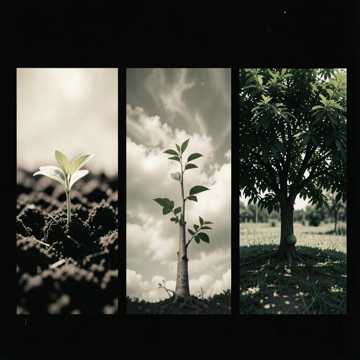
cUANDO cREZCAS
La canción presenta un árbol recién plantado que pide protección durante su crecimiento y promete devolver ese cuidado con sombra, frutos, refugio y apoyo en la vejez. Es una metáfora tierna sobre la responsabilidad, la reciprocidad entre generaciones y la esperanza de un futuro compartido.
04:40
2026-09-01
Piece for Niya Take 001
An instrumental chamber work shaped by indeterminate pulse, sustained chords, decay, silence, and chromatic fragments. Its restrained dynamics and microtonal shading create a mysterious, meditative atmosphere, evoking experimental classical composition, outer space, and an emotionally distant yet captivating sonic landscape.
07:46
2026-09-01

Tanhaii
यह गीत तन्हाई को अकेलेपन नहीं, बल्कि आत्मसंवाद, सुकून और आत्मस्वीकृति का साथी मानता है। रात के सन्नाटे, यादों और आईने के माध्यम से यह बिखरे दिल को समेटकर अपने अस्तित्व से रूबरू होने की भावपूर्ण यात्रा प्रस्तुत करता है।
03:35
2026-09-01

Kala
கலைவாணி என்ற குழந்தைப் பருவக் காதலுக்கான இனிய நினைவஞ்சலியும் பிறந்தநாள் வாழ்த்தும் இந்தப் பாடலின் மையம். காலமும் தூரமும் பிரித்தாலும் முதல் காதலின் நினைவுகள் அழியாது என்பதை உற்சாகமான ராக்-கிளாசிக்கல் மெலடியில் வெளிப்படுத்துகிறது.
04:18
2026-08-31
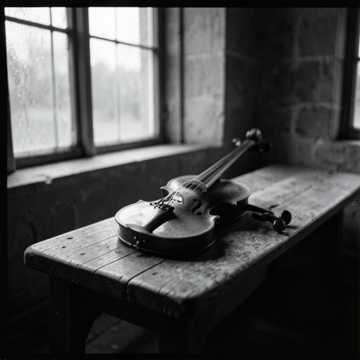
Moonlit Conservatory
A slow, rubato chamber piece that unfolds like moonlight across an empty conservatory. Felted piano introduces a fragile memory, violin carries its grief, and woodwinds deepen the atmosphere before a sparse oboe and cello passage leads to a warm, cinematic final return.
02:50
2026-08-31

start4
An instrumental piano composition that begins with restrained, separated notes and gradually transforms through sustained pedal resonance into a powerful romantic climax. Its noble melodic character evokes open roads, personal ambition, cinematic discovery, and the emotional release of reaching a long-awaited destination.
06:20
2026-08-31
Exxan dc
यह पद घनश्याम और मोहनलाल की झूला-लीला का आनंदमय चित्रण करता है। राधा तथा व्रज की नारियां प्रेमपूर्वक झूला झुलाती हैं, मोतियों से सजे हिंडोरे की छवि निहारती हैं और कृष्ण-स्मरण में निरंतर ब्रह्मानंद अनुभव करती हैं।
04:26
2026-08-31
Ccecec hjj
यह पद घनश्याम और राधा के झूला-विहार का आनंदमय चित्रण करता है। मोहनलाल मोतियों से सजे हिंडोरे पर झूलते हैं, जबकि व्रज की नारियां प्रेमपूर्वक झुलाती हैं। राग बिहाग और हिंदोला कीर्तन शैली रचना में भक्ति, माधुर्य, उत्सव और आत्मिक विश्राम भरती है।
05:41
2026-08-31

Как важно просыпаться в тишине...
Песня размышляет о значении тишины, здорового сна и внутреннего покоя. Герои призывают беречь энергию души, избегать суеты и шума, очищать мысли молитвой и вовремя пробуждаться к более гармоничной жизни.
02:28
2026-08-31
Introduction to Classical Music
Classical music, often referred to simply as 'Classical,' is a broad genre of music that originated in the traditions of Western culture, encompassing a wide period from the medieval era to the present day. Its development spans several centuries, with its roots deeply embedded in the liturgical and secular music of the Western world. The genre is characterized by its emphasis on formal styles, complex structures, and the use of notation to ensure precise performances. The Classical era itself, which ranges from the mid-18th century to the early 19th century, is often considered the pinnacle of this genre, marked by the works of composers like Haydn, Mozart, and Beethoven. Over time, Classical music has evolved, influencing and incorporating various styles and innovations from different periods and regions.
Sub-tags and Classifications of Classical Music
Baroque
The Baroque period, spanning from approximately 1600 to 1750, is known for its elaborate musical ornamentation, contrasting dynamics, and the development of tonality. Key composers of this era include Johann Sebastian Bach, George Frideric Handel, and Antonio Vivaldi. Baroque music often features complex counterpoint and was typically composed for both religious and secular settings.
Classical Period
The Classical period, roughly from 1750 to 1820, emphasized clarity, balance, and form, moving away from the ornate style of the Baroque. Composers such as Wolfgang Amadeus Mozart, Joseph Haydn, and Ludwig van Beethoven are central to this era. The music of the Classical period is known for its clear structure, with the sonata form being a dominant compositional method.
Romantic
The Romantic era, from about 1820 to 1900, focused on emotional expression, individualism, and the expansion of the orchestra. This period saw composers like Franz Schubert, Johannes Brahms, and Richard Wagner pushing the boundaries of traditional forms to convey deeper emotional content and dramatic intensity. Romantic music often features rich harmonies, dynamic contrasts, and expansive melodic lines.
20th Century and Contemporary
The 20th century and contemporary classical music reflect a broad range of styles, techniques, and ideologies, from the atonal works of Arnold Schoenberg to the minimalist compositions of Philip Glass. This period is marked by experimentation, the blending of classical traditions with modern and popular music influences, and the use of new technologies in composition and performance.
Famous Artists and Works in Classical Music
Ludwig van Beethoven
Beethoven is one of the most influential composers in the history of Western music. His works, including the 'Symphony No. 9' and 'Moonlight Sonata,' bridge the Classical and Romantic eras, showcasing his innovative use of form, harmony, and orchestration. Beethoven's music is renowned for its emotional depth and technical brilliance.
Symphony No. 9 in D minor, Op. 125
Beethoven's Symphony No. 9, also known as the 'Choral Symphony,' is a monumental work that introduced the use of a choir and vocal soloists in the final movement. The symphony's fourth movement features the famous 'Ode to Joy' theme, which has become an anthem for unity and brotherhood. This work is celebrated for its innovative structure, emotional depth, and powerful themes.
Wolfgang Amadeus Mozart
Mozart was a prolific composer who produced more than 600 works, including symphonies, operas, chamber music, and concertos. His compositions, such as 'The Magic Flute' and 'Requiem,' are celebrated for their melodic beauty, structural clarity, and emotional expressiveness.
The Magic Flute, K. 620
Mozart's 'The Magic Flute' is a two-act opera that blends elements of German singspiel with deep philosophical themes. The work is noted for its masterful use of orchestration, memorable arias, and the portrayal of complex characters. The opera remains one of the most performed works in the operatic repertoire.
Johann Sebastian Bach
Bach is often considered the greatest composer of the Baroque era. His works, such as the 'Brandenburg Concertos' and 'The Well-Tempered Clavier,' are revered for their complex counterpoint, rich harmonies, and intellectual depth. Bach's music has had a profound influence on subsequent generations of composers.
Brandenburg Concertos
Bach's 'Brandenburg Concertos' are a collection of six instrumental works that exemplify the Baroque concerto grosso form. Each concerto features a unique combination of instruments and showcases Bach's skill in fusing counterpoint with virtuosic demands. These works are celebrated for their complexity, creativity, and enduring appeal.
Frédéric Chopin
Chopin, a leading figure in the Romantic era, is known for his piano compositions, which include nocturnes, études, and sonatas. His music is characterized by its poetic lyricism, technical demands, and emotional intensity. Works like the 'Nocturne in E-flat major, Op. 9 No. 2' remain cornerstones of the piano repertoire.
Piano Concerto No. 2 in F minor, Op. 21
Chopin's Piano Concerto No. 2 is a Romantic masterpiece that highlights the expressive possibilities of the piano. The concerto is known for its lyrical second movement, which showcases Chopin's ability to convey deep emotion through subtle harmonic shifts and delicate phrasing. This work remains a favorite among pianists and audiences alike.
Application Scenarios for Classical Music
Classical music is frequently used in movie soundtracks to enhance the emotional depth of scenes and convey complex narratives. Works such as Richard Wagner's 'Ride of the Valkyries' or Johann Pachelbel's 'Canon in D' are often used to evoke specific moods or underscore dramatic moments.
Movie Soundtracks
In advertising, Classical music is often used to create a sense of elegance, sophistication, and timelessness. Pieces like Mozart's 'Eine kleine Nachtmusik' are commonly used in commercials to convey a refined atmosphere or appeal to a high-end market.
Advertising Music
Classical music is also used in video games to enhance the gaming experience, particularly in titles that require a grand or epic feel. For example, Gustav Holst's 'Mars, the Bringer of War' from 'The Planets' suite is often used in strategy games to create tension and anticipation.
Game Background Music