Free Historical Music Generator Powered by AI
Turn text into high-quality Historical music effortlessly – no login required!

music.toolTips
Captain's Daughter
A doubted captain's daughter rises during a violent storm, proving her leadership through courage and sacrifice. What begins as inherited legacy transforms into self-earned authority as she takes the wheel, protects her crew, and becomes a captain in her own right.
04:54
3 days ago
Leyenda de 1677
Una narración instrumental de aire barroco que evoca una leyenda española del siglo XVII. La guitarra de nylon conduce melodías nobles y heroicas, mientras la vihuela, las cuerdas sutiles y la percusión crean una atmósfera cálida, histórica y cinematográfica.
03:47
3 days ago
Leyenda de 1677
Una evocación instrumental de la España barroca de1677, construida con guitarras clásicas cálidas, líneas pulsadas ornamentales y un aire cortesano. Su carácter majestuoso, brillante y esperanzador resulta ideal para documentales históricos, recreaciones renacentistas, ceremonias y escenas de conquista cultural.
02:00
3 days ago

Captain's Daughter
A captain's underestimated daughter takes command during a deadly storm, proving her courage and nautical skill while honoring her father without living in his shadow. The song builds from quiet grief to defiant triumph as she earns the crew's trust and leads them home.
05:41
3 days ago
Captain's Daughter
A captain's underestimated daughter transforms doubt into command during a devastating storm. Guided by her father's legacy but driven by her own courage, she takes the wheel, saves her crew, and proves that leadership is earned through action rather than inherited through blood.
05:28
3 days ago
Leyenda de Monasterio
Una fantasía instrumental de aire cortesano que evoca un monasterio antiguo mediante un suave balanceo en6/8. Las guitarras, el laúd, el arpa, la mandolina y los ecos corales construyen una atmósfera íntima, noble, luminosa y profundamente cinematográfica.
02:55
3 days ago
Luz de Monasterio
Luz de Monasterio evoca una corte española de1677 mediante laúd, arpegios de arpa, melodías de flauta y adornos de violín. Su pulso sereno, ecos sacros y cadencia noble crean un paisaje íntimo, ceremonial y esperanzador, ideal para contemplación, ambientación histórica o momentos de inspiración.
03:24
3 days ago
Cántico de Alba
Una evocación sonora del amanecer en una corte ibérica: la vihuela y el laúd presentan una melodía modal luminosa, mientras flautas, violas y percusión construyen un contrapunto sereno. La pieza crece con elegancia y concluye en una cadencia plena, cálida y satisfactoria.
04:59
3 days ago
Leyenda de 1677
Una danza cortesana de aire barroco que revive el esplendor de1677 mediante melodías modales, cuerdas antiguas, vihuela, órgano y percusión sutil. Su viaje sonoro pasa de la solemnidad íntima a una expansión majestuosa, antes de regresar a un cierre contemplativo.
03:00
3 days ago
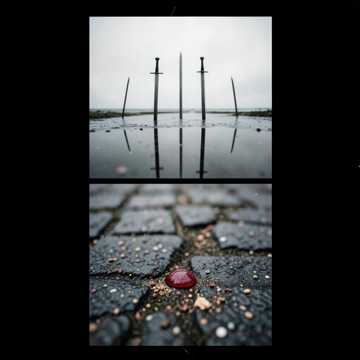
Four Swords (The Wrath of Jan Mydlář)
This midtempo arena-rock march depicts the1621 execution of Bohemian rebels in Prague. Through grim imagery of blood, severed heads, betrayal, and servitude, Jan Mydlář becomes both executioner and symbol of historical fate. The song transforms national tragedy into a menacing, chant-driven medieval metal anthem.
04:08
3 days ago
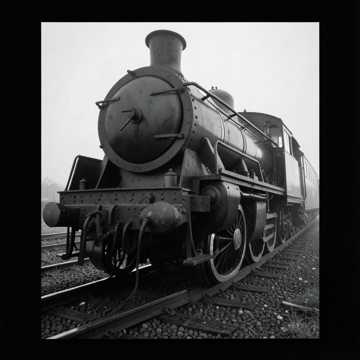
Roll On, Iron Wonder
This historically minded folk ballad celebrates Richard Trevithick's pioneering1804 steam locomotive demonstration in Merthyr Tydfil. Its steady march, warm storytelling vocal, fiddle, flute, and hand drum evoke industrial Wales while portraying invention, courage, and the locomotive's transformative beginning.
02:30
3 days ago
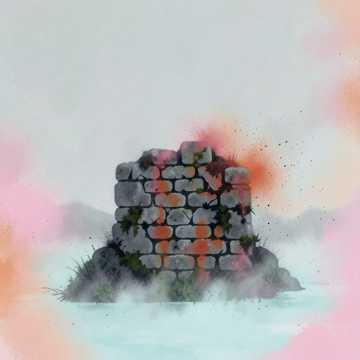
Giso von Steinau
Die Ballade erzählt vom Raubritter Giso von Steinau, dessen Gewalt leere Höfe und bleibende Trauer hinterlässt. Nach seiner Verurteilung endet sein Leben am kalten Haunefluss, während die Ruinen seiner Burg als stumme Zeugen von Schuld und Vergeltung bestehen bleiben.
04:23
3 days ago
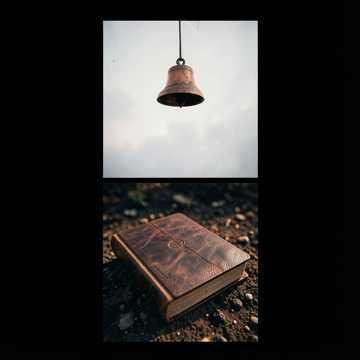
Burn 'Em, Salem
A dramatic protest anthem recounting Lindsey's wrongful persecution in Salem. Four-on-the-floor dance-pop momentum, heavy metal guitars, brass-like synths, taiko fills, and shouted responses transform historical fear into an explosive call for truth, accountability, and remembrance.
04:36
3 days ago
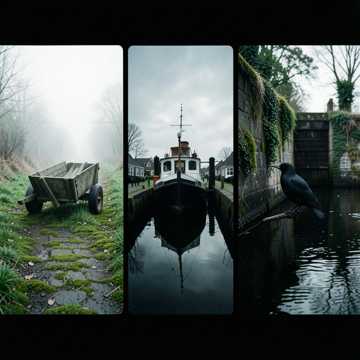
The old cut
The song honors William Perry, the Tipton Slasher, portraying his strength, humor, and authority among canal workers and boatmen. Through misty towpaths, crowded locks, and fading industrial landscapes, it preserves the memory of Black Country labor and local legend.
03:35
3 days ago
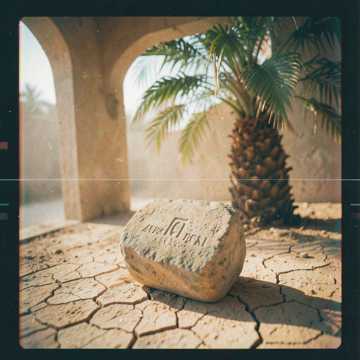
مياه الرافدين
نشيد وطني مهيب يستلهم دجلة والفرات ونخيل العراق وذاكرته الحضارية، داعياً إلى الوحدة والسلام والأمل. يتدرج من أبيات حميمة إلى لازمة جماعية واسعة، بصوت رجولي وقور وأجواء فخمة متفائلة.
03:50
3 days ago
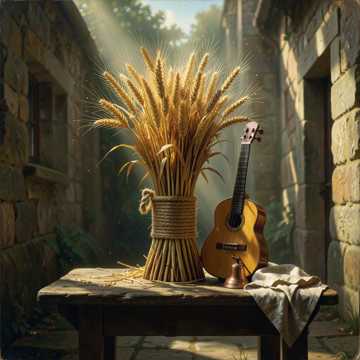
Roda de Feno
Faixa instrumental de atmosfera medieval, construída sobre um balanço leve em6/8. O alaúde conduz a melodia, enquanto tambores, sinos, flautas, palmas e camadas vocais criam uma dança rústica, luminosa e contagiante, adequada a celebrações, feiras históricas e aventuras fantásticas.
03:06
3 days ago

k
K ist ein instrumentales beziehungsweise textlich nicht bestimmbares Konzept im Stil viktorianischen Heavy Metals. Die Kombination aus gotischer Ästhetik, monumentaler Härte und dramatischer Klangsprache lässt an alte Kathedralen, mechanische Schatten und eine düstere Epoche voller Geheimnisse denken.
03:44
3 days ago

Kong Christian d XI’s Honnørmarch
En storslået, patriotisk militærmarch inspireret af Kong Christian d XI, skrevet til ceremoniel fremførelse med faner og standarter fra1.,2. og3. Infanteriregiment. Messingblæsere, trommer og stram marchrytme udtrykker ære, disciplin og historisk national stolthed.
01:54
Invalid date
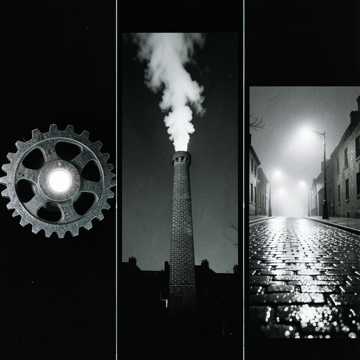
h
An instrumental heavy-metal concept built around Victorian grandeur, British steel, and gothic drama. With no lyrics provided, its identity rests on imagined thunderous guitars, martial momentum, and an atmosphere suited to dark fantasy, historical spectacle, and cinematic adventure.
03:35
3 days ago
Kong Christian d XI’s Honnørmarch
En storslået og patriotisk militærmarch, der hylder Kong Christian XI og det danske nationalgardes artilleriregiment. Musikken forestilles fremført med skarpe messingblæsere, taktfast slagtøj og ceremoniel energi, velegnet til parader, officielle markeringer og historiske rekonstruktioner.
00:47
Invalid date
Introduction to Historical Music
Historical music encompasses compositions that are rooted in or directly influenced by the music of past eras, often reflecting the styles, forms, and practices of specific historical periods. This genre often includes pieces from the medieval, Renaissance, Baroque, Classical, and Romantic periods, among others. The origins of historical music can be traced back to early human civilizations, where music played a crucial role in cultural and religious ceremonies. Over time, it evolved through various movements, each characterized by distinct musical forms, instruments, and compositional techniques. Historical music not only offers a window into the past but also serves as a foundation for many contemporary genres, influencing modern compositions and performances.
Sub-tags and Classifications of Historical Music
Medieval Music
Medieval music refers to the music of Europe from the fall of the Roman Empire (around 500 AD) to the beginning of the Renaissance (around 1400 AD). It is characterized by the use of monophonic chants and the development of early polyphony. Gregorian chant, a central form of medieval music, is known for its free-flowing, melismatic melodies and is often performed a cappella. The period also saw the rise of secular music, performed by troubadours and minstrels, which included early forms of folk and dance music.
Renaissance Music
Renaissance music spans from the 14th to the 17th century and is marked by greater harmonic complexity and the widespread use of polyphony. Composers like Josquin des Prez and Palestrina became renowned for their intricate vocal compositions. This period also saw the emergence of the madrigal, a form of secular vocal music, and the increased use of instrumental music, paving the way for the development of distinct instrumental genres in later periods.
Baroque Music
Baroque music, spanning from 1600 to 1750, is known for its dramatic, expressive qualities and the use of ornamentation. This period saw the development of many forms still popular today, such as the opera, concerto, sonata, and oratorio. Composers like Johann Sebastian Bach, George Frideric Handel, and Antonio Vivaldi were key figures in shaping the Baroque style, characterized by complex polyphonic textures, contrasts in dynamics, and a heightened sense of drama and emotion.
Classical Music
The Classical period (1730-1820) is characterized by a clear, structured approach to composition, emphasizing form, clarity, and balance. This era saw the development of the symphony, sonata-allegro form, and the string quartet. Composers like Wolfgang Amadeus Mozart, Ludwig van Beethoven, and Franz Joseph Haydn brought these forms to their heights, producing works that are celebrated for their melodic beauty, formal innovation, and expressive range.
Romantic Music
Romantic music, from about 1820 to 1900, emphasizes emotion, individualism, and expressiveness. This period is marked by the expansion of the orchestra, the development of program music, and an increased focus on lyrical melodies and rich harmonies. Composers like Johannes Brahms, Franz Liszt, and Richard Wagner pushed musical boundaries, exploring new harmonic languages and expanding the possibilities of musical form and expression.
Famous Artists and Works in Historical Music
Johann Sebastian Bach
Bach is often regarded as one of the greatest composers of all time. His contributions to the Baroque period are immense, with works like the 'Brandenburg Concertos,' 'The Well-Tempered Clavier,' and 'Mass in B minor' showcasing his mastery of counterpoint, harmonic organization, and melodic invention. Bach's music is celebrated for its intellectual depth, technical command, and artistic beauty.
The Well-Tempered Clavier by Johann Sebastian Bach
This monumental collection consists of two books, each containing 24 preludes and fugues in all major and minor keys. The work is considered one of the cornerstones of Western classical music, demonstrating the full potential of equal temperament tuning and serving as a masterclass in counterpoint and harmonic development. Its influence on both Baroque and later composers is immeasurable.
Wolfgang Amadeus Mozart
A prolific and influential composer of the Classical period, Mozart's music is renowned for its clarity, balance, and form. His works, such as 'The Magic Flute,' 'Symphony No. 40 in G minor,' and 'Piano Concerto No. 21,' reflect a mastery of the Classical style and a deep understanding of the human emotional experience, balancing lightness and drama with elegance.
Symphony No. 9 in D minor, Op. 125 by Ludwig van Beethoven
Also known as the 'Choral Symphony,' this work is notable for its unprecedented inclusion of a choir and vocal soloists in the final movement. It is celebrated for its revolutionary structure, emotional depth, and the use of Friedrich Schiller's 'Ode to Joy,' which has become a universal symbol of unity and freedom. Beethoven's Ninth Symphony pushed the boundaries of the symphonic form and laid the groundwork for the Romantic symphony.
Ludwig van Beethoven
Beethoven's work marks the transition from the Classical to the Romantic era. His compositions, such as the 'Eroica Symphony,' 'Fidelio,' and 'Piano Sonata No. 14 (Moonlight Sonata),' are known for their emotional intensity, structural innovation, and expansive scale. Beethoven's ability to convey deep emotion and his innovations in form and harmony had a profound impact on the course of Western music.
Application Scenarios for Historical Music
Historical music is often used in movie soundtracks to evoke a specific period setting or emotional tone. For example, Baroque or Classical compositions might be chosen for films set in the 17th or 18th centuries to provide an authentic auditory backdrop, enhancing the storytelling by immersing viewers in the era.
Movie Soundtracks
In advertising, historical music can be used to convey sophistication, elegance, or nostalgia. Brands may use Classical pieces in commercials to associate their products with refinement and high culture, or Romantic-era music to evoke emotions and create a memorable connection with the audience.
Advertising Music
In video games, historical music is often used to create an immersive experience that matches the game's setting or narrative. For instance, games set in medieval or Renaissance times might use period-appropriate music to enhance the atmosphere and provide players with a more engaging, historically resonant experience.
Game Background Music