Free Medieval Music Generator Powered by AI
Turn text into high-quality Medieval music effortlessly – no login required!

music.toolTips
Ave
'Ave' est meditatio mystica per monachorum cantum Gregorianum expressa. Hic cantus sacer, simplici et solenni harmonia structus, auditorem in altam spiritualitatis, tranquillitatis et reverentiae divinae contemplationem traducit, pacem interiorem et devotione repletam gignens.
03:30
Invalid date
Iron Cairn
An instrumental war-anthem built from medieval Celtic color, cinematic trap momentum, and hyperpop intensity. Bass, mandolin, harpsichord, bagpipes, taiko, choir, and gang vocals create a dark ceremonial journey suited to battles, trailers, fantasy worlds, high-stakes entrances, and heroic transformation.
03:08
3 days ago
Throne On Replay
An instrumental power statement blending medieval grandeur with hyperpop-trap aggression. Sparse808s, harpsichord, bagpipe drones, rising choir, brass, steel drum accents, and chopped synths create a regal yet streetwise atmosphere designed for dramatic drops, relentless momentum, and victorious replay value.
03:04
3 days ago
sada
A spellbinding instrumental that moves from delicate celesta and pizzicato strings to majestic orchestral climaxes, evoking enchanted corridors, ancient libraries, snowy windows, Christmas feasts, childhood wonder, gothic mystery, and the bittersweet comfort of returning home.
02:43
3 days ago
Primal Fury and Golden Chaos
An aggressive yet hopeful crossover anthem where Super Saiyan4 Goku and Super Sonic unite through soaring orchestration, driving rock rhythms, dramatic harmonies, and operatic vocals. Its mysterious medieval atmosphere frames a motivational battle about courage, transformation, loyalty, and victory against impossible odds.
02:57
3 days ago
Guthan Beaga
Tha an t-òran seo a’ leantainn turas bho shàmhchair na h-oidhche gu latha ùr, far a bheil guthan beaga a’ gleidheadh cuimhne nan sinnsirean, neart na coimhearsnachd agus dòchas tilleadh dhachaigh. Bidh ceòl dùthchasach socair a’ tionndadh gu lùth dannsa làidir agus buadhach.
04:20
3 days ago
ONWARD TO THE STARS CHRISTIAN SOLDIERS
A solemn, apocalyptic march depicts modern Templars advancing in devotion amid war, prophecy, and a collapsing sacred order. Desert drums, fractured banners, and the crowning of a Steward frame faith as both refuge and burden in a world consumed by fire.
05:04
4 days ago
Monstruo
Una criatura inmortal lucha contra el hambre, la culpa y los recuerdos de quienes hirió. Condenada a contemplar el paso de los siglos, suplica liberarse de su maldición y recuperar la humanidad, aunque duda si aún queda bondad en su alma.
07:21
4 days ago
Mittelalterliches Schlachtfeld
Ein rein atmosphärisches Klangbild eines mittelalterlichen Schlachtfelds: Vielschichtige Schreie, Waffenklirren, dumpfe Treffer, hastige Schritte und dichtes Kampfgetöse erzeugen eine rohe, lebendige und räumlich immersive Szene ohne musikalische Melodie.
00:21
4 days ago
Clan of the Iron Dawn
A wordless medieval battle anthem that builds from distant warrior calls and foreboding drones into a relentless surge of taiko percussion, heroic minor-key brass, sub-bass force, and a final commanding resolution.
03:04
4 days ago
Cry of the Conqueror
A125 BPM cinematic battle piece that moves from distant ritual chants to an explosive martial assault. Ominous brass, taiko, war drums, heavy bass, and wordless warrior cries build heroic tension before ending with decisive force.
03:23
4 days ago
Vampire's Lord
An instrumental dark fantasy piece portraying a vampire sovereign ruling over a shadowed medieval realm. Its orchestral force, ambient unease, Gothic atmosphere, and choral darkness suggest ancient curses, forbidden power, moonlit castles, and the lonely immortality of an undying lord.
03:09
Invalid date
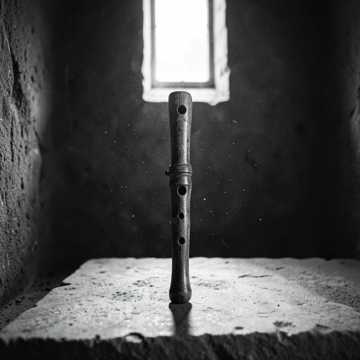
The Missing Link Melody
An instrumental flute meditation with no lyrics, The Missing Link Melody explores mystery, beauty, and historical atmosphere through haunting Ars Antiqua-inspired phrasing and a resonant432Hz tuning, suggesting an unseen connection between the past and the present.
03:45
Invalid date
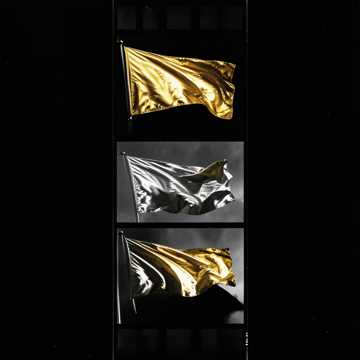
金の旗
『金の旗』は、疾走するハイパーポップ・トラップの躍動感と、中世的な弦や鍵盤、壮大な行進曲風オーケストラを融合したインストゥルメンタル。戦いの幕開け、勝利の宣言、アニメのクライマックスに似合う高揚感を持つ。
03:15
4 days ago

Franco
A mournful undead remembrance of homeland, family, and loss. The song begins as an intimate recollection, grows into a restrained procession with drones and distant voices, then closes in a shared whisper, expressing the Forsaken’s quiet persistence without triumph or release.
02:57
4 days ago
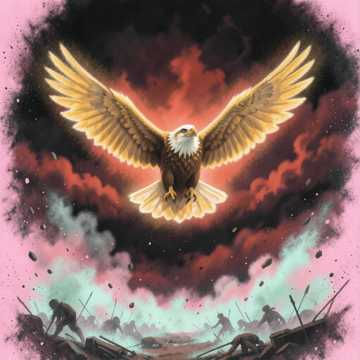
Le chant de l'Aigle
Cette fresque guerrière raconte la défense victorieuse de Byzance par les Varègues face aux chevaliers noirs d’Antioche. Entre charges de cavalerie, machines de guerre et serments sacrés, le triomphe impérial laisse place au deuil, à la mémoire des morts et à la survivance éternelle de l’aigle.
06:40
4 days ago
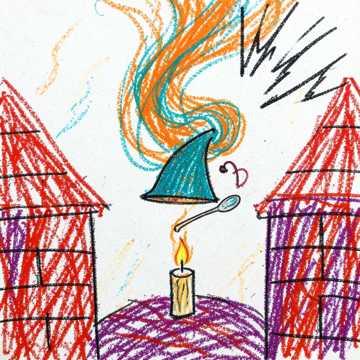
Jester, Turn the Court Around
A clever court jester uses comedy, music, and fearless observation to expose royal pride. Beneath its playful surface, the song explores truth, power, danger, and survival through an aggressive fusion of rap, dubstep metal, chugging guitars, live drums, and commanding alto saxophone.
04:03
4 days ago
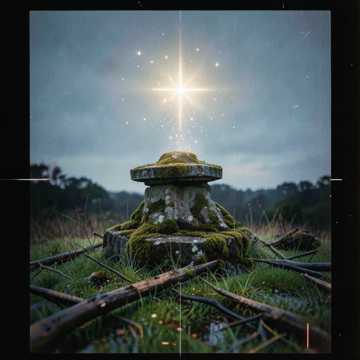
Starfall Relic Trail
A slow, intimate orchestral exploration of forgotten relics beneath a star-filled sky. Sparse flute and frame drum create quiet discovery, while harp, celesta, strings, low cellos, bells, and wordless choir gradually expand the music into a radiant theme of wonder, mystery, and ancient magic.
03:48
4 days ago
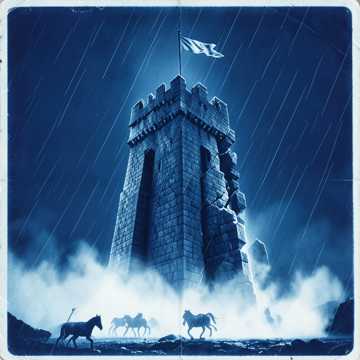
Ride, Royal Knight
A royal knight leads a desperate defense as a besieged kingdom faces invasion. Through storm, fear, and collapsing walls, Rowan chooses courage and solidarity, transforming one sworn promise into a triumphant ride toward dawn.
03:42
4 days ago

Gilded Vein
A ritualistic anthem about descendants bound to an ancient crown and sacred lineage. Through choral chants and driving orchestration, the faithful endure curses, preserve ancestral memory, and await the return of a divine dominion flowing through their gilded veins.
05:03
4 days ago
Introduction to Medieval Music
Medieval music refers to the music of the Middle Ages, a period that spans from roughly the 5th to the 15th century. This genre of music emerged from the remnants of the Roman Empire and developed into a distinctive form that reflected the social, religious, and cultural transformations of Europe during that time. Medieval music can be broadly divided into two categories: sacred and secular. Sacred music was primarily connected to the church, including Gregorian chant and liturgical pieces, while secular music encompassed folk songs, ballads, and troubadour melodies. The development of notation systems, such as neumes, allowed for the preservation and dissemination of Medieval compositions, setting the foundation for Western music traditions.
Sub-tags and Classifications of Medieval Music
Gregorian Chant
Named after Pope Gregory I, Gregorian Chant is a form of plainchant used in the liturgical services of the Catholic Church. It is characterized by monophonic, unaccompanied vocal music with free-flowing, modal melodies. The chant's rhythm is non-metrical, designed to follow the natural inflections of the Latin text, enhancing the spiritual and meditative aspects of worship.
Troubadour Music
Troubadour music refers to the secular songs composed and performed by poet-musicians in the courts of Southern France, Northern Spain, and Italy during the 12th and 13th centuries. These songs often focused on themes of chivalry and courtly love, characterized by lyrical poetry and melodies. Troubadours played a significant role in shaping the tradition of lyrical composition and storytelling in Western music.
Organum
Organum represents one of the earliest forms of polyphony, where a plainchant melody is accompanied by one or more additional voice parts. Emerging in the 9th century, organum evolved from parallel movement to more complex forms, such as free and melismatic organum. This development marked a significant step towards the intricate polyphonic compositions of the later Medieval period.
Ars Nova
The Ars Nova ('New Art') movement of the 14th century introduced innovations in rhythmic notation, allowing for greater complexity and variation in musical compositions. This era saw the rise of isorhythmic motets and the use of syncopation, which laid the groundwork for the transition from Medieval to Renaissance music. Composers like Philippe de Vitry and Guillaume de Machaut were pioneers of this style, pushing the boundaries of musical form and expression.
Famous Artists and Classic Works in Medieval Music
Hildegard von Bingen
Hildegard von Bingen was a German Benedictine abbess, writer, and composer of the 12th century. She is renowned for her contributions to sacred music, particularly her collection of compositions known as 'Symphonia armoniae celestium revelationum.' Hildegard's works are characterized by soaring melodies and vivid texts, which often drew upon her mystical visions, blending religious devotion with musical innovation.
Messe de Nostre Dame by Guillaume de Machaut
This iconic work is one of the first known polyphonic settings of the complete Mass Ordinary. Composed in the mid-14th century, 'Messe de Nostre Dame' showcases Machaut's mastery of polyphony and rhythmic sophistication. The composition includes movements like the Kyrie and Gloria, characterized by their complex interweaving of vocal lines and innovative use of isorhythmic techniques, which were revolutionary for their time.
Guillaume de Machaut
A leading figure of the Ars Nova movement, Guillaume de Machaut was a French poet and composer of the 14th century. His most famous work, 'Messe de Nostre Dame,' is the earliest known complete setting of the Ordinary of the Mass by a single composer. Machaut's use of intricate polyphony and rhythmic complexity in both sacred and secular music significantly influenced the transition to Renaissance music.
Carmina Burana
Although not strictly a single work but a collection of 13th-century poems set to music, 'Carmina Burana' provides insight into the secular music of the Medieval period. These pieces, written by Goliards—students and clerics—cover topics ranging from satire to love. The vibrant melodies and rhythmic patterns in 'Carmina Burana' highlight the lively and sometimes irreverent spirit of Medieval secular music.
Perotin
Perotin was a prominent composer of the Notre Dame School of polyphony in the late 12th and early 13th centuries. He is known for his development of organum, particularly the composition of multi-voice pieces such as 'Viderunt omnes.' Perotin's works exemplify the early stages of polyphonic music, characterized by their harmonic complexity and structural clarity.
Viderunt omnes by Perotin
A seminal example of early polyphonic music, 'Viderunt omnes' by Perotin is a four-voice organum composed for the Feast of the Circumcision. This work demonstrates the complexity of Notre Dame polyphony, with its layered vocal lines and dynamic interplay of melodic motifs. Perotin's composition illustrates the evolution of Medieval music from monophonic chant to richly textured polyphonic structures.
Application Scenarios for Medieval Music
Medieval music is frequently used in historical and fantasy films to create an authentic atmosphere that transports audiences to the Middle Ages. Films like 'The Name of the Rose' and 'Kingdom of Heaven' utilize Gregorian chants and medieval instrumentals to enhance the storytelling, providing a sense of time and place that aligns with the narrative.
Movie Soundtracks
Many video games set in medieval or fantasy worlds, such as 'The Elder Scrolls' series or 'Assassin's Creed,' incorporate Medieval music into their soundtracks. This genre helps to immerse players in the game environment, evoking the sounds of ancient castles, bustling medieval markets, and epic battles, thus enriching the overall gaming experience.
Video Game Background Music
Medieval music plays a crucial role in themed events such as Renaissance fairs, historical reenactments, and medieval banquets. Performers use traditional instruments like the lute, harp, and hurdy-gurdy to recreate the soundscapes of the Middle Ages, providing an authentic auditory backdrop that enhances the atmosphere and educational value of these events.
Themed Events and Reenactments
The calming and spiritual nature of Gregorian chant and other forms of sacred Medieval music makes it suitable for use in therapeutic and meditation settings. These compositions, with their repetitive structures and soothing harmonies, are often employed to promote relaxation, reduce stress, and aid in mindfulness practices.
Therapeutic and Meditation Settings