Free Medieval Music Generator Powered by AI
Turn text into high-quality Medieval music effortlessly – no login required!

music.toolTips
.
La canción recrea la aparición del espectro en Elsinor y la lucha de Hamlet entre la verdad y el engaño. Con una atmósfera medieval, oscura y dinámica, explora la traición, la duda, la locura y el peso de una decisión real.
03:21
2026-08-24
rey hamlet
La canción presenta a Hamlet frente al espectro de su padre en las murallas de Elsinor. Entre niebla, frío y ecos de traición, el príncipe enfrenta la duda, el peso del reino y la fragilidad de la razón antes del amanecer.
02:08
2026-08-24
Останній День
Енергійна абсурдна пригода про трьох героїв, які в останній день світу б’ються з могутньою Математичкою. КіберПиво, шкільний жах, епічні удари й комедійний фінал перетворюють контрольну на фантастичну битву за виживання.
04:09
2026-08-23
Pointe de Brume
Une chevauchée instrumentale celtique aux accents médiévaux, lancée à132 BPM. Les percussions haletantes, les motifs en mode mineur et les drones de cornemuse composent une fuite à travers la brume, entre urgence guerrière, mystère ancien et exaltation instinctive.
02:57
2026-08-22
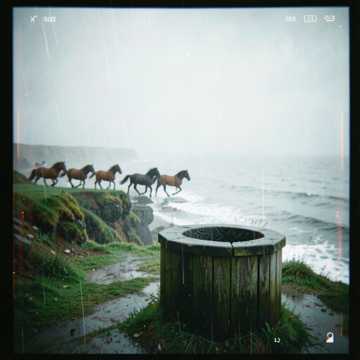
viking
Une voyageuse poussée par la mer atteint une terre sauvage et paisible, où les chevaux galopent librement. Après avoir tout abandonné, elle découvre un amour authentique, loin des cités, dans un paysage évoquant la liberté, la renaissance et la joie éternelle.
02:25
2026-08-21
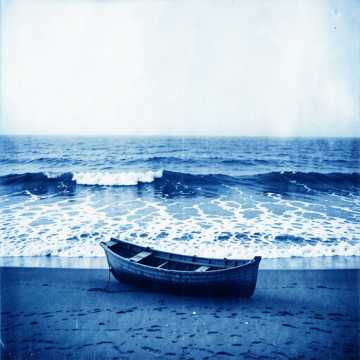
viking
Une voyageuse poussée par la mer atteint un rivage sauvage et infini. Après le froid, la perte et l’exil, elle découvre une terre de paix où l’attendent l’amour véritable et la joie éternelle.
02:34
2026-08-21
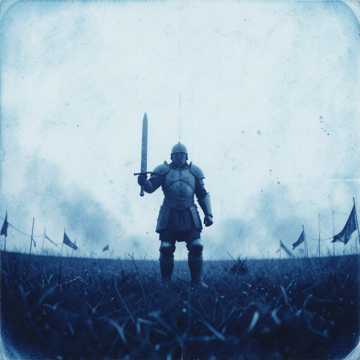
Longsword Oath
A relentless warrior charges through a fantasy battlefield, confronting knights, arrows, and fire-wielding wizards. Driven by aggressive electronic metal, the song celebrates courage, endurance, and triumph through its repeated longsword oath.
04:51
2026-08-20
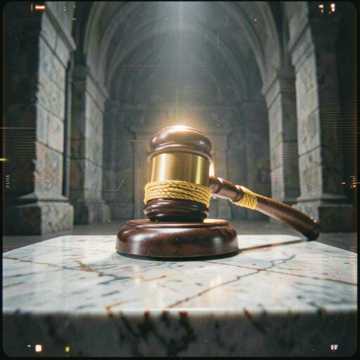
Iron Laws
Iron Laws portrays an absolute ruler enforcing an ancient code without mercy. Set against a severe D minor processional, the song combines brass, organ, anvil percussion, and resonant male vocals to create a cold, imposing anthem about judgment, power, obedience, and uncompromising law.
02:52
2026-08-19
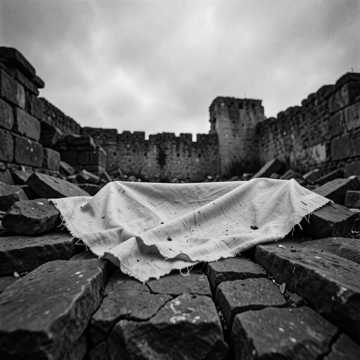
Moi IA - Le chevalier tombe
Dans une nuit marquée par les tambours et le deuil, une dernière garde de chevaliers résiste au destin. Malgré les murailles détruites et la bannière déchirée, la foi demeure : le chevalier tombe, mais ne se rend jamais.
02:49
2026-08-18
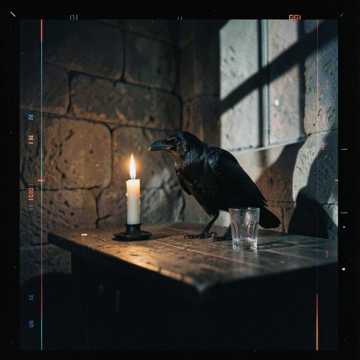
Nimmermehr Der Rabe
In einer kalten Mitternacht sucht ein verzweifelter Mann nach seiner verstorbenen Lenore. Ein unheilvoller Rabe beantwortet jede Hoffnung mit Nimmermehr. Zwischen Trauer, Angst und möglicher Einbildung verwandelt sich der Verlust in eine ewige, bedrückende Gewissheit.
04:00
2026-08-18
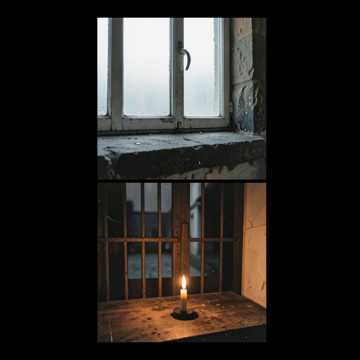
Lourizela Antiga
Uma balada medieval e melancólica sobre Lourizela, aldeia serrana onde rios, sinos, pedras e vozes antigas preservam a memória. Entre dor e ternura, a canção transforma o passado numa chama viva, pedindo que os sons do lugar guiem quem um dia se perder.
04:13
2026-08-16
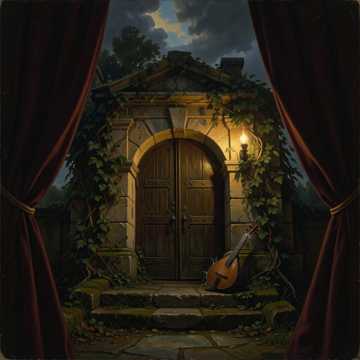
Penedono em Pedra
Uma abertura medieval cinematográfica que evoca Penedono, muralhas antigas e celebrações junto ao castelo. O violino e o piano conduzem um pulso dançante em6/8, crescendo de uma tensão austera para um clímax heroico, reforçado por sinos metálicos, tremolos e reverberação de pedra.
03:18
2026-08-15

Viking shield warrior
A ferocious Viking battle anthem where two warriors reject crowns, laws, and fear. Amid cracking shield walls, cold winds, and war drums, they embrace reckless desire and mutual defiance, becoming an unstoppable storm against enemies and judgment.
04:32
2026-08-14
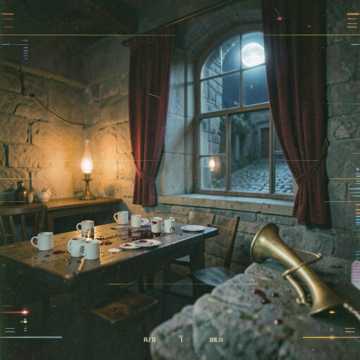
Uusimvresioon
Laul kujutab öist keskaegset maailma, kus rahvas otsib kõrtsidest lohutust, armastust ja unustust. Külm, üksindus ja mineviku kajad põimuvad lootusega, samal ajal kui korduv refrään kinnitab saatuse paratamatust ja südame mälu.
02:57
2026-08-13
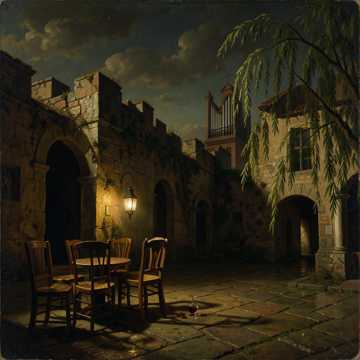
Minu moodi saare
Laul kujutab öist linna, kus kõrtside rõõm, rahva rahulolematus, külm ja üksindus põimuvad igatsusega armastuse järele. Korduv mõte Mis on, see on väljendab leppimist saatusega, kuid mineviku viisid ja süda hoiavad alles lootust, mälestusi ning inimlikku lähedust.
02:20
2026-08-13
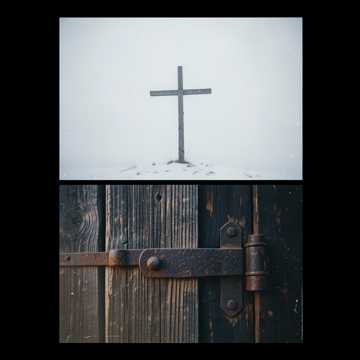
Büttel
Ein grotesker, provokanter Spottgesang im Stil eines christlichen Weihnachtslieds. Choralartige Volksmusik begleitet die Anklage gegen Büttel, Herrscher und Dribbler, während Triumph, Verachtung und gesellschaftliche Abrechnung in bewusst überzeichneter Sprache verschmelzen.
01:29
2026-08-13
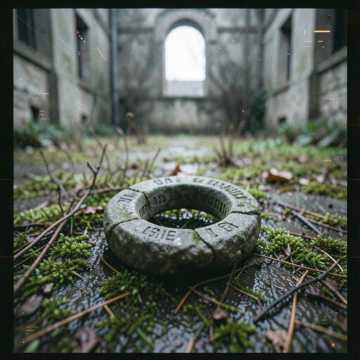
L6-2 What Remains
A solemn, unresolved meditation on time, death, memory, and impermanence. Through ancient imagery and restrained confession, the narrator accepts that kingdoms, identities, and even immortality decay, while questioning why one forgotten name remains preserved within the heart.
05:07
2026-08-13
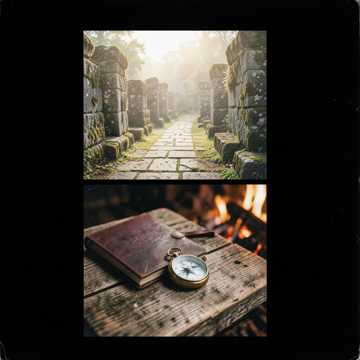
Journey Begins..
A nostalgic medieval fantasy game theme that balances peaceful exploration with subtle mystery. Rustic acoustic instruments carry a memorable, moderate-tempo melody designed to loop naturally through pixel-art villages, forests, and the first steps of an enduring RPG journey.
03:40
2026-08-13
Речь Святослава Храброго.
Песня полемично защищает историческую память о Руси и образ Святослава Храброго, противопоставляя героическое прошлое искажениям летописей. Маршевая энергия, языческие фольклорные интонации и трагический вокал превращают композицию в суровое обращение к совести народа.
03:50
2026-08-12
Речь Святослава Храброго.
Патриотическая баллада от лица защитника исторической памяти. Лирический герой противопоставляет легендарную мощь Святослава и духовное наследие Руси попыткам исказить прошлое, превращая песню в скорбный, гневный призыв помнить свои корни.
03:24
2026-08-12
Introduction to Medieval Music
Medieval music refers to the music of the Middle Ages, a period that spans from roughly the 5th to the 15th century. This genre of music emerged from the remnants of the Roman Empire and developed into a distinctive form that reflected the social, religious, and cultural transformations of Europe during that time. Medieval music can be broadly divided into two categories: sacred and secular. Sacred music was primarily connected to the church, including Gregorian chant and liturgical pieces, while secular music encompassed folk songs, ballads, and troubadour melodies. The development of notation systems, such as neumes, allowed for the preservation and dissemination of Medieval compositions, setting the foundation for Western music traditions.
Sub-tags and Classifications of Medieval Music
Gregorian Chant
Named after Pope Gregory I, Gregorian Chant is a form of plainchant used in the liturgical services of the Catholic Church. It is characterized by monophonic, unaccompanied vocal music with free-flowing, modal melodies. The chant's rhythm is non-metrical, designed to follow the natural inflections of the Latin text, enhancing the spiritual and meditative aspects of worship.
Troubadour Music
Troubadour music refers to the secular songs composed and performed by poet-musicians in the courts of Southern France, Northern Spain, and Italy during the 12th and 13th centuries. These songs often focused on themes of chivalry and courtly love, characterized by lyrical poetry and melodies. Troubadours played a significant role in shaping the tradition of lyrical composition and storytelling in Western music.
Organum
Organum represents one of the earliest forms of polyphony, where a plainchant melody is accompanied by one or more additional voice parts. Emerging in the 9th century, organum evolved from parallel movement to more complex forms, such as free and melismatic organum. This development marked a significant step towards the intricate polyphonic compositions of the later Medieval period.
Ars Nova
The Ars Nova ('New Art') movement of the 14th century introduced innovations in rhythmic notation, allowing for greater complexity and variation in musical compositions. This era saw the rise of isorhythmic motets and the use of syncopation, which laid the groundwork for the transition from Medieval to Renaissance music. Composers like Philippe de Vitry and Guillaume de Machaut were pioneers of this style, pushing the boundaries of musical form and expression.
Famous Artists and Classic Works in Medieval Music
Hildegard von Bingen
Hildegard von Bingen was a German Benedictine abbess, writer, and composer of the 12th century. She is renowned for her contributions to sacred music, particularly her collection of compositions known as 'Symphonia armoniae celestium revelationum.' Hildegard's works are characterized by soaring melodies and vivid texts, which often drew upon her mystical visions, blending religious devotion with musical innovation.
Messe de Nostre Dame by Guillaume de Machaut
This iconic work is one of the first known polyphonic settings of the complete Mass Ordinary. Composed in the mid-14th century, 'Messe de Nostre Dame' showcases Machaut's mastery of polyphony and rhythmic sophistication. The composition includes movements like the Kyrie and Gloria, characterized by their complex interweaving of vocal lines and innovative use of isorhythmic techniques, which were revolutionary for their time.
Guillaume de Machaut
A leading figure of the Ars Nova movement, Guillaume de Machaut was a French poet and composer of the 14th century. His most famous work, 'Messe de Nostre Dame,' is the earliest known complete setting of the Ordinary of the Mass by a single composer. Machaut's use of intricate polyphony and rhythmic complexity in both sacred and secular music significantly influenced the transition to Renaissance music.
Carmina Burana
Although not strictly a single work but a collection of 13th-century poems set to music, 'Carmina Burana' provides insight into the secular music of the Medieval period. These pieces, written by Goliards—students and clerics—cover topics ranging from satire to love. The vibrant melodies and rhythmic patterns in 'Carmina Burana' highlight the lively and sometimes irreverent spirit of Medieval secular music.
Perotin
Perotin was a prominent composer of the Notre Dame School of polyphony in the late 12th and early 13th centuries. He is known for his development of organum, particularly the composition of multi-voice pieces such as 'Viderunt omnes.' Perotin's works exemplify the early stages of polyphonic music, characterized by their harmonic complexity and structural clarity.
Viderunt omnes by Perotin
A seminal example of early polyphonic music, 'Viderunt omnes' by Perotin is a four-voice organum composed for the Feast of the Circumcision. This work demonstrates the complexity of Notre Dame polyphony, with its layered vocal lines and dynamic interplay of melodic motifs. Perotin's composition illustrates the evolution of Medieval music from monophonic chant to richly textured polyphonic structures.
Application Scenarios for Medieval Music
Medieval music is frequently used in historical and fantasy films to create an authentic atmosphere that transports audiences to the Middle Ages. Films like 'The Name of the Rose' and 'Kingdom of Heaven' utilize Gregorian chants and medieval instrumentals to enhance the storytelling, providing a sense of time and place that aligns with the narrative.
Movie Soundtracks
Many video games set in medieval or fantasy worlds, such as 'The Elder Scrolls' series or 'Assassin's Creed,' incorporate Medieval music into their soundtracks. This genre helps to immerse players in the game environment, evoking the sounds of ancient castles, bustling medieval markets, and epic battles, thus enriching the overall gaming experience.
Video Game Background Music
Medieval music plays a crucial role in themed events such as Renaissance fairs, historical reenactments, and medieval banquets. Performers use traditional instruments like the lute, harp, and hurdy-gurdy to recreate the soundscapes of the Middle Ages, providing an authentic auditory backdrop that enhances the atmosphere and educational value of these events.
Themed Events and Reenactments
The calming and spiritual nature of Gregorian chant and other forms of sacred Medieval music makes it suitable for use in therapeutic and meditation settings. These compositions, with their repetitive structures and soothing harmonies, are often employed to promote relaxation, reduce stress, and aid in mindfulness practices.
Therapeutic and Meditation Settings