Free Medieval Music Generator Powered by AI
Turn text into high-quality Medieval music effortlessly – no login required!

music.toolTips
Sultan Ramin
Sultan Ramin, Makran
03:32
2026-09-22
Lied der Linde - Part 2
Eine archaische Untergangsvision schildert den Zerfall politischer Ordnung, Krieg, Pest und geistige Verwirrung. Aus dunkler Prophetie, sakralem Chorgesang und orchestraler Steigerung entsteht ein bedrückendes Gemälde kollektiver Schuld, das in der verzweifelten Hoffnung auf einen Erlöser gipfelt.
04:30
2026-09-21

Tavern at the End of the
At the world’s final tavern, outcasts, heroes, thieves, and saints gather to drink, share stories, and defy despair. Its dark fantasy imagery transforms apocalypse into a communal celebration, insisting that endings can become doorways to courage, memory, and renewed dreams.
03:45
2026-09-21
Whackus The Jackus
A playful medieval fantasy ballad about Jackus Bao, an ambitious tinkerer who builds a steel spaceship without a gyro. His dream of flight becomes a comic disaster as the unstable craft rises, rattles, and collapses in spectacular fashion.
00:58
2026-09-21
Die Harten und die Zarten
Ein archaischer Gemeinschaftsgesang über die Verbindung von Stärke und Sanftheit. Tiefe Stimmen, Drehleier, Trommeln und Stampfrhythmen verwandeln den Ruf nach Zusammenhalt in eine kraftvolle Hymne für Brüderlichkeit, Heilung und gemeinsames Bestehen in jedem Wetter.
03:34
2026-09-20

Șmecheriecherie
O aventură jucăușă despre doi strategi carismatici care navighează târguri, porți și negocieri prin observație, improvizație și curaj. Piesa combină energia unei taverne medievale cu trapul modern și subliniază că adevărata șmecherie cere minte limpede, inimă bună și respect pentru ceilalți.
02:55
2026-09-20

Szilánkos Szavak - A Kegyetlen
A dal a három tünde, hét törp és kilenc embergyűrű történetét meséli el, miközben a hatalom, kapzsiság és végzet fokozatosan árnyékká változtatja viselőiket. A kovácstűz motívuma végül mindegyik sorsát az Egy Gyűrű kegyetlen akaratához köti.
06:34
2026-09-20
Tu palabra
La canción expresa una profunda devoción a Cristo y presenta su palabra como una fuente de dulzura, sabiduría, dirección y fortaleza. Con tono solemne y nostálgico, el creyente pide entendimiento para obedecer y permanecer en la presencia de Dios.
02:57
2026-09-20

Fight the Fire
A dramatic fantasy battle song depicting dragons reclaiming their ancient land while knights fight through fear and fire to protect their families. Tense verses, forceful chants, pounding drums, and cinematic violin build toward an urgent survival anthem filled with courage, conflict, and resistance.
02:53
2026-09-20

Szilánkos Szavak - Megindul a Hegy
A dal egy évszázadokon át felgyülemlett természeti és társadalmi erő elszabadulását idézi meg. A hegyek, a föld és a gördülő kövek a megállíthatatlan változás jelképeivé válnak, miközben a várak és láncok összeomlanak egy új korszak küszöbén.
04:14
2026-09-19
Rupeți Lanțurile
Un cântec de revoltă și solidaritate, în care vocea celor apăsați se ridică din munți și sate pentru a rupe lanțurile. Îmbinând simboluri istorice, energie de război și o producție trap modernă, piesa transformă libertatea într-un legământ colectiv.
02:49
2026-09-19

Szilánkos Szavak - Megindul a Hegy
A dal allegorikus földindulásként ábrázolja a sokáig elfojtott erők felszabadulását. A hegyek és sziklák megmozdulása a változás megállíthatatlan erejét jelképezi, amely ledönti a várakat, láncokat és régi hatalmi rendeket.
04:17
2026-09-19
Rădăcini în Piatră
O piesă românească de folk-rap întunecat, cu energie de marș și atmosferă cinematografică. Versurile evocă rădăcinile dacice, solidaritatea și demnitatea, transformând trecutul într-o chemare modernă la curaj, unitate și speranță.
02:30
2026-09-19
Helden des Nordens
Ein ausgelassenes Hochzeitslied aus Skorraholt, das Kameradschaft, Ahnen, Mut und die Liebe zwischen Sobal und Svana feiert. Ruhige Gedenkmomente wachsen zu gewaltigen Mitgröl-Refrains mit Krügen, Trommeln und dem beschwörenden Ruf Seite an Seite.
06:00
2026-09-19

Ashen Crown March
An instrumental fantasy march that begins with bright harp, driving taiko, brass, and choir, then expands into a grand orchestral climax before collapsing into bare cellos, distant voices, and warped bells. Its tragic arc evokes a fallen monarch, a haunted kingdom, and the final echo of lost glory.
03:30
2026-09-18
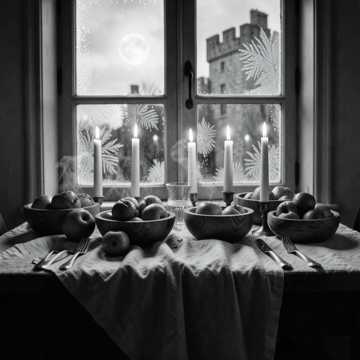
Winter Feast Tonight
A joyful winter anthem set in a storybook castle, where royalty, mythical creatures, strangers, and friends gather for a magical feast. Its upbeat pulse, duet vocals, chiming guitars, handclaps, sleigh bells, and gang harmonies transform cold winter imagery into a celebration of belonging and shared warmth.
04:02
2026-09-18
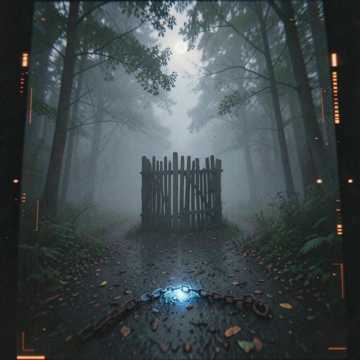
Fresh Meat (The Road to the Kron Hills)
Three travelers are captured by Orc slavers after crossing a war-scarred wilderness. T'Chulbar escapes with a chained Troll and Milicent, while a pursuing Drow joins the final battle. Though freedom is won, a friend is lost, questions remain, and the Kron Hills loom ahead.
05:02
2026-09-18
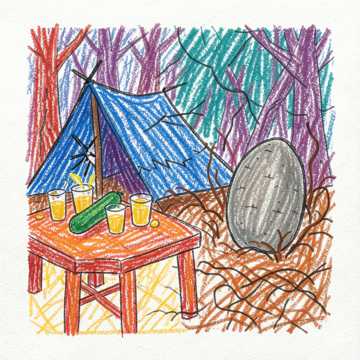
Вступление
Ироничный фолк-панк боевик, переосмысляющий события Куликовской битвы в духе хмельного трактирного хаоса. Задорные гитарные риффы, пьяный хоровой запев и нецензурный юмор рассказывают о подготовках князя, визите хана Мамая и появлении великана Челубея перед решающим боем.
02:33
2026-09-17
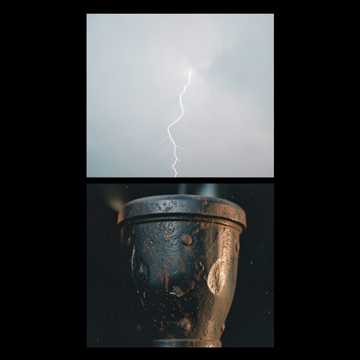
come
'come' is a dark cinematic war marching anthem powered by thunderous Taiko drums, booming brass, and a commanding male baritone vocal. Blending modern punch with medieval grit, the song builds intense tension into a defiant, relentless battle cry about taking control and chasing victory.
02:27
2026-09-17

Воевода
Сатирическая история о ленивом и самовлюбленном воеводе, который просыпает битву, гонится за наградами и прячется от опасности. Благодаря абсурду, грубой брани и пьяной героике песня превращает военную легенду в фарсовый рок-боевик.
04:14
2026-09-16
Introduction to Medieval Music
Medieval music refers to the music of the Middle Ages, a period that spans from roughly the 5th to the 15th century. This genre of music emerged from the remnants of the Roman Empire and developed into a distinctive form that reflected the social, religious, and cultural transformations of Europe during that time. Medieval music can be broadly divided into two categories: sacred and secular. Sacred music was primarily connected to the church, including Gregorian chant and liturgical pieces, while secular music encompassed folk songs, ballads, and troubadour melodies. The development of notation systems, such as neumes, allowed for the preservation and dissemination of Medieval compositions, setting the foundation for Western music traditions.
Sub-tags and Classifications of Medieval Music
Gregorian Chant
Named after Pope Gregory I, Gregorian Chant is a form of plainchant used in the liturgical services of the Catholic Church. It is characterized by monophonic, unaccompanied vocal music with free-flowing, modal melodies. The chant's rhythm is non-metrical, designed to follow the natural inflections of the Latin text, enhancing the spiritual and meditative aspects of worship.
Troubadour Music
Troubadour music refers to the secular songs composed and performed by poet-musicians in the courts of Southern France, Northern Spain, and Italy during the 12th and 13th centuries. These songs often focused on themes of chivalry and courtly love, characterized by lyrical poetry and melodies. Troubadours played a significant role in shaping the tradition of lyrical composition and storytelling in Western music.
Organum
Organum represents one of the earliest forms of polyphony, where a plainchant melody is accompanied by one or more additional voice parts. Emerging in the 9th century, organum evolved from parallel movement to more complex forms, such as free and melismatic organum. This development marked a significant step towards the intricate polyphonic compositions of the later Medieval period.
Ars Nova
The Ars Nova ('New Art') movement of the 14th century introduced innovations in rhythmic notation, allowing for greater complexity and variation in musical compositions. This era saw the rise of isorhythmic motets and the use of syncopation, which laid the groundwork for the transition from Medieval to Renaissance music. Composers like Philippe de Vitry and Guillaume de Machaut were pioneers of this style, pushing the boundaries of musical form and expression.
Famous Artists and Classic Works in Medieval Music
Hildegard von Bingen
Hildegard von Bingen was a German Benedictine abbess, writer, and composer of the 12th century. She is renowned for her contributions to sacred music, particularly her collection of compositions known as 'Symphonia armoniae celestium revelationum.' Hildegard's works are characterized by soaring melodies and vivid texts, which often drew upon her mystical visions, blending religious devotion with musical innovation.
Messe de Nostre Dame by Guillaume de Machaut
This iconic work is one of the first known polyphonic settings of the complete Mass Ordinary. Composed in the mid-14th century, 'Messe de Nostre Dame' showcases Machaut's mastery of polyphony and rhythmic sophistication. The composition includes movements like the Kyrie and Gloria, characterized by their complex interweaving of vocal lines and innovative use of isorhythmic techniques, which were revolutionary for their time.
Guillaume de Machaut
A leading figure of the Ars Nova movement, Guillaume de Machaut was a French poet and composer of the 14th century. His most famous work, 'Messe de Nostre Dame,' is the earliest known complete setting of the Ordinary of the Mass by a single composer. Machaut's use of intricate polyphony and rhythmic complexity in both sacred and secular music significantly influenced the transition to Renaissance music.
Carmina Burana
Although not strictly a single work but a collection of 13th-century poems set to music, 'Carmina Burana' provides insight into the secular music of the Medieval period. These pieces, written by Goliards—students and clerics—cover topics ranging from satire to love. The vibrant melodies and rhythmic patterns in 'Carmina Burana' highlight the lively and sometimes irreverent spirit of Medieval secular music.
Perotin
Perotin was a prominent composer of the Notre Dame School of polyphony in the late 12th and early 13th centuries. He is known for his development of organum, particularly the composition of multi-voice pieces such as 'Viderunt omnes.' Perotin's works exemplify the early stages of polyphonic music, characterized by their harmonic complexity and structural clarity.
Viderunt omnes by Perotin
A seminal example of early polyphonic music, 'Viderunt omnes' by Perotin is a four-voice organum composed for the Feast of the Circumcision. This work demonstrates the complexity of Notre Dame polyphony, with its layered vocal lines and dynamic interplay of melodic motifs. Perotin's composition illustrates the evolution of Medieval music from monophonic chant to richly textured polyphonic structures.
Application Scenarios for Medieval Music
Medieval music is frequently used in historical and fantasy films to create an authentic atmosphere that transports audiences to the Middle Ages. Films like 'The Name of the Rose' and 'Kingdom of Heaven' utilize Gregorian chants and medieval instrumentals to enhance the storytelling, providing a sense of time and place that aligns with the narrative.
Movie Soundtracks
Many video games set in medieval or fantasy worlds, such as 'The Elder Scrolls' series or 'Assassin's Creed,' incorporate Medieval music into their soundtracks. This genre helps to immerse players in the game environment, evoking the sounds of ancient castles, bustling medieval markets, and epic battles, thus enriching the overall gaming experience.
Video Game Background Music
Medieval music plays a crucial role in themed events such as Renaissance fairs, historical reenactments, and medieval banquets. Performers use traditional instruments like the lute, harp, and hurdy-gurdy to recreate the soundscapes of the Middle Ages, providing an authentic auditory backdrop that enhances the atmosphere and educational value of these events.
Themed Events and Reenactments
The calming and spiritual nature of Gregorian chant and other forms of sacred Medieval music makes it suitable for use in therapeutic and meditation settings. These compositions, with their repetitive structures and soothing harmonies, are often employed to promote relaxation, reduce stress, and aid in mindfulness practices.
Therapeutic and Meditation Settings